Part three of our mellow Sunday adventure is about the animals living in this area. As I said before, in parts one and two, we were driving the tuk tuk along the North and East borders of Kumana National Park. The only legal access into the park is by jeep safari, which is pretty cheap, and you will have a professional game spotter as a driver, but we lucked into what was a pretty cool DIY safari the entire day, just from our trusty tuk tuk Enzo.
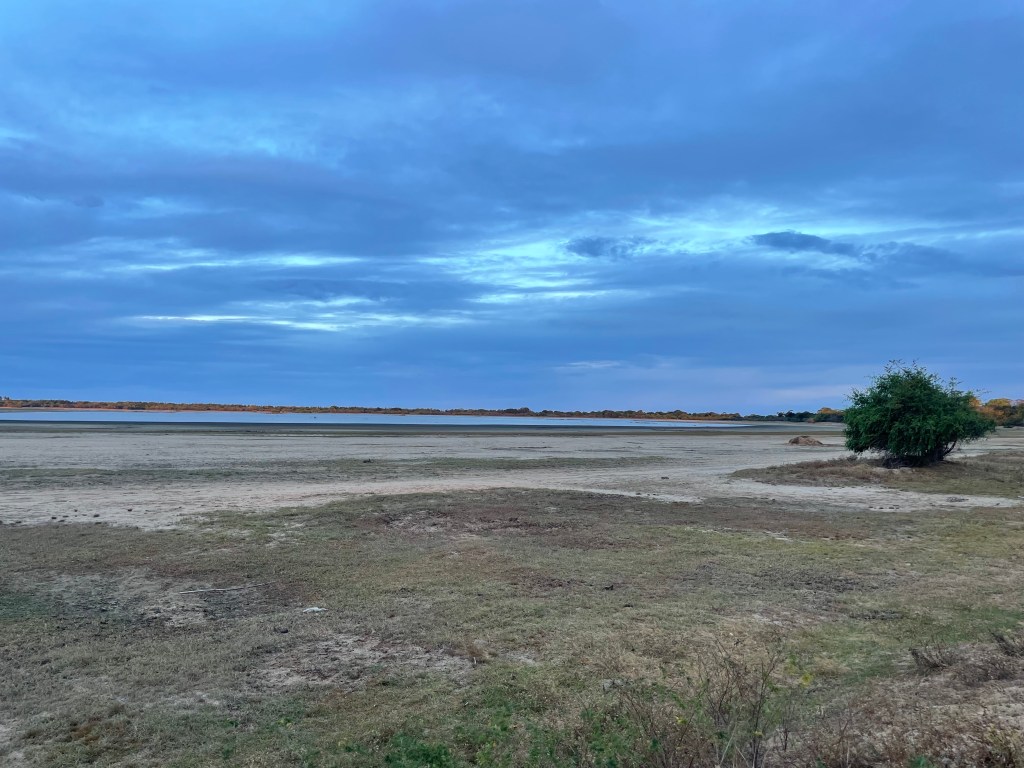
First off, whether you see animals, visit temples, or not, this is a gorgeous area. It is one of my favorite climates, where the desert savanna and scrub forests, dotted with outcroppings of ancient granite domes, meet the ocean.
It is a place of unlikely beauty.
The animals have an unlikely beauty about them also.
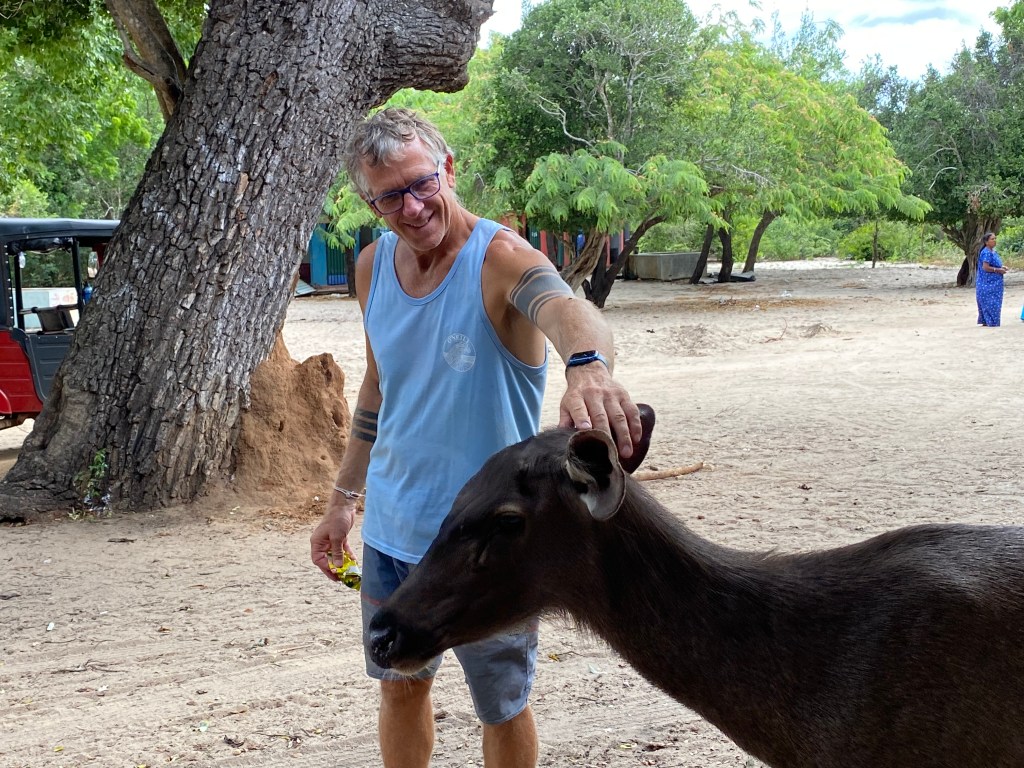
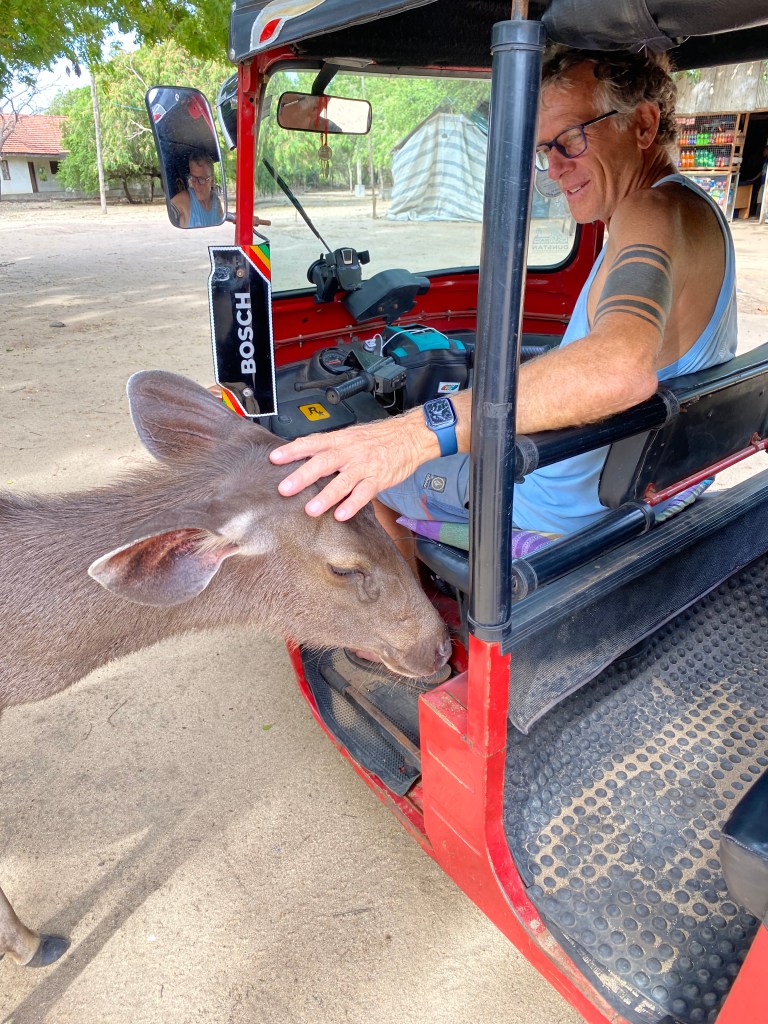

First, we had to get through the not-so-wild animals before we could see any wild ones. These “wild” deer in Okanda wander about the village, and hang out at the Hindu temple. They just wander up to you like a street dog looking for handouts. They are wild deer, they have just decided life is simpler if they domesticate themselves. This one actually came quite a ways into the tuk tuk.

I apologize for the poor quality of this photo, but it needed to be in here. There are wild coyotes in this area. I never would have guessed they lived here. This one was cautiously curious, but ran off quite soon after he turned to check us out.
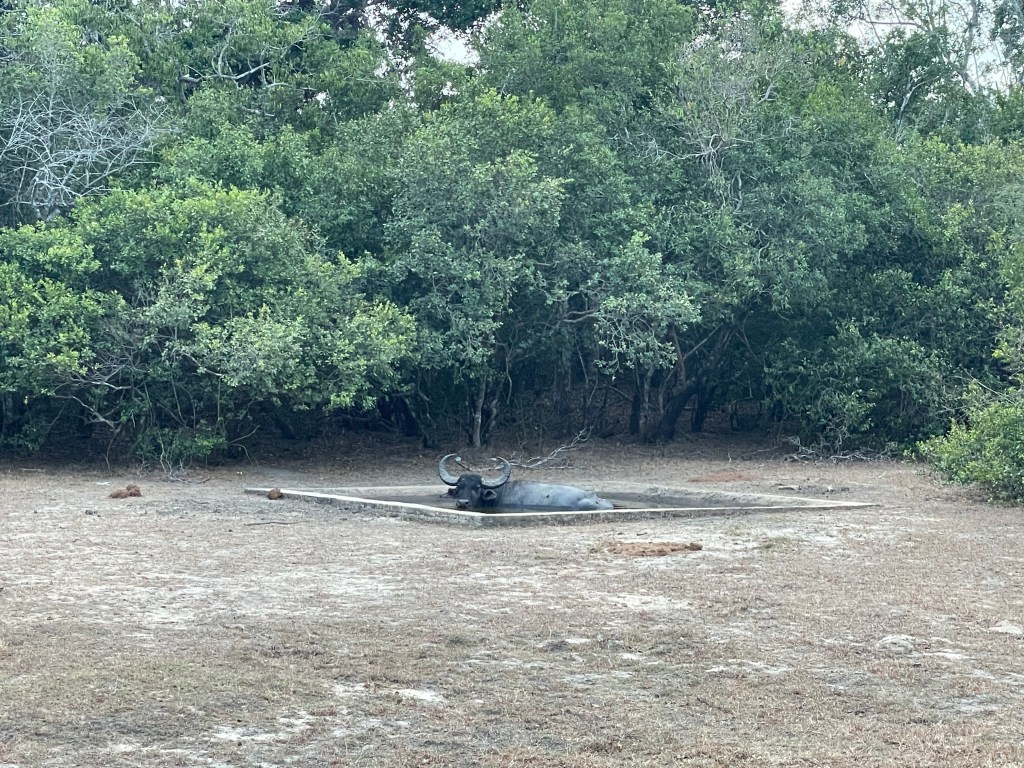
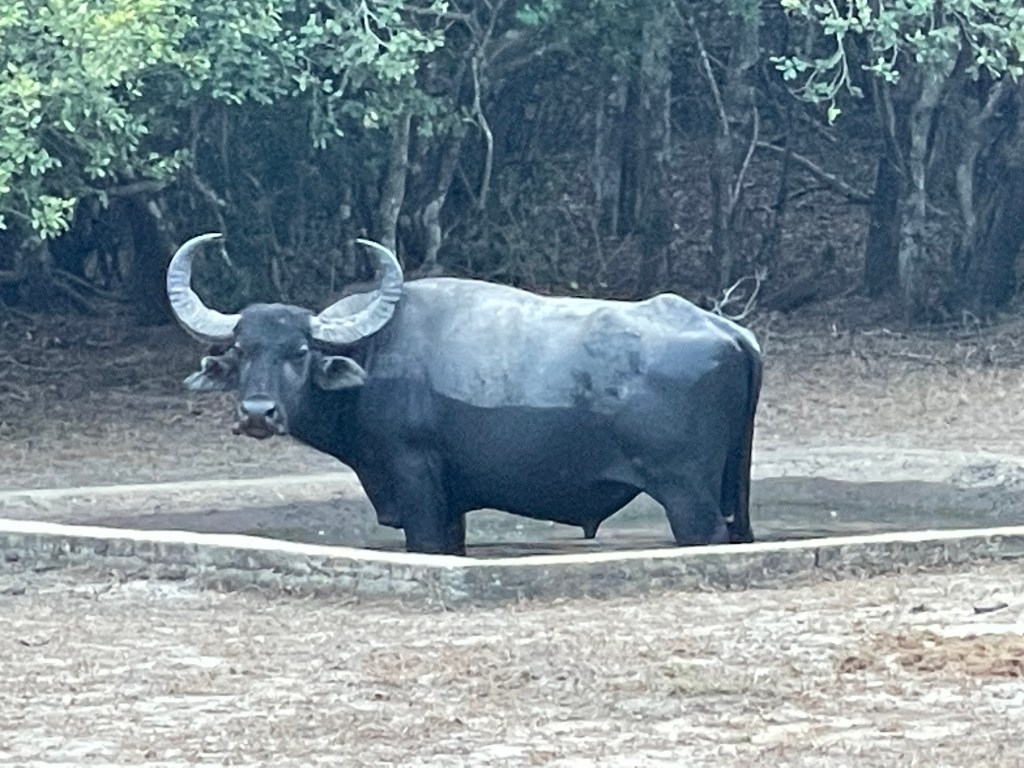
I love these big old guys. There has been a lot of “domestication” over the years, and most of the water buffaloes you see around the park are likely many generations from domestication, their predescessors having escaped from lives of servitude. The wild ones do still exist. I do not know if these are wild or feral buffalo in these pictures, but the demeanor and the look is very similar. In either case, they are massive, and a bit intimidating, but overall fairly relaxed. This one really seemed to be enjoying his bath, and only very begrudgingly got up as we stopped for pictures.
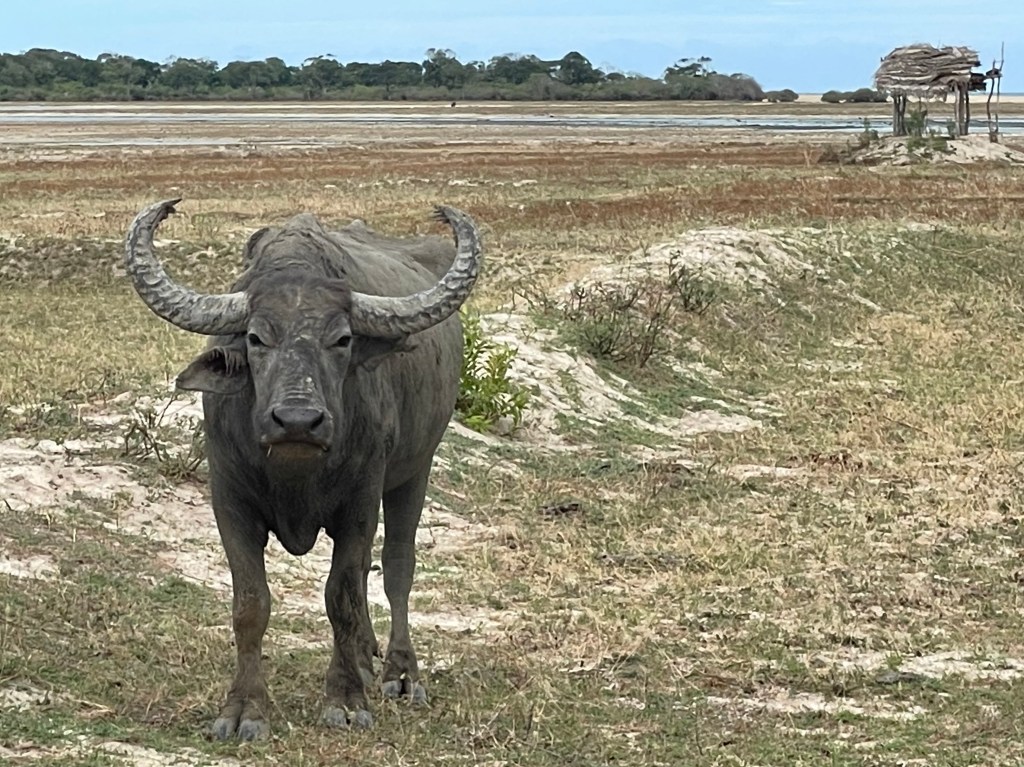
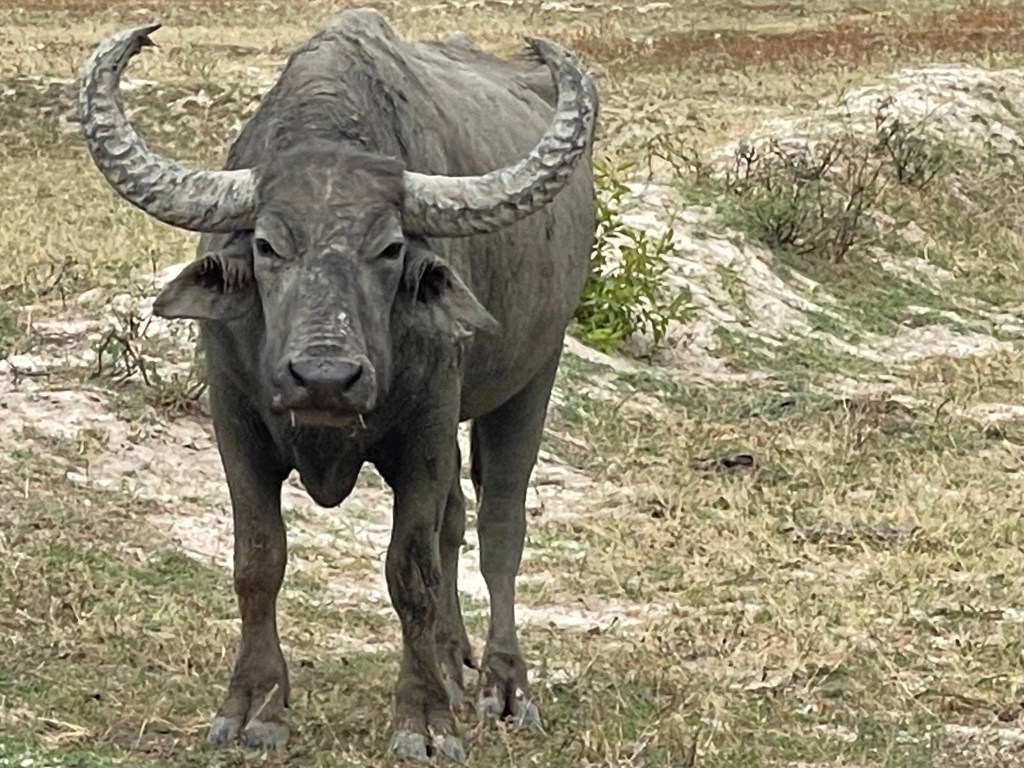
This big old guy. Wow. He was close to the same size as the tuk tuk. He did seem quite attentive to us, but not outwardly aggressive. He was within twenty meters for these pictures, so we moved on pretty quickly.
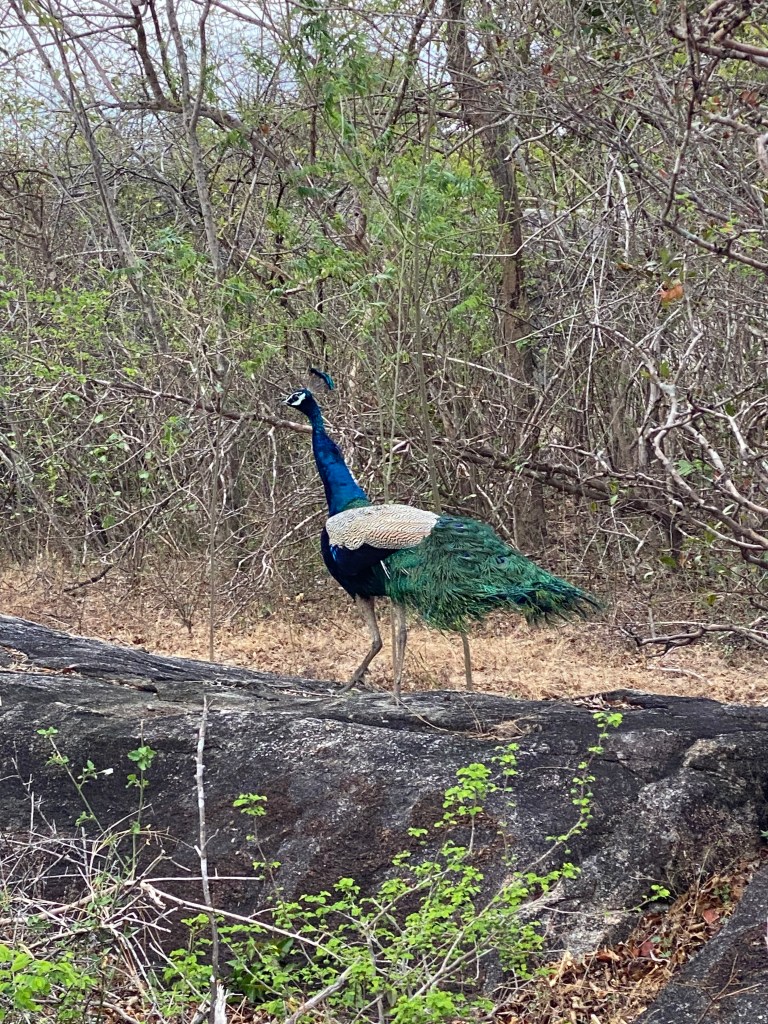
Wild peacocks (and peahens too, of course) are everywhere in Sri Lanka. We kept driving by all these peacocks with no tails, and we were thinking maybe the Sri Lankan variety did not come equipped with the fancy plumage. This was not the case. The Sri Lankan peacocks do have the magnificent tails, but – what we didn’t know – the wild peacocks only get their tails for mating season. The rest of the year, the extravagant tails fall out, leaving them with little short stubby tails. Their iridescent blue coloring stays all year, so they are still pretty eye-catching.
It is now the beginning of peacock/peahen flirtation season, so this guy is working up to a fine looking tail.
He should be popular.
These guys have their tails all sorted. It is so strange to me that they are wild birds. I am so conditioned to seeing them slowly strutting around a zoo with their tails all fanned out, but it is not so here. These are wild birds, and as a result they try very hard to stay away from us. They are seriously fast.
And, they fly pretty well.
And they roost in trees.
Which is really weird.
And these guys. We see them all over the place, when driving, and sometimes while surfing (I still haven’t had the opportunity to share a wave with one).
I could (and probably will) see a thousand wild elephants in Sri Lanka, but I will never lose that childlike excitement and thrill of their presence. You have to be careful around them. They are faster than our tuk tuk (and probably more maneuverable), twice as big, and they are known to smash things up occasionally. A tuk tuk full of surfers was attacked by one on the way to the beach just a few minutes South of our favorite surf spot two weeks ago, and he did some pretty serious damage to the tuk tuk. The surfers were okay.
I will never tire of having these guys around. Their presence is very powerful.
There were some honorable mentions that we saw as well, and either din’t get the camera out in time, or the pictures turned out blurry from poor conditions.
So many monkeys to start with.
There are your regular macaque monkeys around, the sneaky little fuckers. They are the ones responsible for stealing everything out of our tuk tuk (especially our lunch, and our just-purchased two kilo bag of rambutans), mischiefmaking, and causing general chaos.
Several different types of langurs also live here, and they are my favorites. They are less socialized, so less mischievous than their cousins, but they are so much fun to watch and be watched by. They live in large groups (barrels, actually. Not kidding) and we see them regularly in the trees, or running through open fields with this unique, graceful gait with their ridiculously too-long tails sticking way up above them.
The langurs really are my favorites (sorry macaques, you perverted little thieving shits).
We also saw big water monitors, weasels, mongooses (mongeese?), bearded dragon-looking lizards, cranes, purple herons, these giant beautiful brightly colored storks (really bad pictures. We will try again), and a million other cool birds.
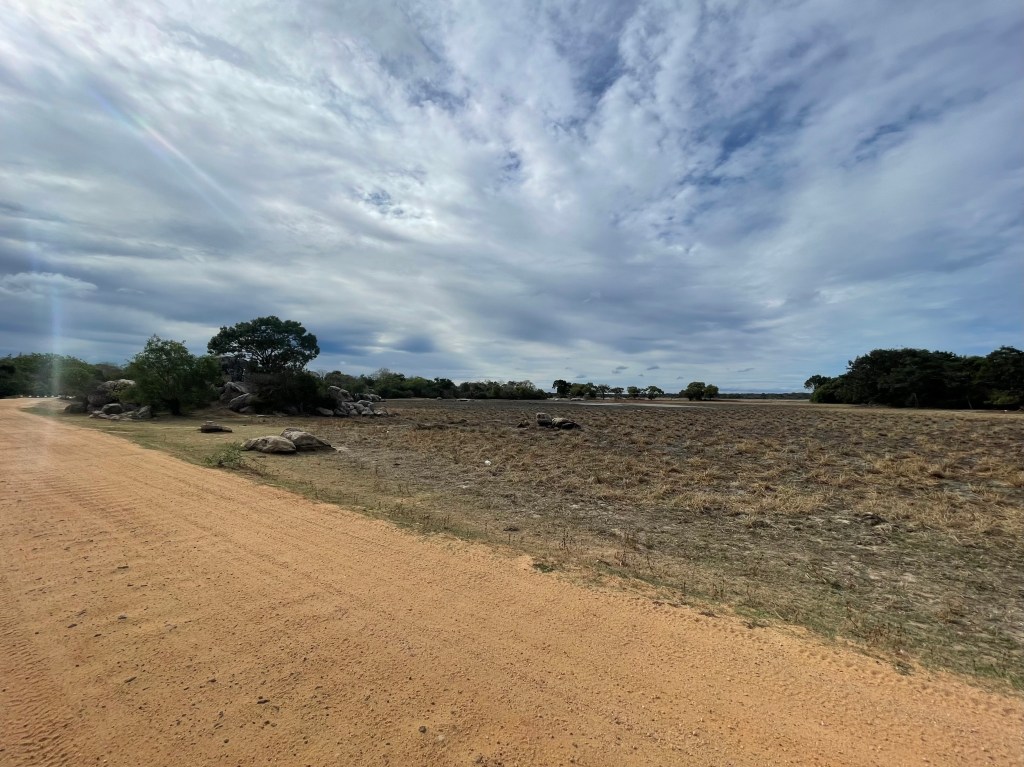
It never gets old. We can drive through these areas so close to our house, and its not that difficult to imagine being on some African safari.
But in a tuk tuk.

 Wind, Water, Waves, Wander
I love living vicariously through your epic adventures, you guys. The animals you are encountering are phenomenal, the ancient sites you are visiting inspire deep reverence (even from afar) and we are so so grateful that you’re taking the time to write and share the pictures! No post is too long … I adore every single one! Love yous! 😀
LikeLiked by 1 person
Thank you for that sis! But, haha, if you ask Dad they are all too long! Anyway, thanks. Im glad you guys enjoy.
LikeLike
Love!! Definitely mongeese….
<
div>Very much enjoying your writing! Xoxo
<
div dir=”ltr”>
<
blockquote type=”cite”>
LikeLiked by 1 person
Thanks Anna! It has to be mongeese, right!!?? Thanks for reading!
LikeLike
You two are so adventuresome! Harley and I are living vicariously through you and Tam. Love you guys!
LikeLike