In the spirit of keeping up with our travels in a timely manner, I mentioned in the last post that we were on Pohnpei for some surfing.
This is not that post.
Instead, it is a post about a trip we took there in July, to hike, visit a million waterfalls, and visit the ruins of Nan Madol.
So, yes. Right on time here.
Years ago, I watched a documentary on this crazy temple/city complex in Micronesia. It caught my imagination, because it is yet another site in the world where we still have yet to explain how it was actually built.
When we realized that we were only two hours away by United Airline’s Island Hopper we made the decision to include a visit here while we were “in the neighborhood”.
It did not disappoint.
Nan Modal actually means “within the intervals” which, translated in some cases is (roughly) “The space between”. There is some thought that this refers simply to the fact that the ninety-two little islets and foundations that make up the man-made structures of the two hundred acre site are all separated by waterways and channels. Another vague theory is that it refers to the idea of purgatory, but I have to wonder if that isn’t a later theological idea that got wedged in there.
The waterways are navigable by boat at the high tide, and shallow enough to wade across at low tide.
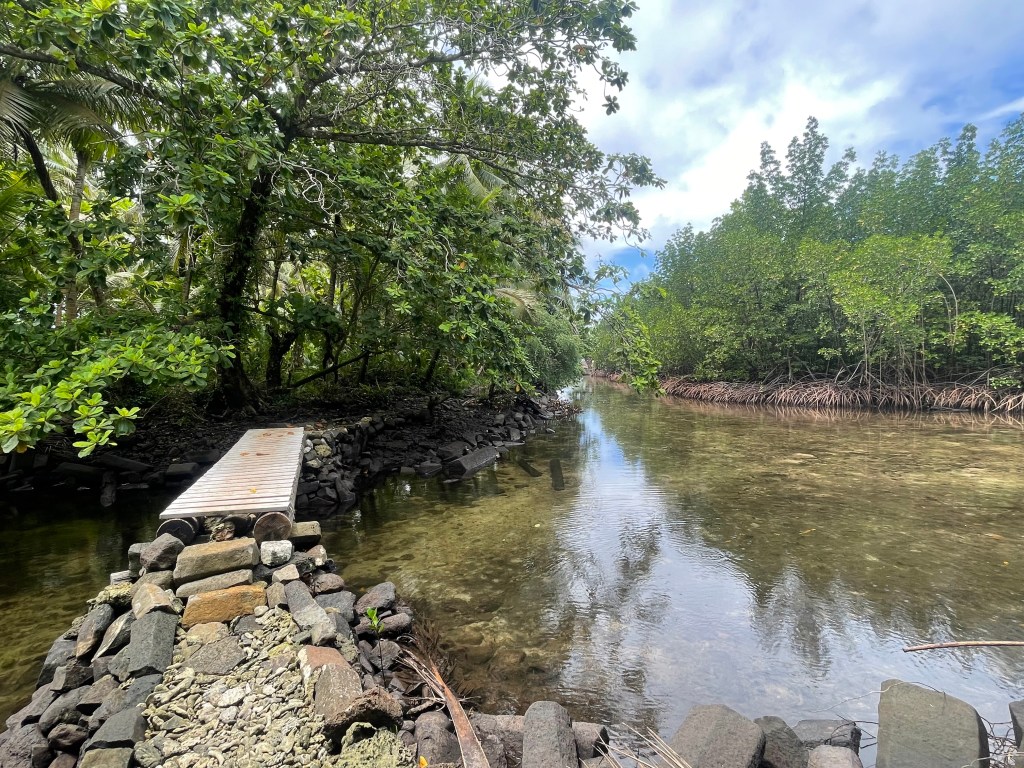
This is the path in, through many of the older, smaller sites. The bridges were built by the park service to allow foot traffic into the main temple complex. We did not find any other bridges anywhere else after the main trail in.
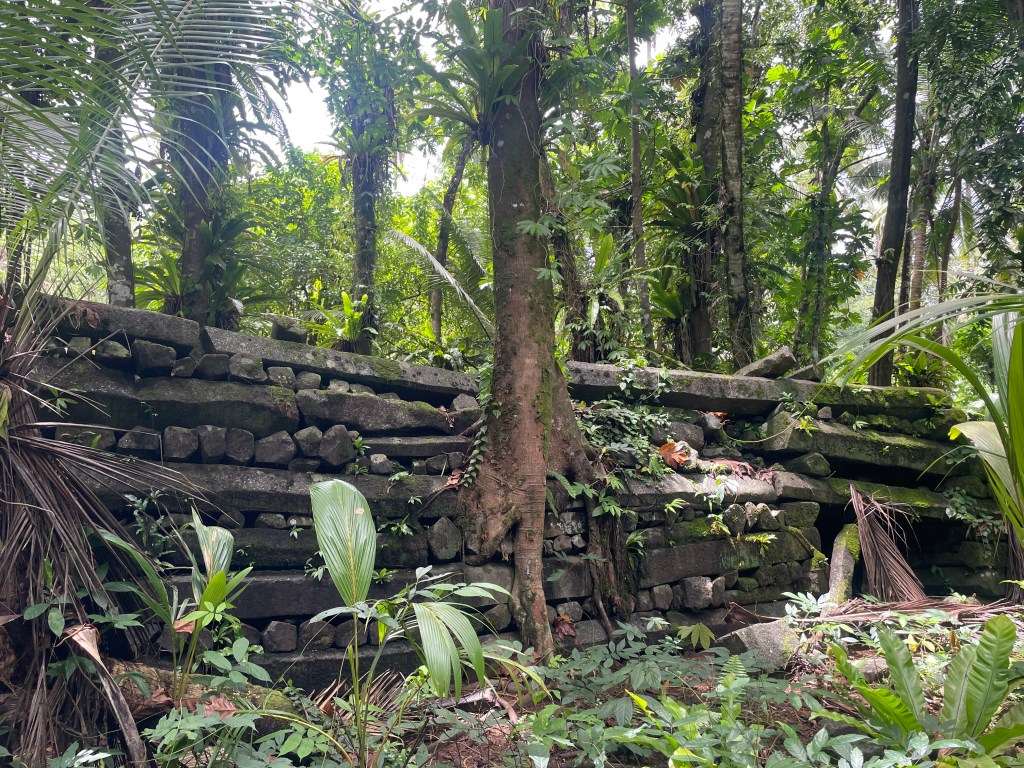
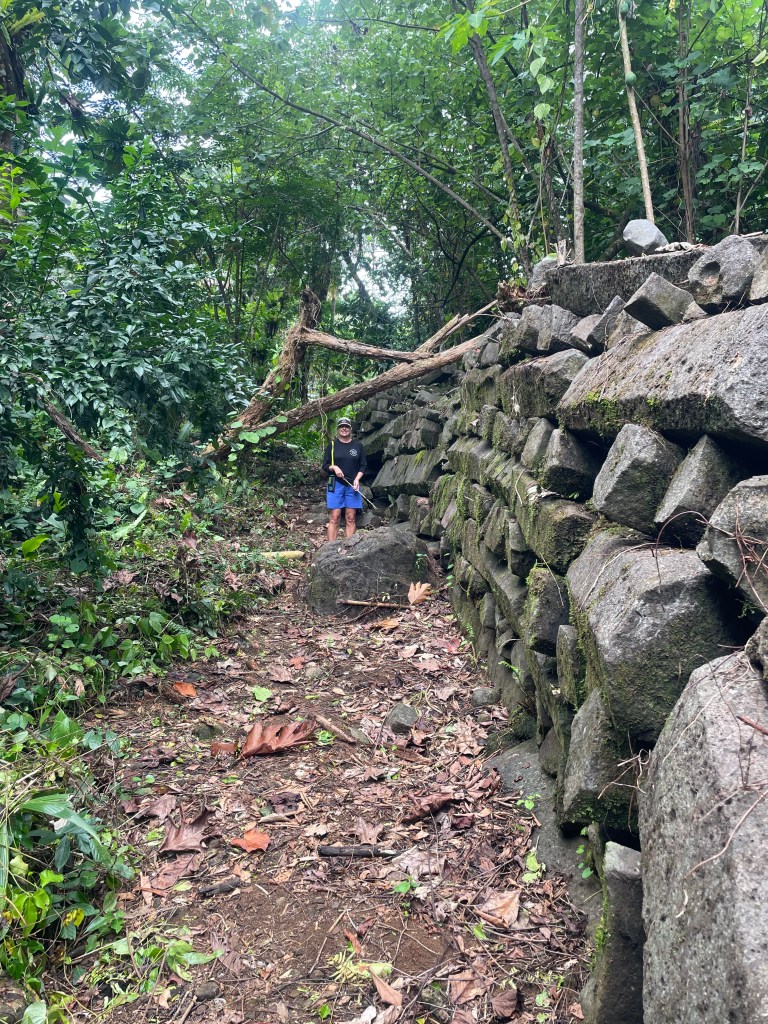
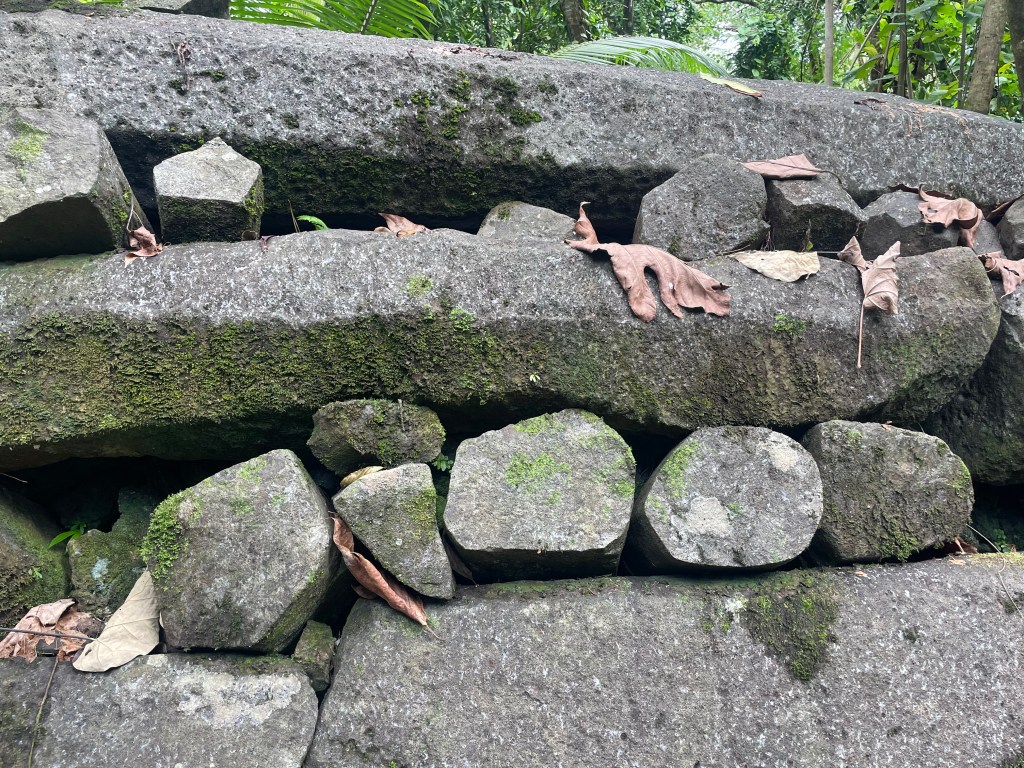
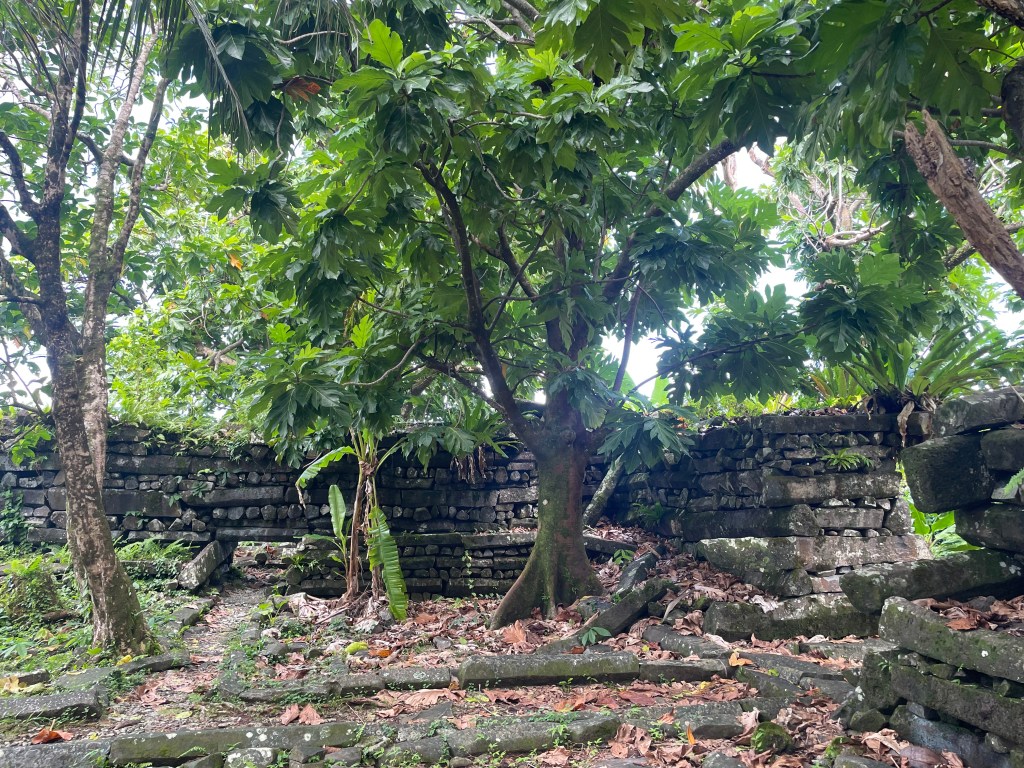
The path into the site is the first introduction to the walls of the old complex. The stones are massive – some as heavy as fifty tons. They are all stacked log cabin-style to create these thick walls. In some spots you can see where they used coral, from huge boulders to little fist-sized chockstones to seal and fill in spaces in the walls. The foundations are also man-made, with coral, and have not sunk appreciably in the nine hundred years since the place was built.
Walking in, the paths take you through low scrubby trees and dense jungle underbrush, and suddenly you find yourself in front of the main temple complex. The walls are twenty-five to thirty feet tall, and ten to twelve feet thick. Some of the stones are massive. There are still many questions as to how this site was actually built, considering it was built primarily from the 1100’s to the 1400’s. Overall, 750,000 metric tons of rock were moved and erected over four hundred years. They do know that the stones were quarried from almost thirty miles away, and, they think, ferried to the site on rafts. There still lies the problem of how they lifted them into place. Many Pohnpeians simply agree that it was magic; that the two sorcerer brothers that are credited with building the place used a combination of magic and the assistance of a magic dragon to lift and place all of the stones.
I like that theory the best.
The Brothers, Olisihpa and olosohpa, were part of the Saudeleur nobility, and believed to be sorcerers. The many temples and altars reflect the religious nature of the Saudeleur, but, unfortunately, they were generally cruel and not entirely nice to the Pohnpeians, so it was a happy ending for them when the demigod Isokelekel – son of the storm god Nahn Sapwe – defeated the Saudeleur in 1628. A period of calm persisted after the Saudeleur were defeated and removed, which was beneficial to the forming of the multiple-chieftain style arrangement they have now on the island of Pohnpei. Many Pohnpeians feel that Nan Madol is inhabited by evil spirits, or that it is a “sad” place, so, since the 1800’s it has been uninhabited.
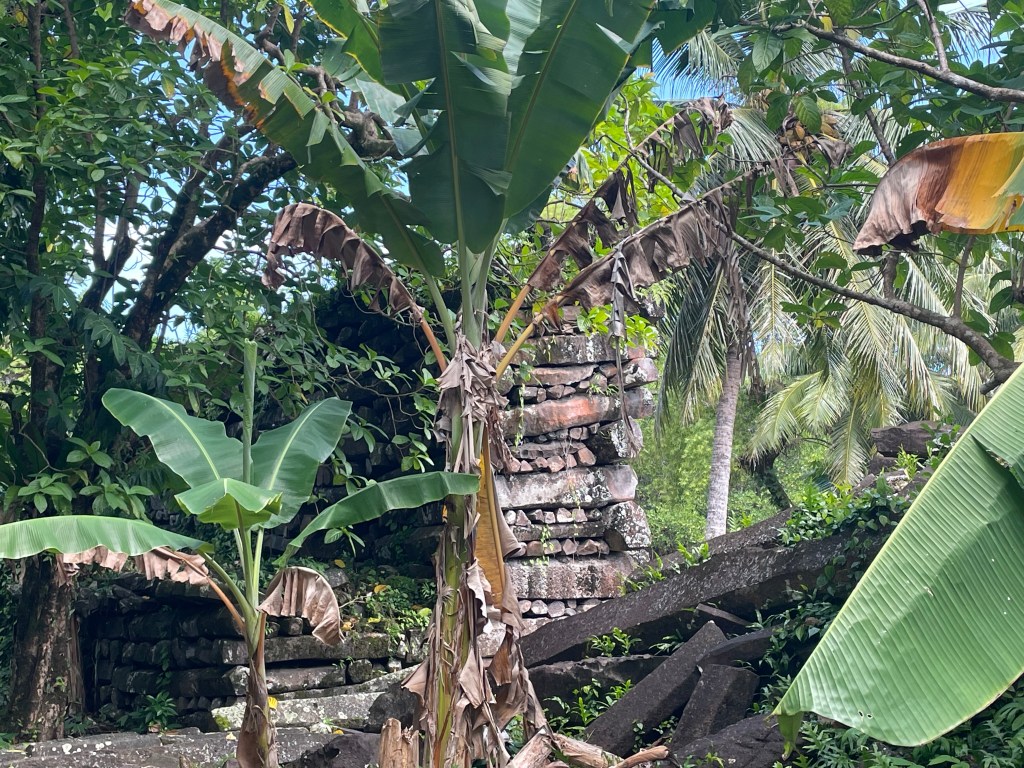
The foundations and the actual construction is so solid that it still stands much as it was in places. Some spots have been damaged by storms and high seas, but the main complex housing the tombs is largely intact.
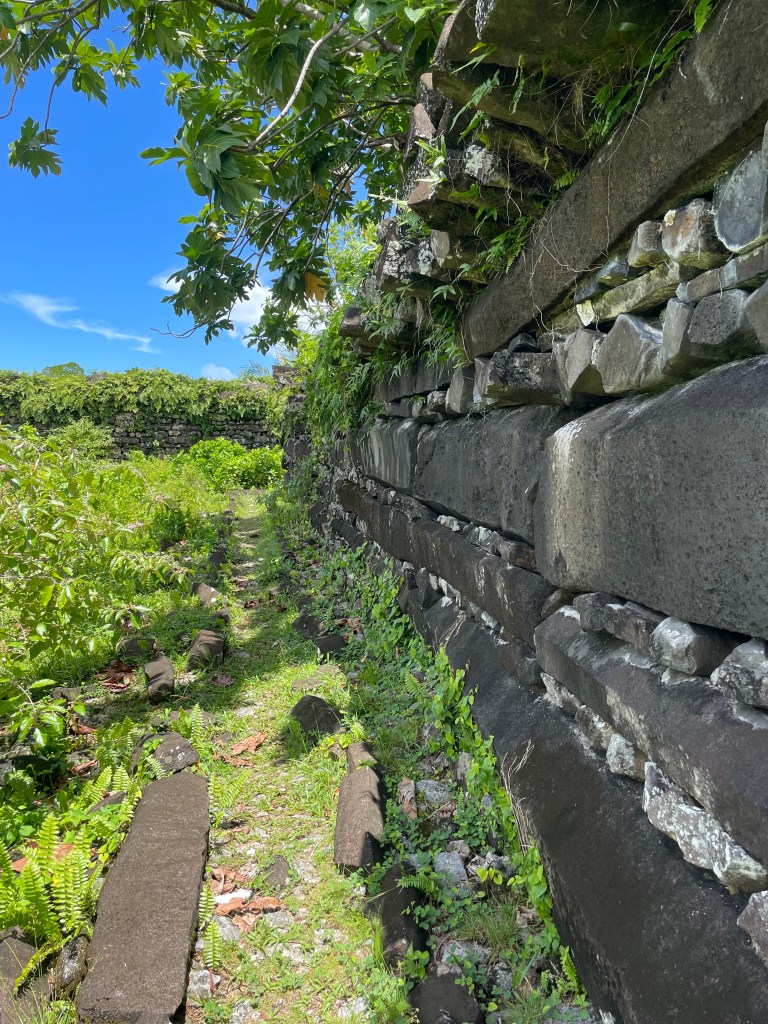
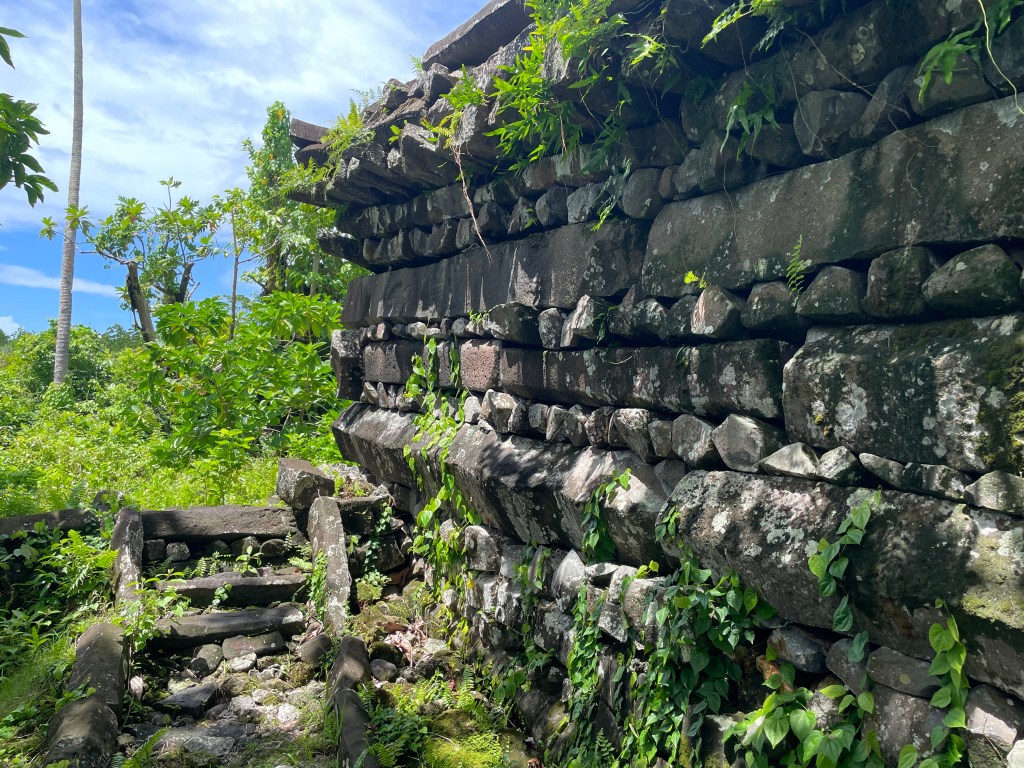
It is also very infrequently visited. We were the only people there the day we went. It is amazing to think of such a beautiful and thought-provoking place with such a rich history, that you can wander about on your own, without guides or other human beings for distraction.
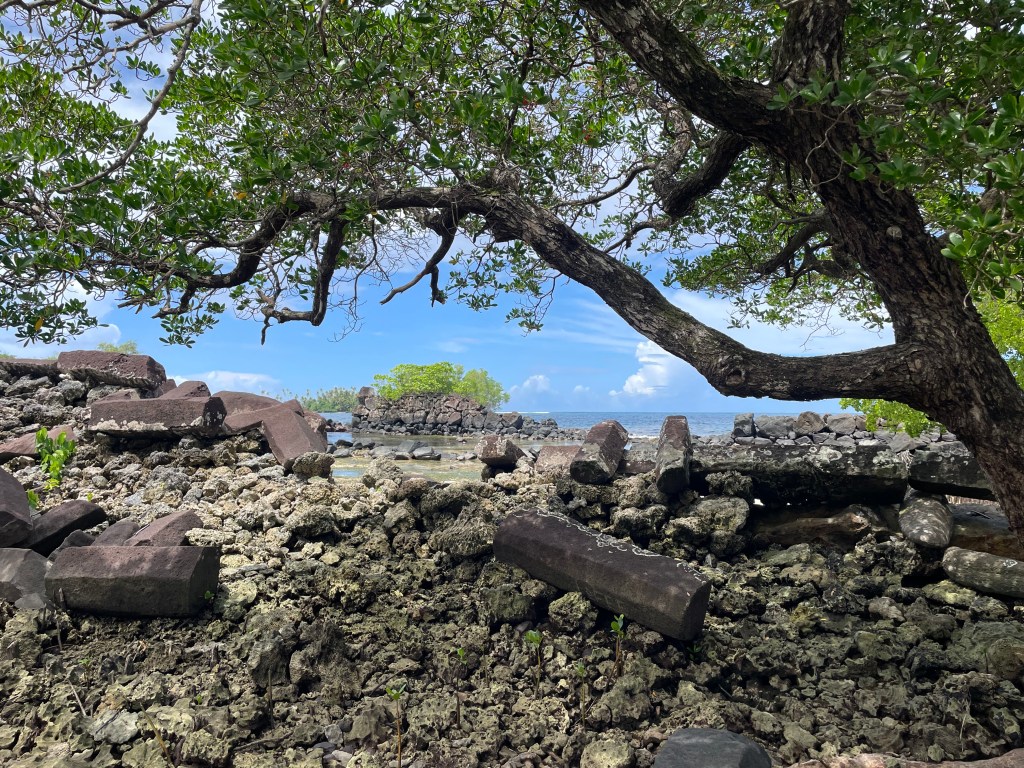
Some of the sites on the more exposed ocean side have taken a bit of a beating, but the peaceful solitude out there is breathtaking.
Inside the walls of the main complex, where the tomb of the kings was built, is an oasis of peace.
The video earlier in this post shows the point of view of crossing a waterway and entering this tomb complex. Somehow the walls separate the outside world so completely from the peace within. The bird song and the light breeze… it seems it would be a pleasant place to be laid down for eternity.
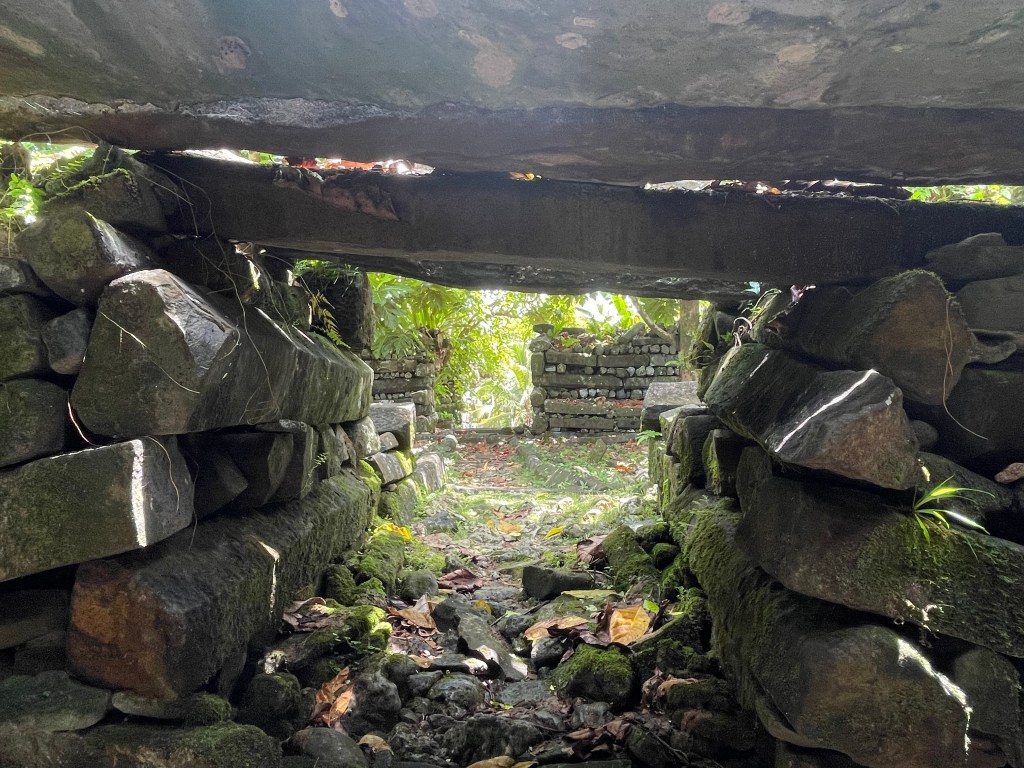
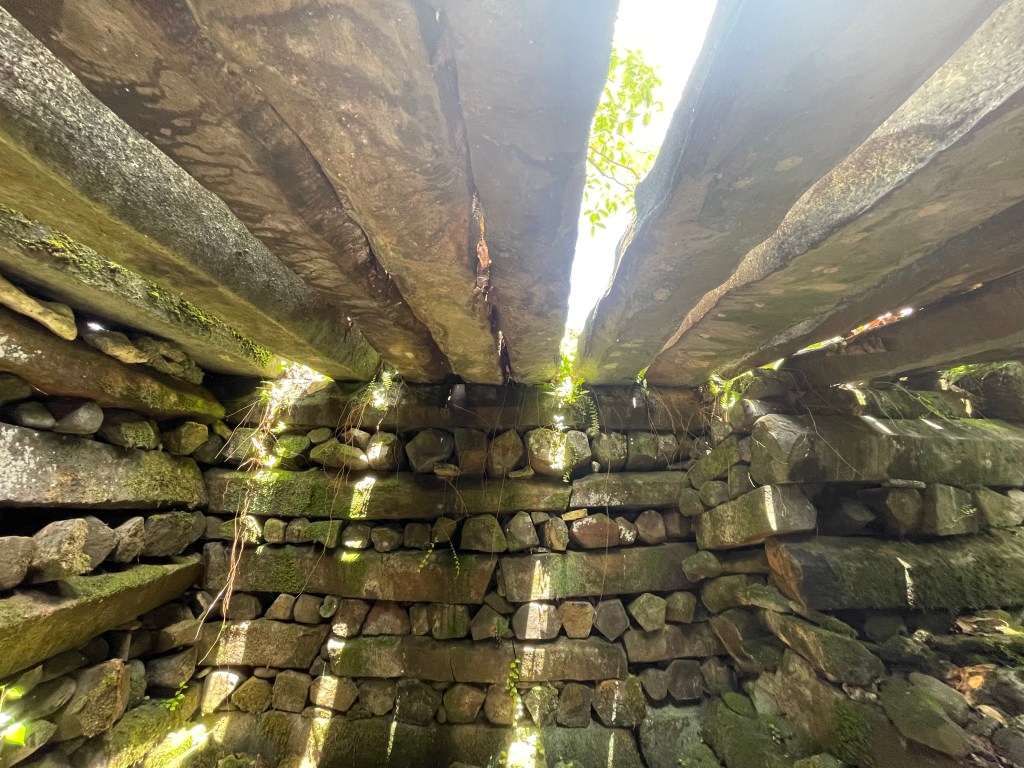
This was one of only two spots we found that had the original roof stones intact over the structure (the other was impossible to get into). This was the tomb where the kings were buried, within the peaceful main complex. It is always hard to see the scale of these things, but the lengths of natural columnar basalt were about twenty feet in length, not that big in diameter, and still intact, spanning the entire distance of the tomb.
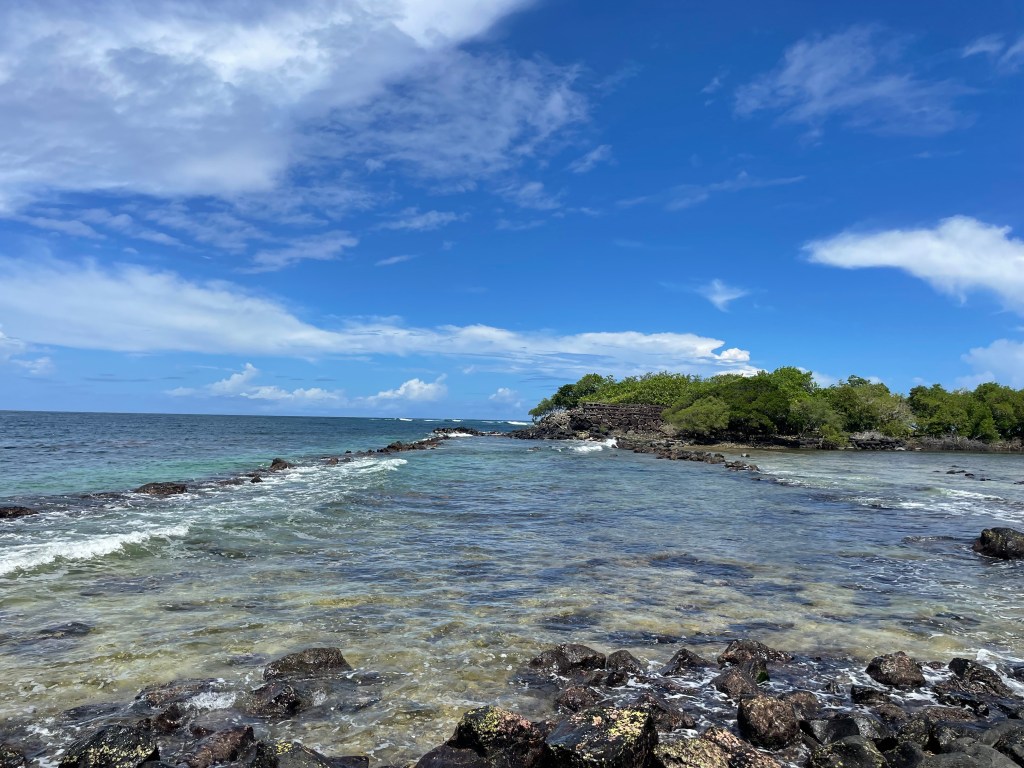
These wild places are my favorites. I feel like I can understand why they chose this place. It is very energetic, and feels like there may actually be a magic dragon in the next temple complex across the reef.
We looked out there, but we didn’t find him.
We did find these guys, though. They are considered sacred, and are fed and protected by the locals. They take care of the sacred pools that they live in, and you can buy canned mackerel and feed them (and pet them, as Tam was trying to do here). The legend of the freshwater eels is pretty cool, and I had several conversations with locals about them. I found this rough outline of the legend online, and have no idea how to credit it, but it is fairly close to the local’s description of the legend (there are many variations of this).
- A stone that hatched a freshwater eel at Pahnkipar was kept by a couple who raised the creature.
- The eel grew and became malevolent, so the couple killed and ate it, but the eel’s spirit attacked them again.
- The couple fled into the forest, where the eel found and ate them.
- The eel then traveled into the Nanmeir Valley, met Kiroun Meir, and they became lovers.
- The eel gave birth to the matriarch of the Sounlipwentiak subclan and other children who founded the Lasiadohng and Lasiakotop subclans.
- After terrorizing the local inhabitants and causing a nearby area to become deserted, the eel died and its body formed the mountain called Dolen Nett.
The legend of other eels extends to Nan Madol as well, as there was a well at the center of one of the islands on the site that was used to feed a sacred saltwater eel named Nan Samol. In a yearly ceremony he was offered a cooked turtle, and if he came to the well and accepted the offering it was generally accepted that the god Nahnisohnsapw was accepting the rule of the Saudeleur nobles over the island.
They have even found tunnels under several of the islets on the Nan Madol site that may have been used for this purpose. I love these old stories.
Sometimes when you visit sites like this in the world you feel closer to the myths and legends, like the members of the pantheon are right there walking the pathways of those ancient sacred places with you.
Especially when there are no other humans around.

 Wind, Water, Waves, Wander
Hi Mike & Tam,
Still love reading your posts & seeing your photos & videos. Thanks muchly.
betsy
>
LikeLike
Aww, thank you Betsy! We are about to wrap up our time here on Kwajalein, so hoping to get in here and write a bit more again soon. Thank you so much for reading.
LikeLike