We made it to Quito!
We had a ten hour ride up from Ayampe, straight from sea-level to ten thousand feet. It took a couple of days to acclimate to the altitude (we have been at sea level for nearly a decade), but we are feeling better now. The headaches and mild nausea are gone.
The shortness of breath when walking up stairs or hills remains, though.
And Quito is all hills. And stairs.
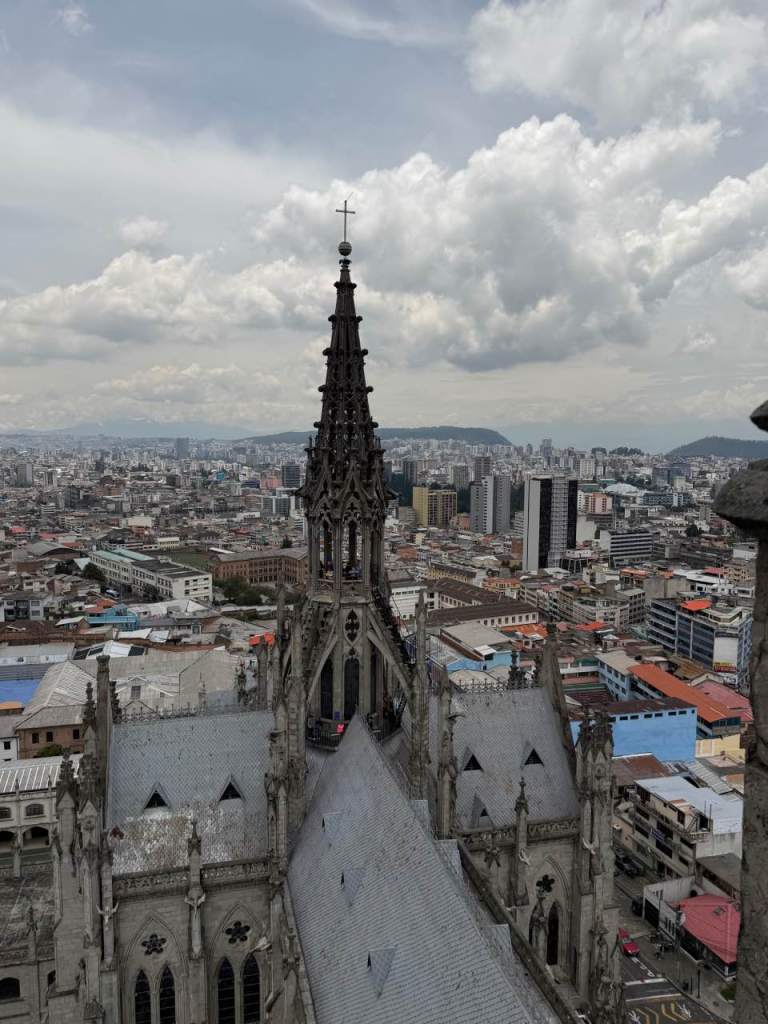
It turns out that Quito is huge! It is just over two million people in the city, and over three million in the surrounding area. It lays in a long Valley, surrounded on all sides by mountains from ten to eighteen thousand feet tall. The city lies sprawled out like snowfields of white among the verdant valleys and slopes of these ridges and peaks. It really is a beautiful place when viewed from the higher buildings in the Historic Center.
And the Historic Center itself is breathtaking. The city was founded in 1534, and the construction of the Basilica of San Francisco started in 1535.
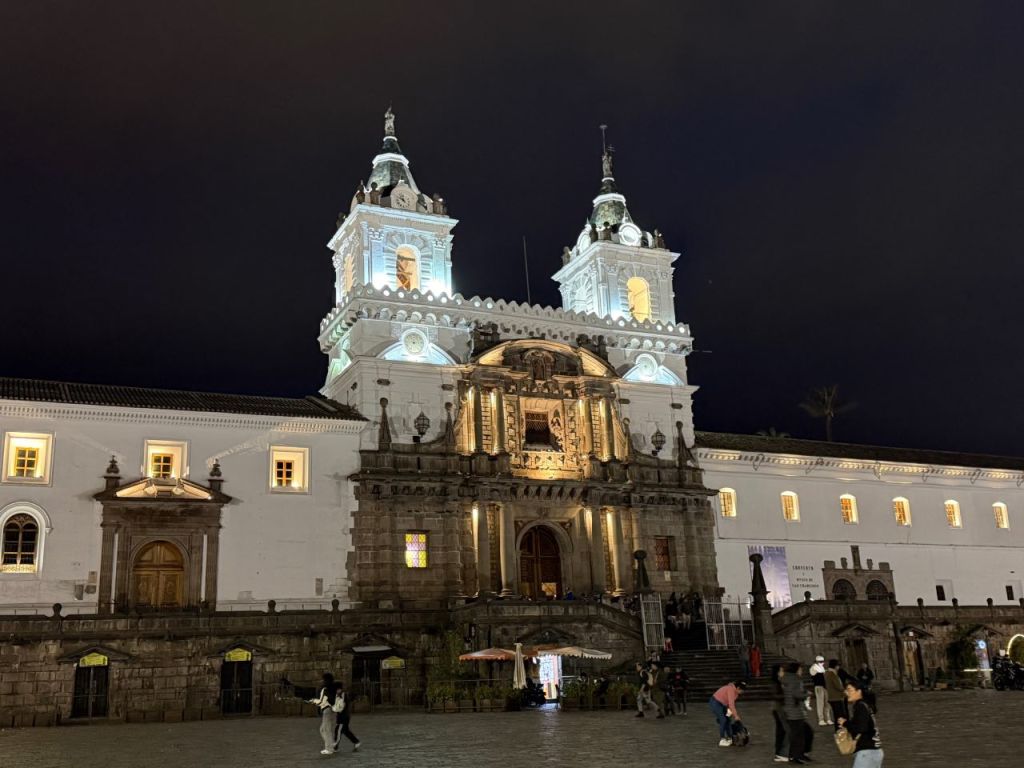
This is the entrance to the Basilica. It is absolutely massive, and gorgeous inside (sadly, we are not allowed to take pictures of the inside), and fronts the Square of San Francisco, a gathering spot for festivals, parades, and casual strolls with the family to feed the thousands of pigeons hanging out there. It houses hundreds of very revered and important pieces of art from Ecuador’s history. The church is built on top of the ruins of an Incan palace that was destroyed by the Incan General, Ruminahui, because he knew that they would be unable to protect it from the Spanish. The church was then built for the Spanish by Francisco Cantuna over the site, the Spanish having no real knowledge of what treasures were underneath their construction.
The legend of that construction is fantastic!
The responsibility of building the church became too great for Cantuna and he fell behind the six-month deadline given by the Spanish, so he made a deal to trade his soul to the devil to help him complete it on time. It was completed before midnight of the final day by the devil’s army of winged demons. The legend goes on to say that when the devil came to collect his soul, Francisco hid the final stone of the construction, and so tricked the devil by claiming the project was unfinished. As the project was never “completed”, he was able to retain his soul.
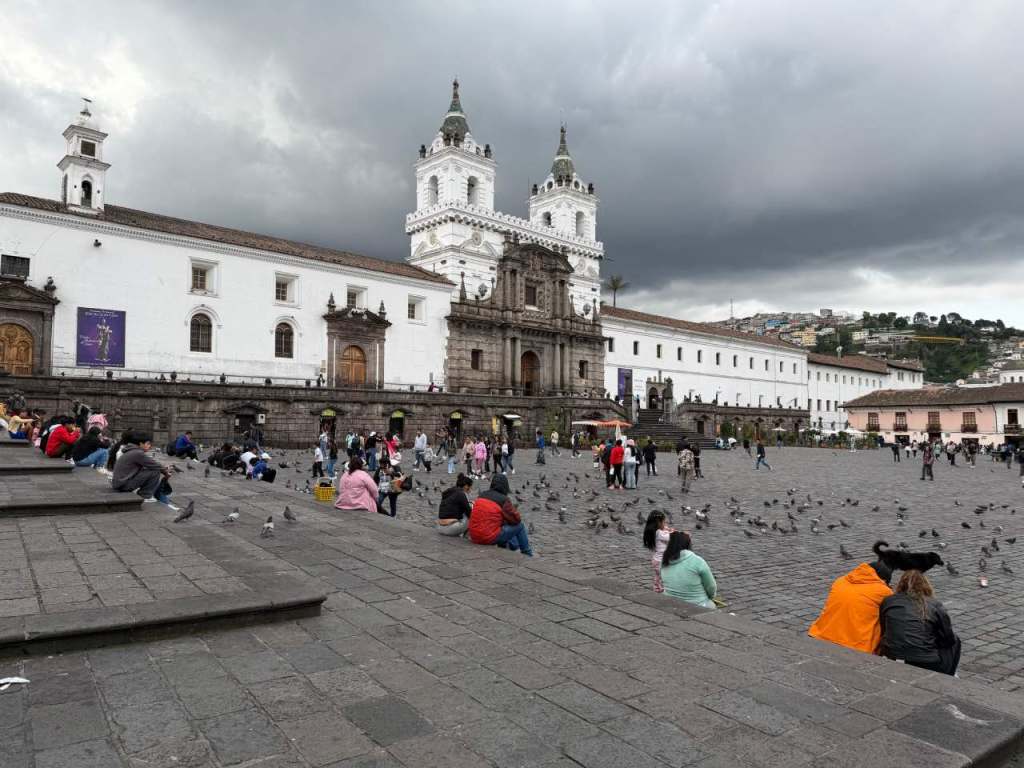
The original Incan catacombs still exist beneath the open square. I hope to do that tour soon.
Our hotel, The Hotel Portal De Cantuna, named after the builder, was a convent that was built next to the church to house the nuns and servants. It is over three hundred years old, creaky, and furnished with all of the original artwork and furniture. The first owner hung his military sword on the wall, and it remains to this day. The rooms are unchanged from as originally built, with the family quarters, kitchen, and dining room at the top floor and the servants quarters below (we are staying on the servant’s floor). The woman that owns the hotel currently is the ex-wife of one of the original family that were the multi-generational owners after it was no longer used as a convent.
We talked for an hour about the history.
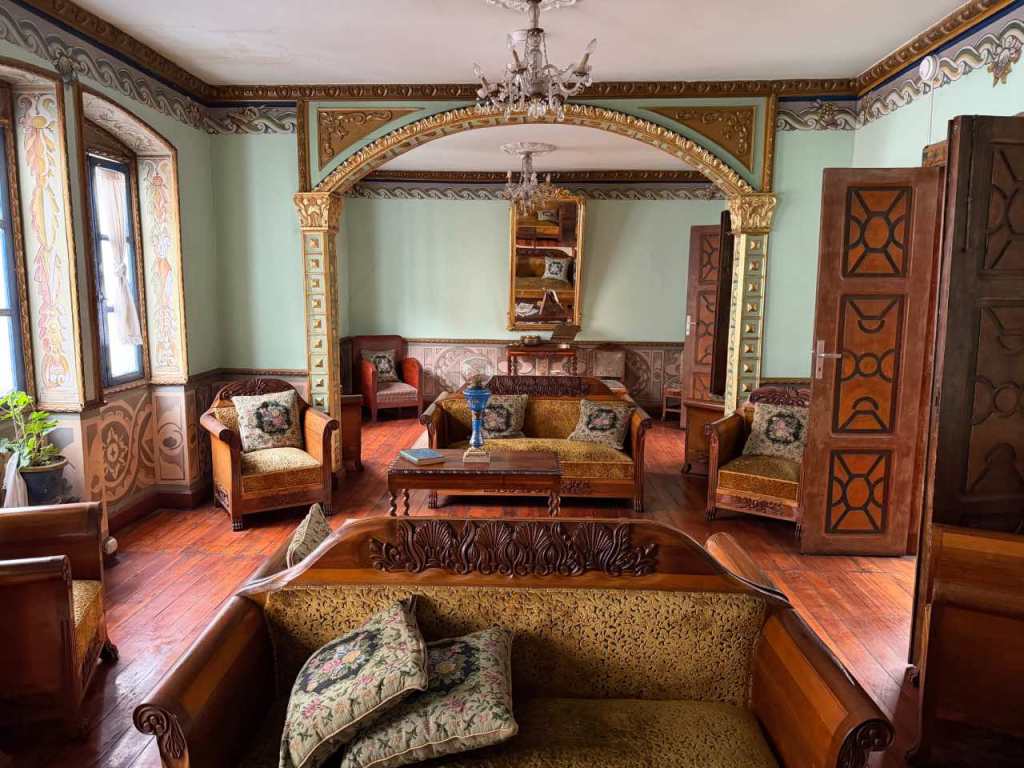
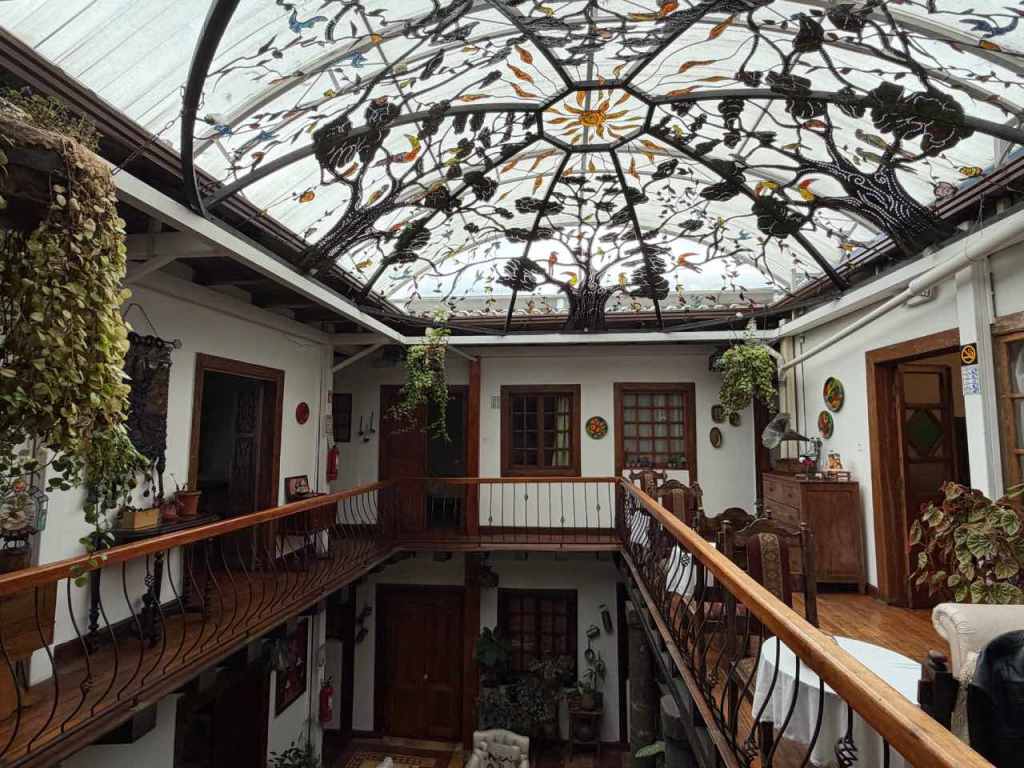
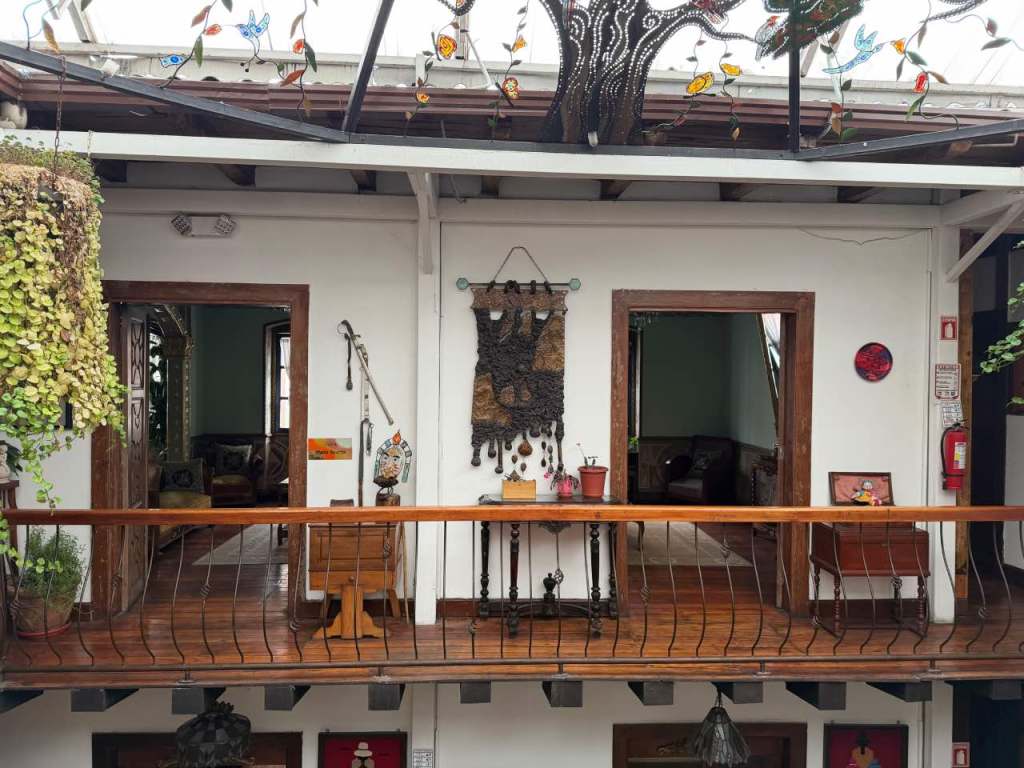
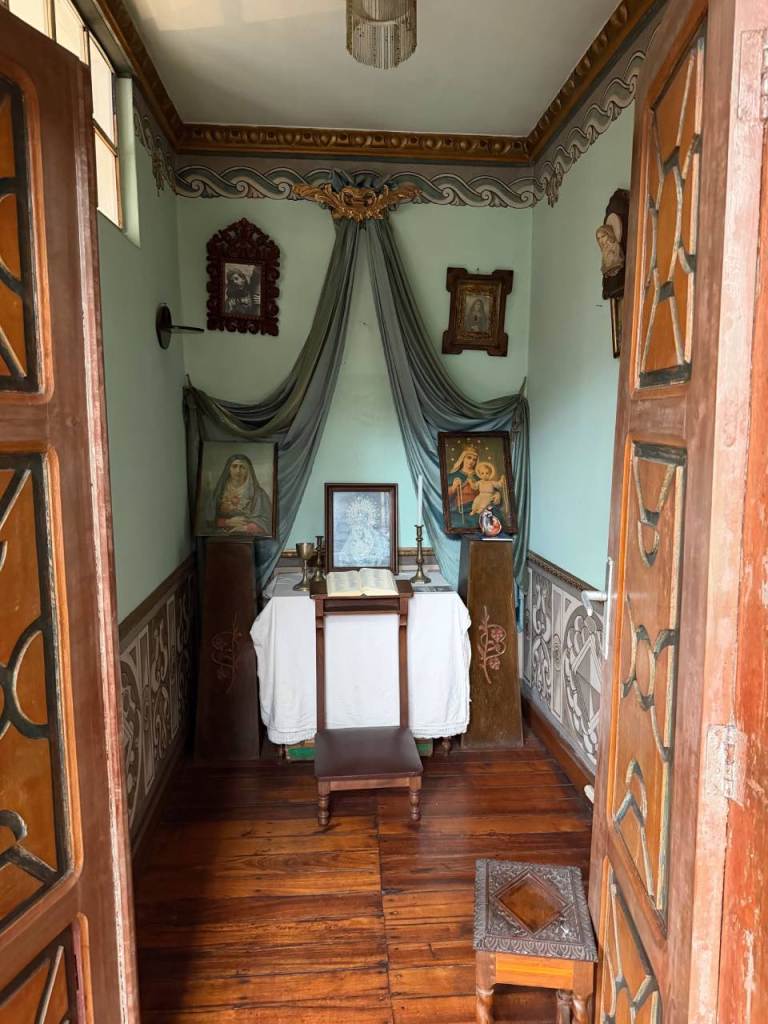
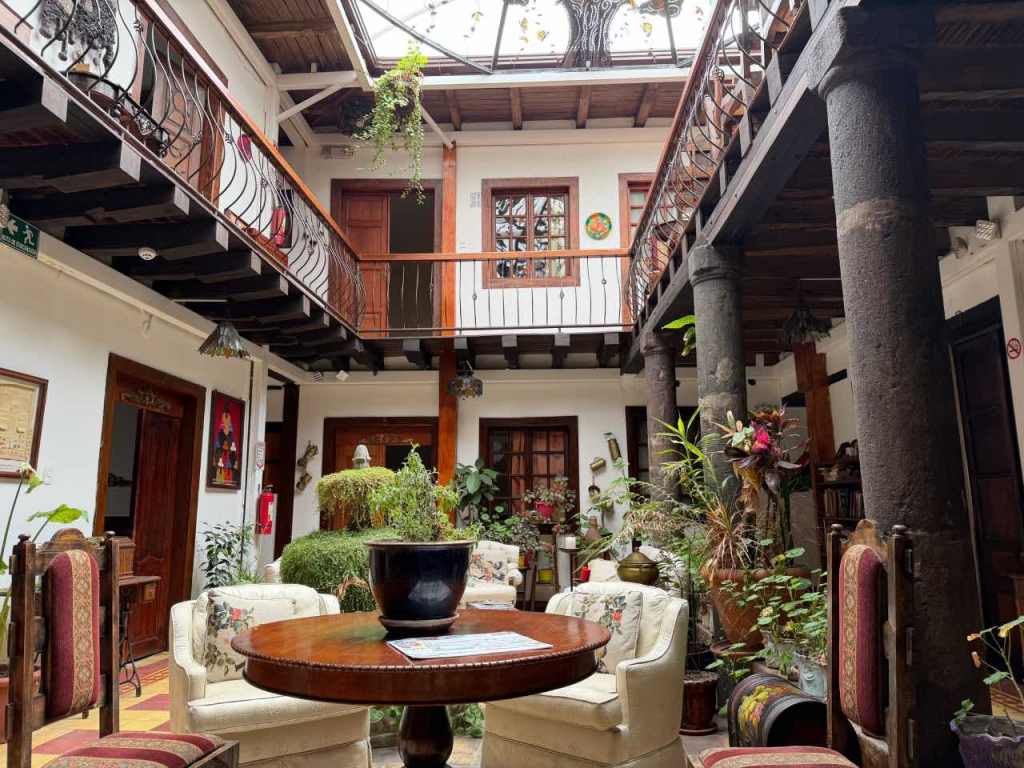
The Hotel Portal De Cantuna.
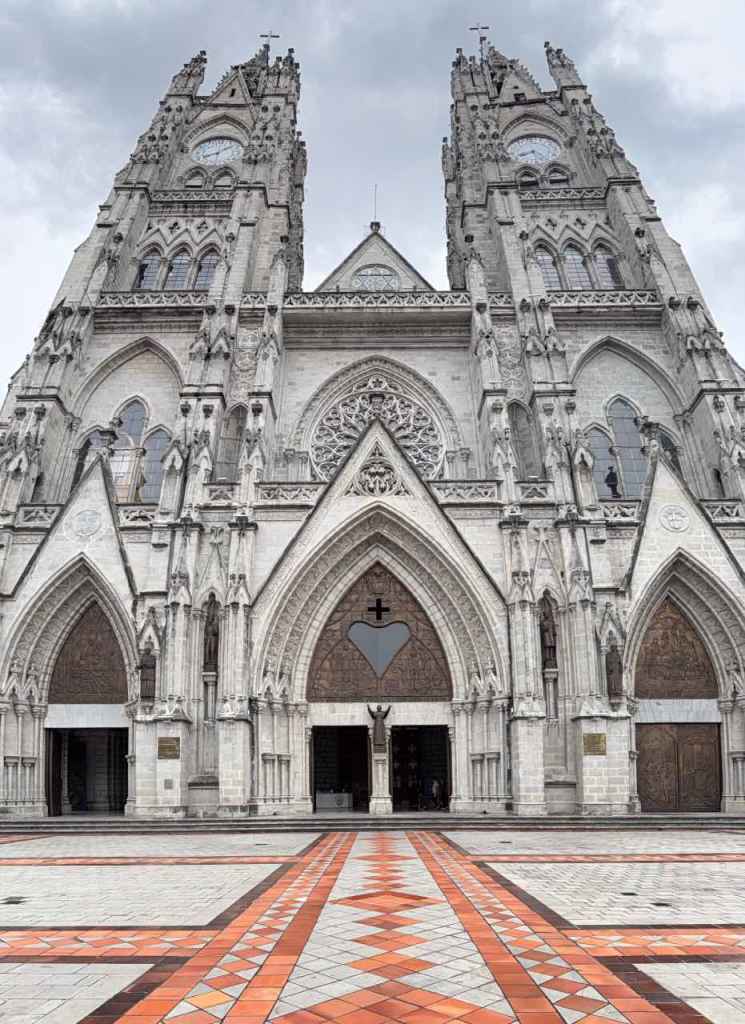
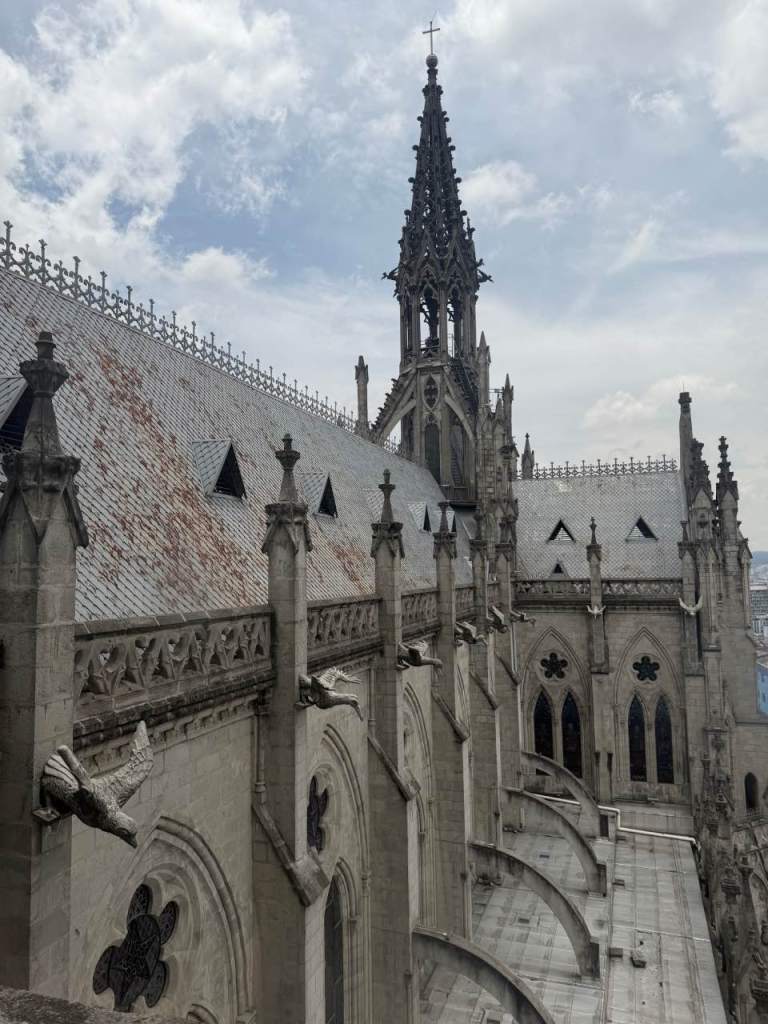
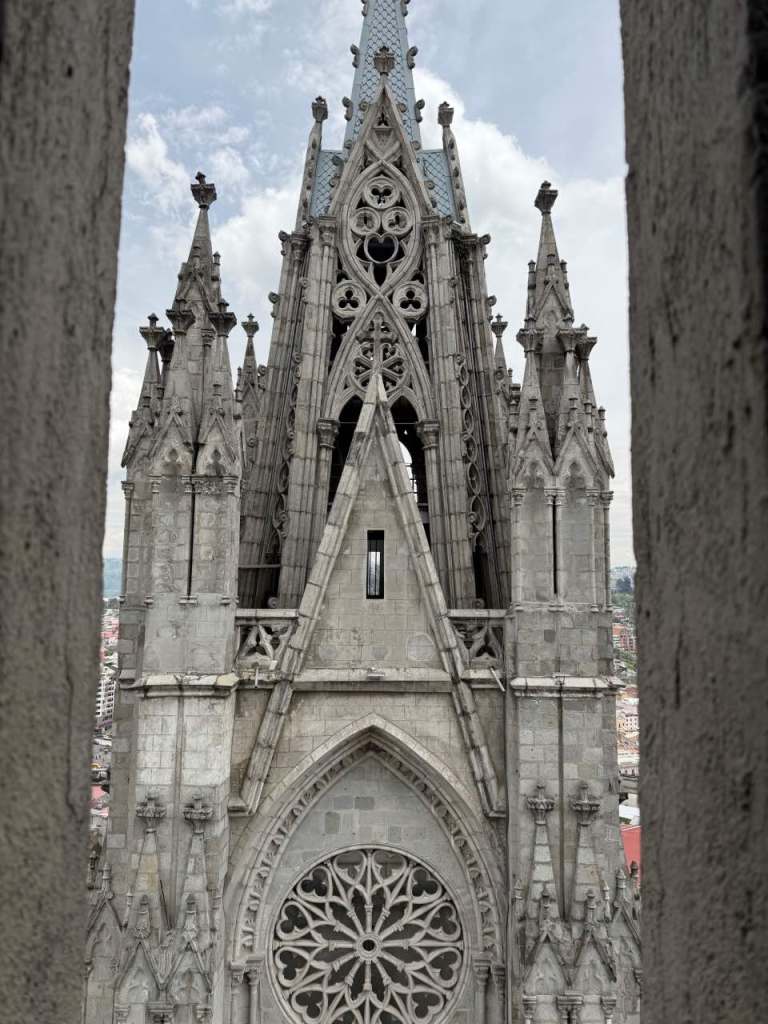
We visited the Basilica del Voto Nacional, and climbed stairs, hundreds of stairs, to explore the towers and rooms of this unbelievable structure. It sits about three or four hundred feet above the historic center, and, even though it is quite a bit newer than the Basilica San Francisco, it has it’s own crazy story…
It was started in 1883 by Father Julio Matovelle, and was blessed by pope John Paul in 1985. Strangely, though, it is incomplete. There is a local legend that claims that when the basilica is finished, the world will end.
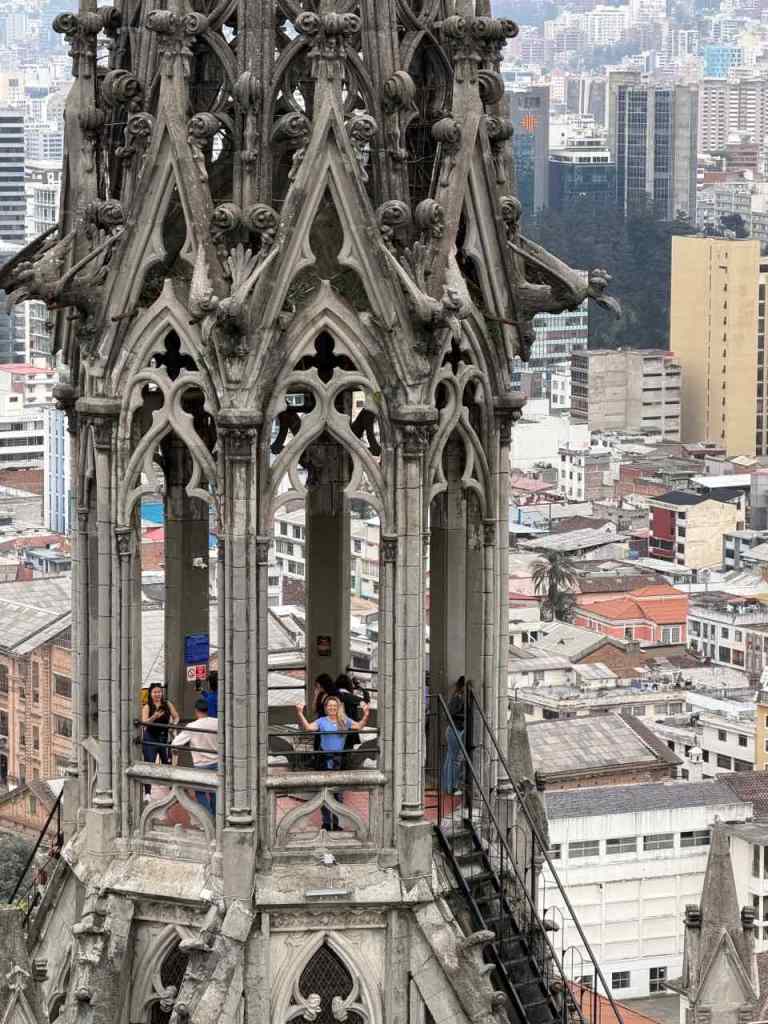
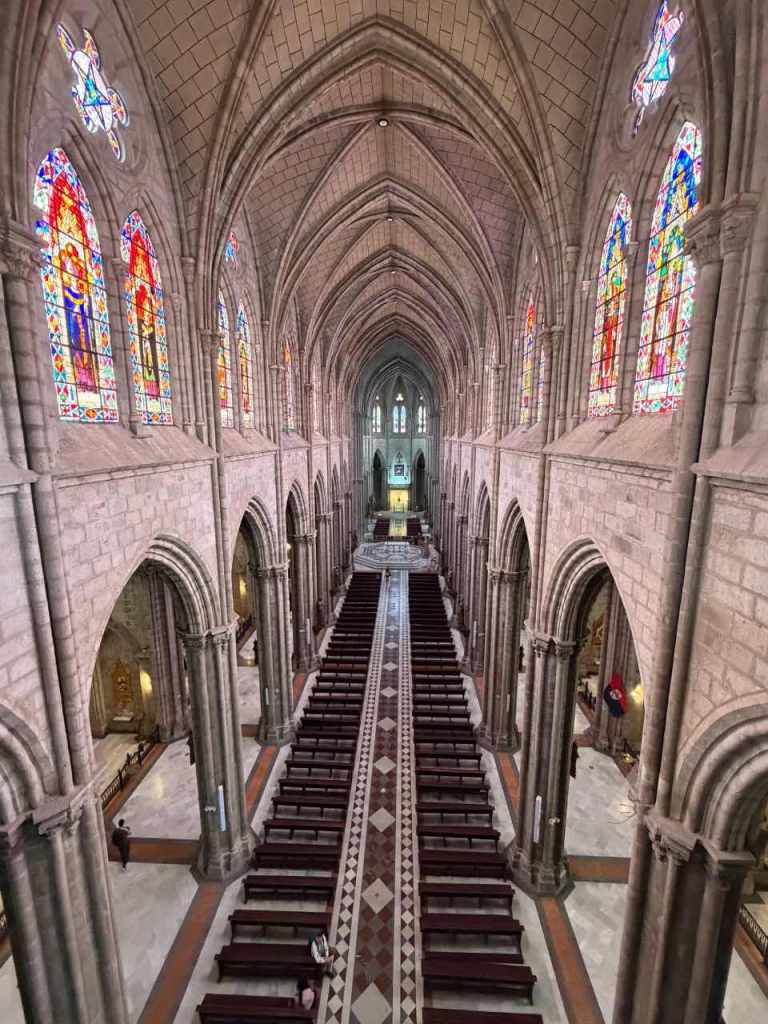
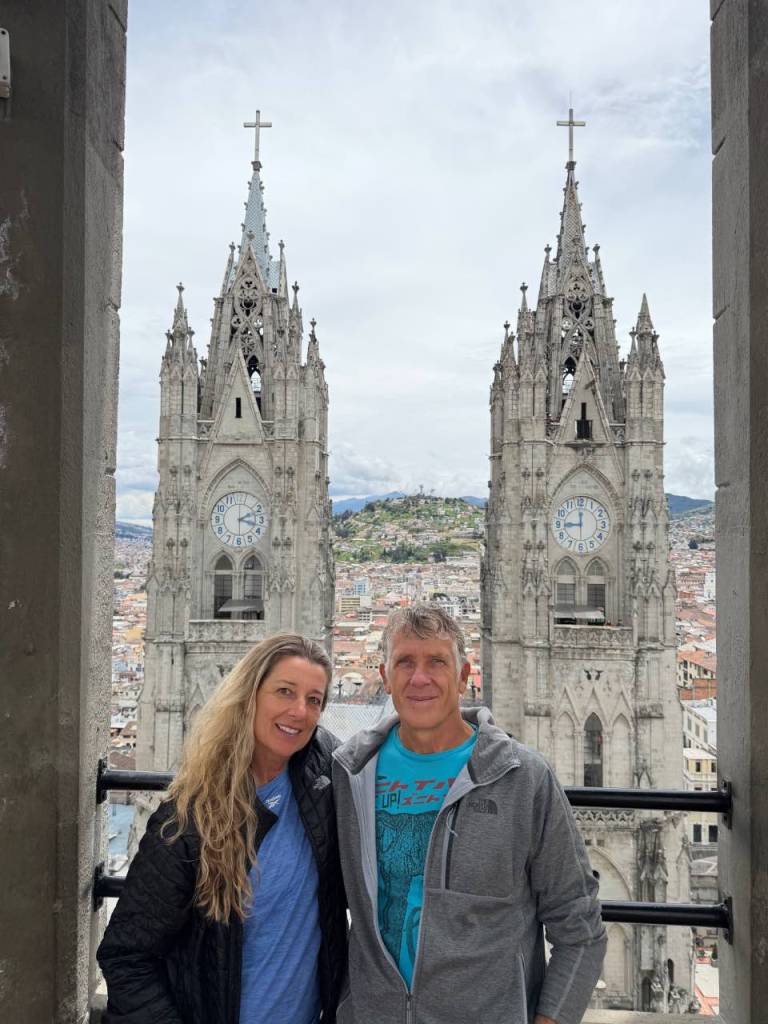
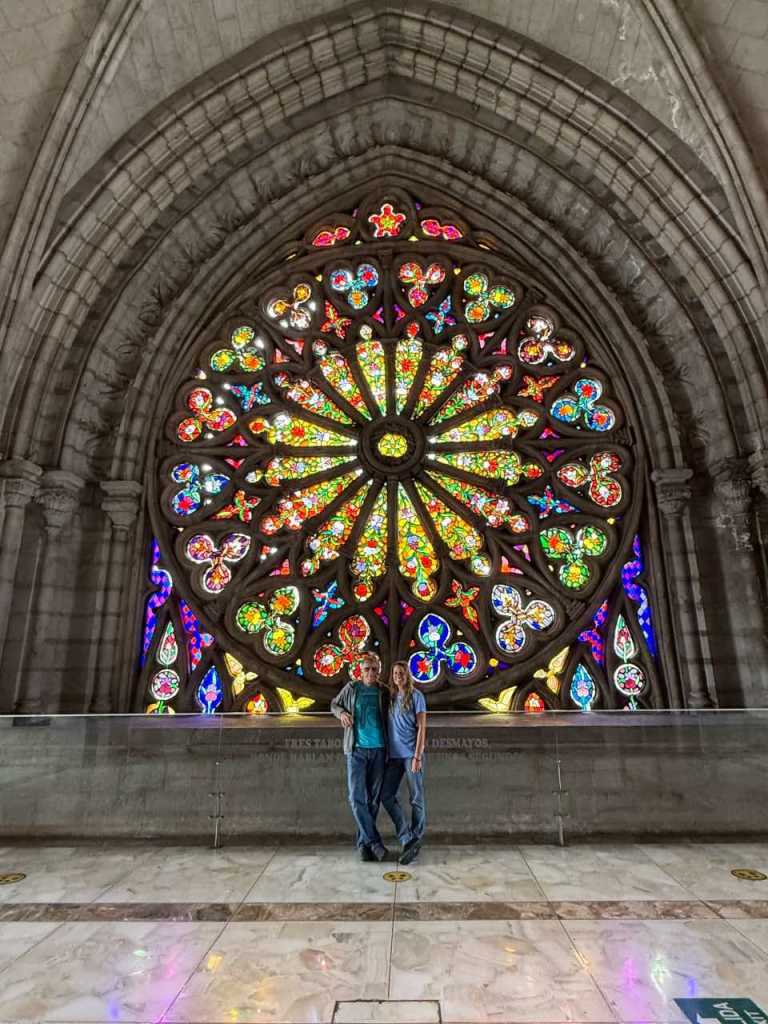
Lets hope that the construction continues at a snails pace on this one and nobody makes a deal with the devil to finish it up quickly.
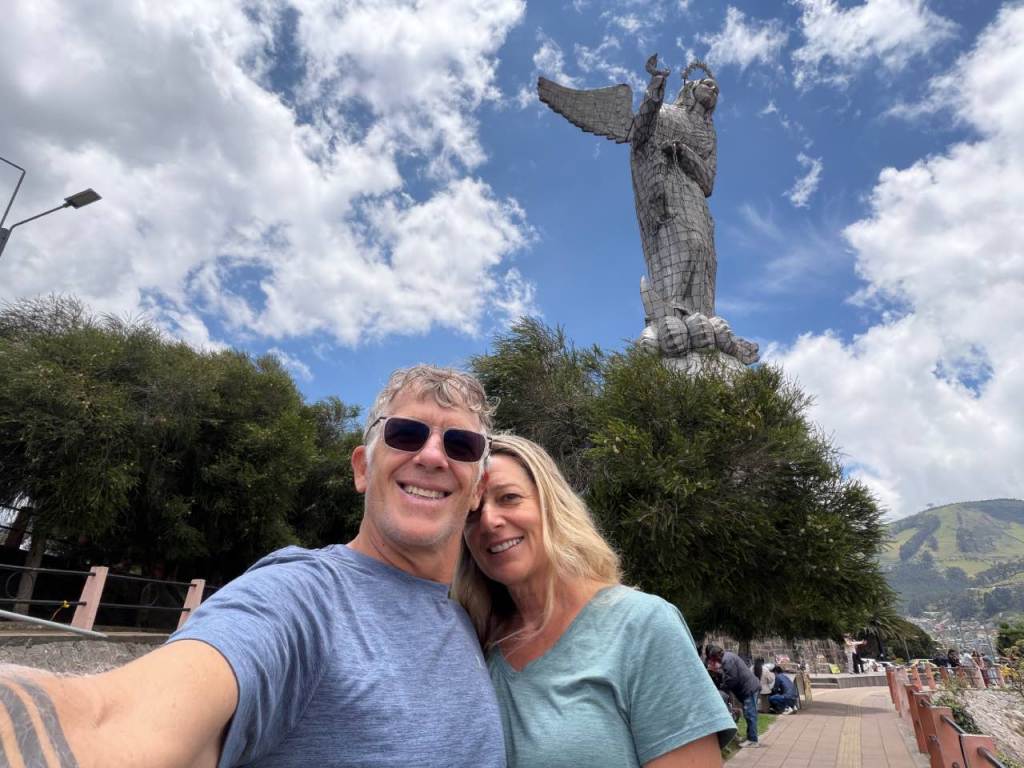
We also took a nice walk up seven hundred feet onto a hill in the center of Quito that overlooks the historic district. The statue, The Virgin of Panecilla, is visible from almost any of the streets in the historic center, and stands out prominently at night. The statue is a 153 foot tall replica of Bernardo de Legarda’s four-foot-tall wooden carving of the “Virgin of Quito” from 1734, and was completed in 1975.
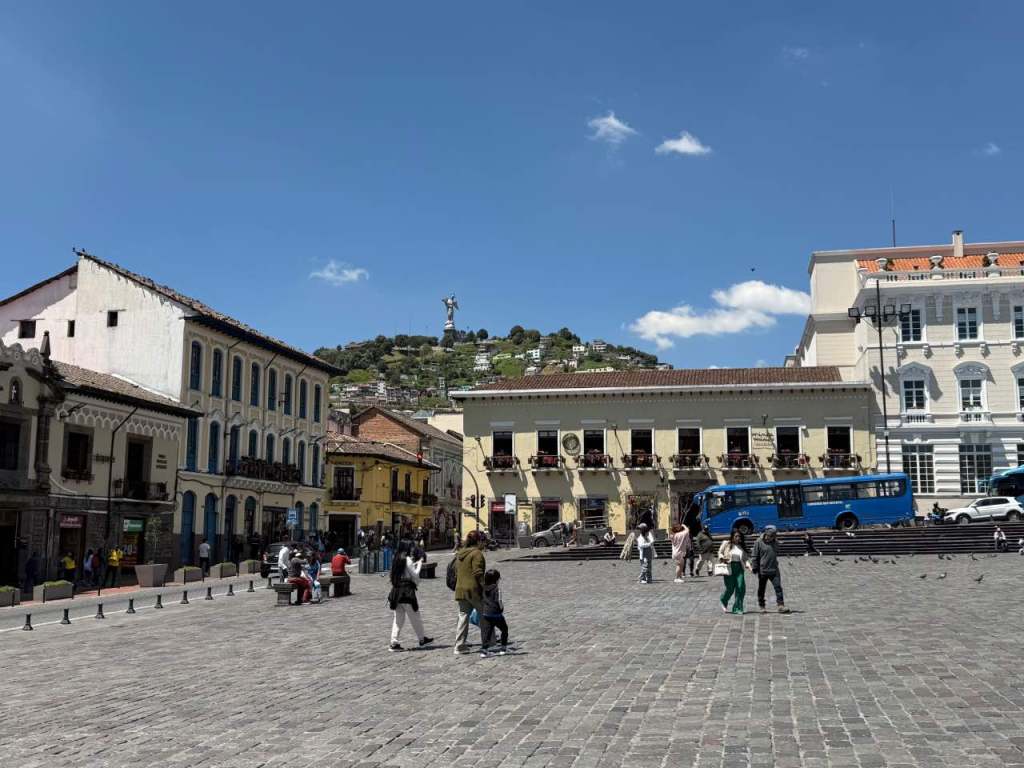
There she is, looking over the historic center of Quito.
She stands taller than the “Christ the Redeemer” statue in Brazil (maybe some competition going on there?).
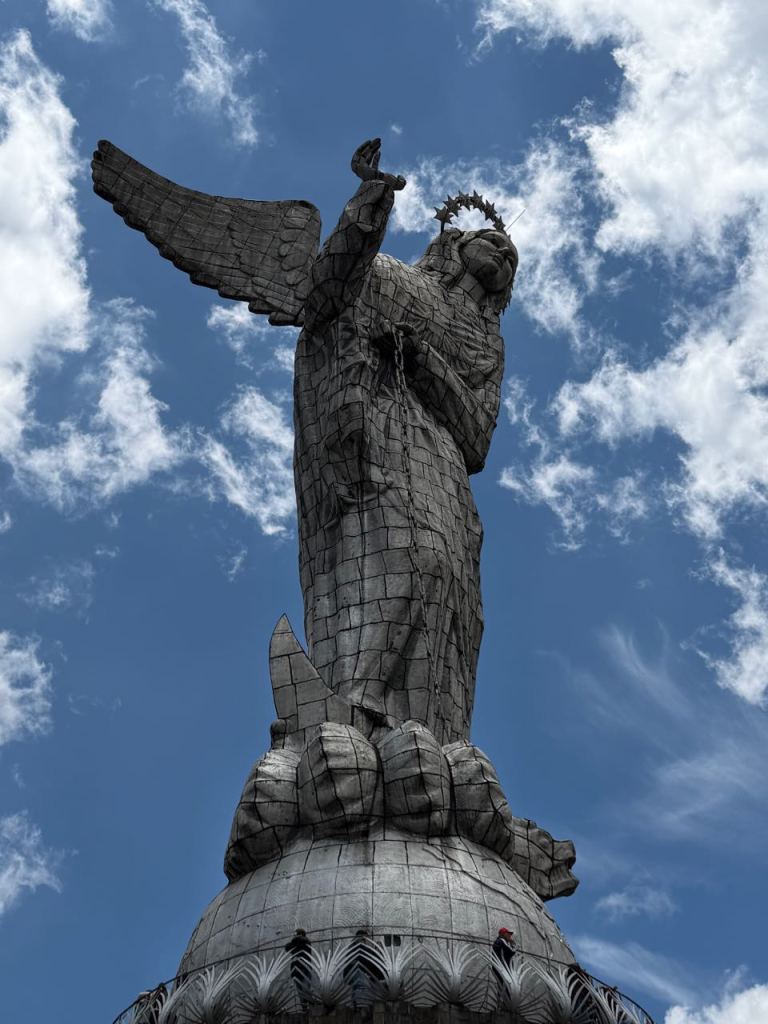
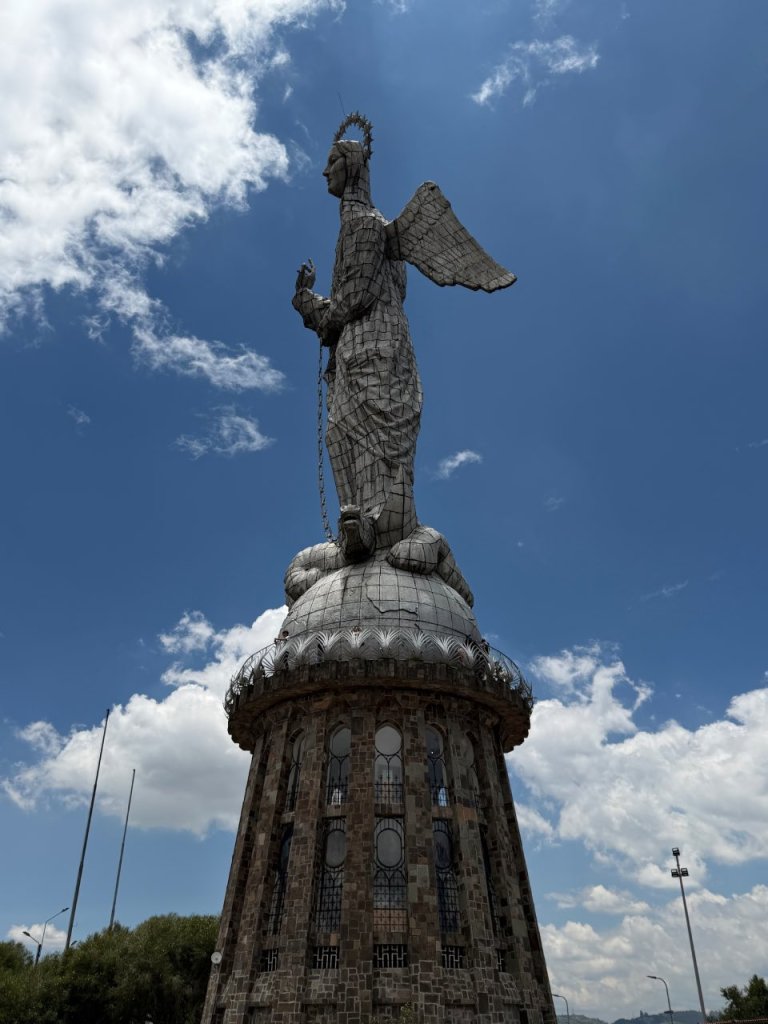
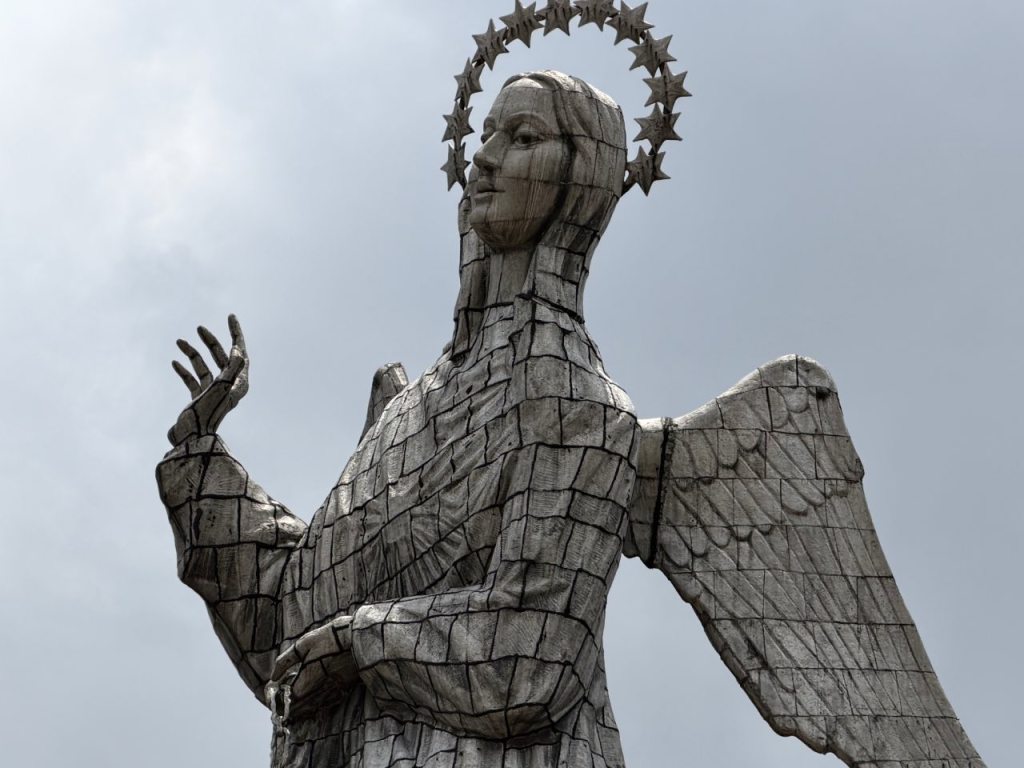
She was designed and built in Spain, by Agustín de la Herrán Matorras. It is made of 7,400 separate pieces of aluminum, which were all numbered, then it was disassembled, shipped to Quito, and reassembled on the hill of El Panecillo.
It was a rough walk at this altitude, but worth every minute,,,
She is beautiful.
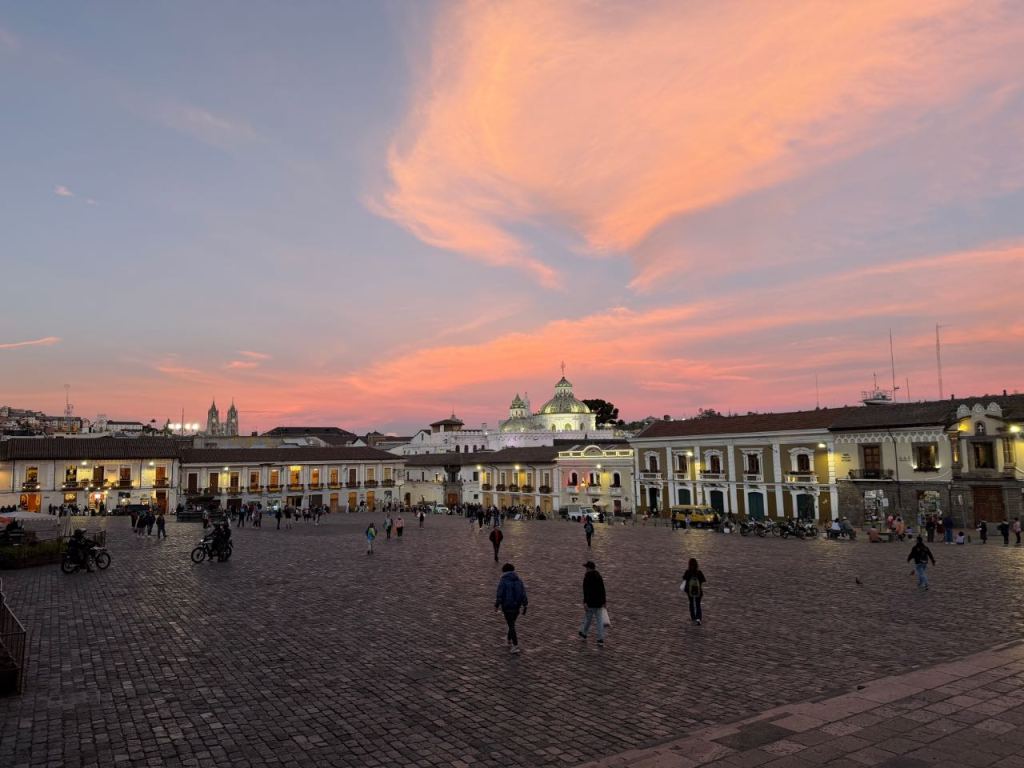
I have kind of fallen in love a bit with Quito. It is a city populated by the friendliest people, and filled with art and history and spectacular architecture. I have really come to appreciate the Ecuadorians for their warm, genuine smiles and willingness to chat with a stranger, or to help out as needed. They really are a beautiful people living in a beautiful country.
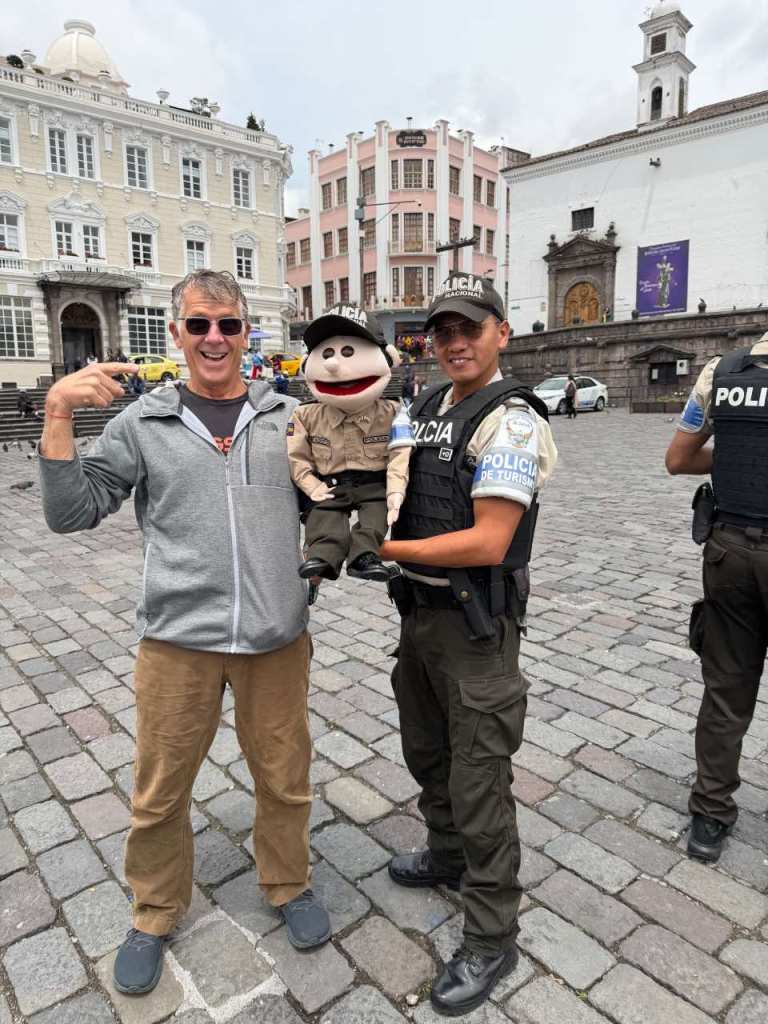
They have the most relaxed and fun attitude towards life. They do not seem particularly stressed about much, and they are always down for a good laugh and some harmless, lighthearted fun.
Even the police. We see them doing silly things, like dancing in groups in the city square, and walking about with puppets.
I just wish they would turn up the heat here in Quito a bit. It is freezing!

 Wind, Water, Waves, Wander