This is going to be a long one… Sorry!
We left Munich scorching in it’s eighty-seven degree heatwave (the Germans don’t do well with that type of heat and get very stern and very grumpy), and flew to Ireland for a comfortable eighty degrees and sunshine. The Irish folks assured us of two things:
1.) they loved the sunshine.
and, 2.) actually, they were all miserable, because it is a “heavy” heat in Ireland.
We loved it.
It felt right at home to us from our tropical travels, and we had been freezing back home in Oregon for two weeks.
It was only going to last for three or four days, though. We were reassured that Ireland would certainly return to its misty, rainy self soon (it did).
After we landed, we rented a car (of course the insurance was more than they claimed, and the policy that we bought would not “actually” cover us, and we had to pay at least twice as much for the proper coverage, and blah, blah, blah, etc, etc, etc…) and, anyway, we rented a car and drove South towards the seaside of County Cork.
It was gorgeous.
It took no time at all, and just one time of turning into head-on traffic on the wrong side of the street, to get used to driving on the left side again.
The roads are in perfect shape, neat and tidy as a pin, but, holy shit, they are narrow. We were laughing because the speed limit on all the incapacious strips of asphalt they call country roads is 80 KPH (50 MPH), but dropped to 50 KPH every time the roads become just about wide enough for two sub-compact cars (which then feels like a four-lane freeway after those much more narrow “roads”). We always knew the road was about to get frighteningly narrower any time the speed limit went up to 80 KPH again.
Those country roads (bike paths) winding between the old rock walls and hedgerows, and the oncoming trucks, tractors, and farm implements were clearly the primary cause of Tam’s white-knuckled style of passengering in our trusty little rental VW.
It certainly couldn’t have been my driving…
I loved every minute of it, possibly as a result of my experience with driving a tuk tuk in Sri Lanka.
After a couple days, she relaxed about riding in the car, and we started to enjoy the scenery.
A lot.
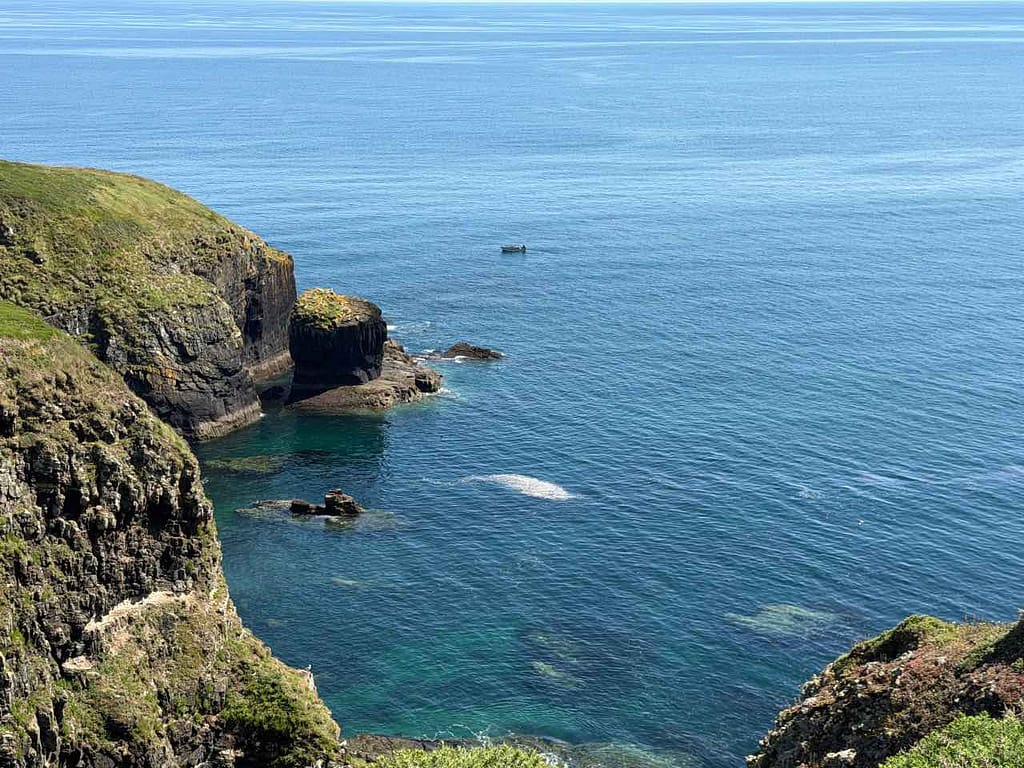
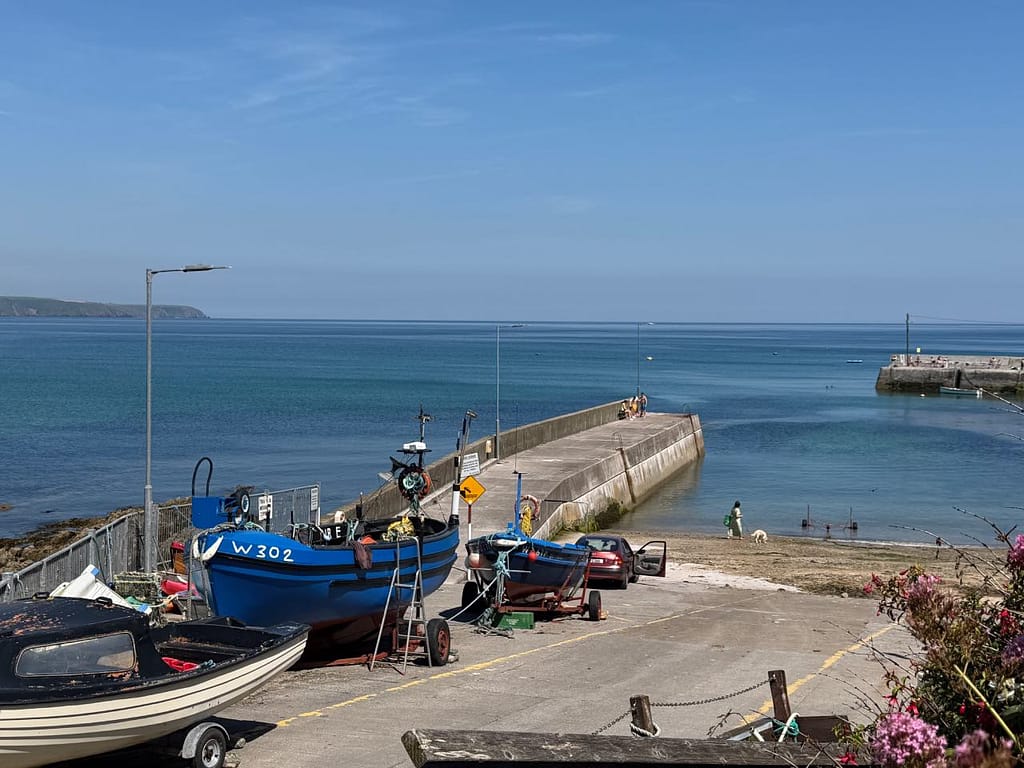
We drove down through County Waterford to the really pretty town of Ardmore. The surrounding area was exactly as we had hoped for our first view of the seaside landscape.
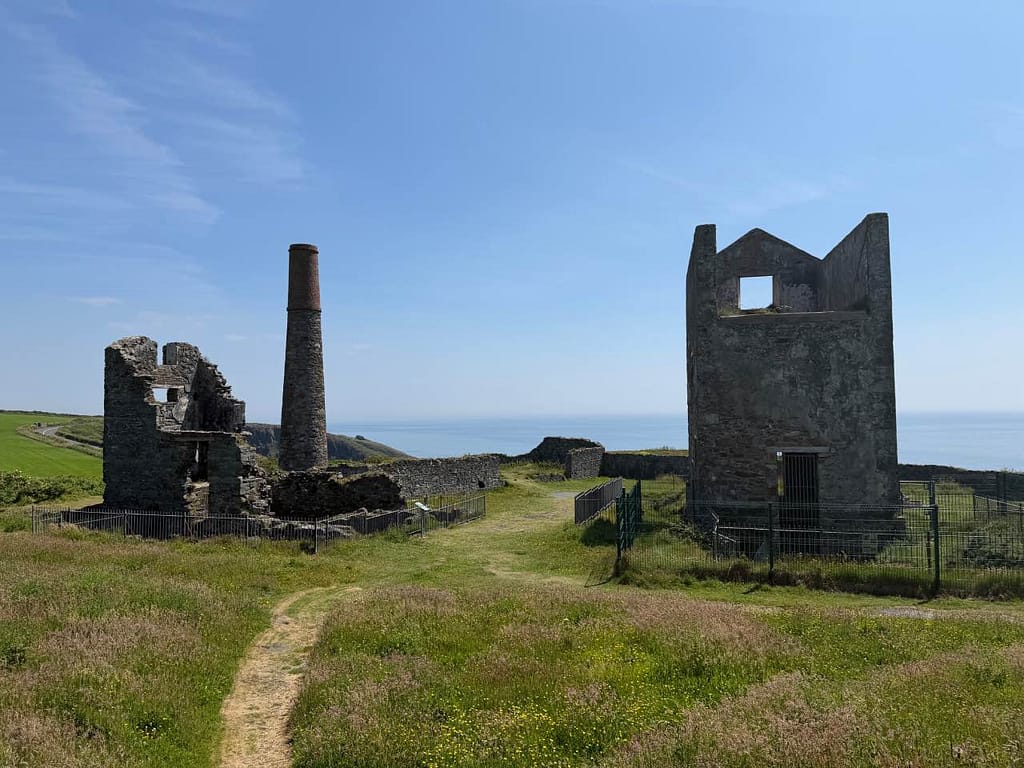
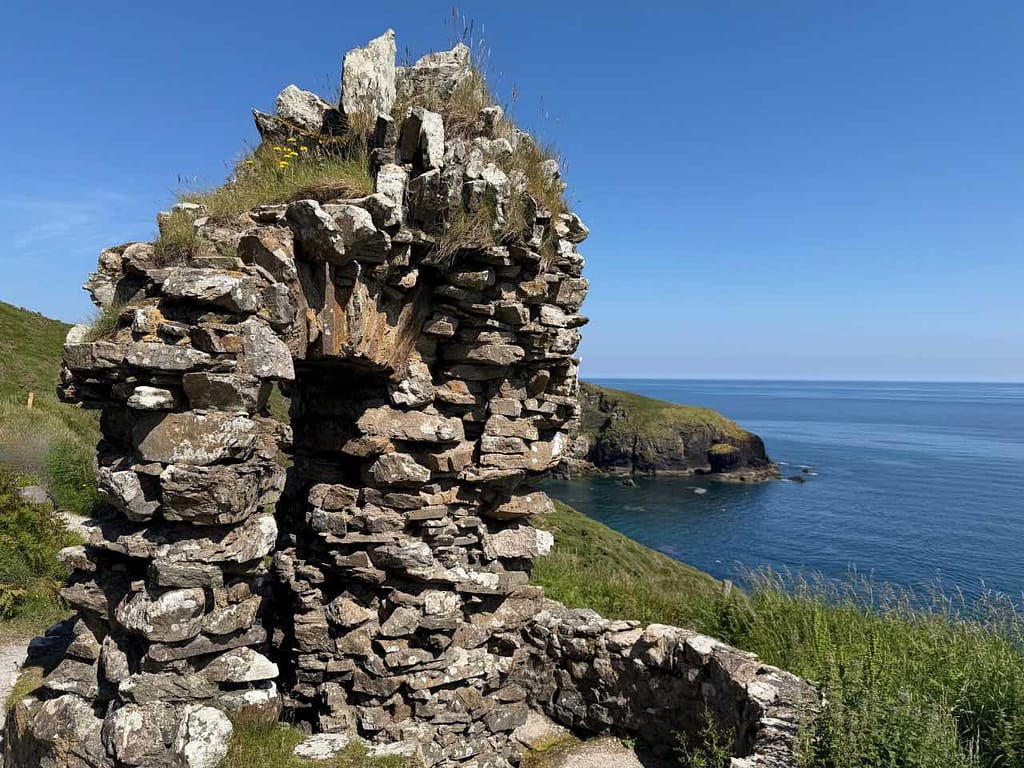
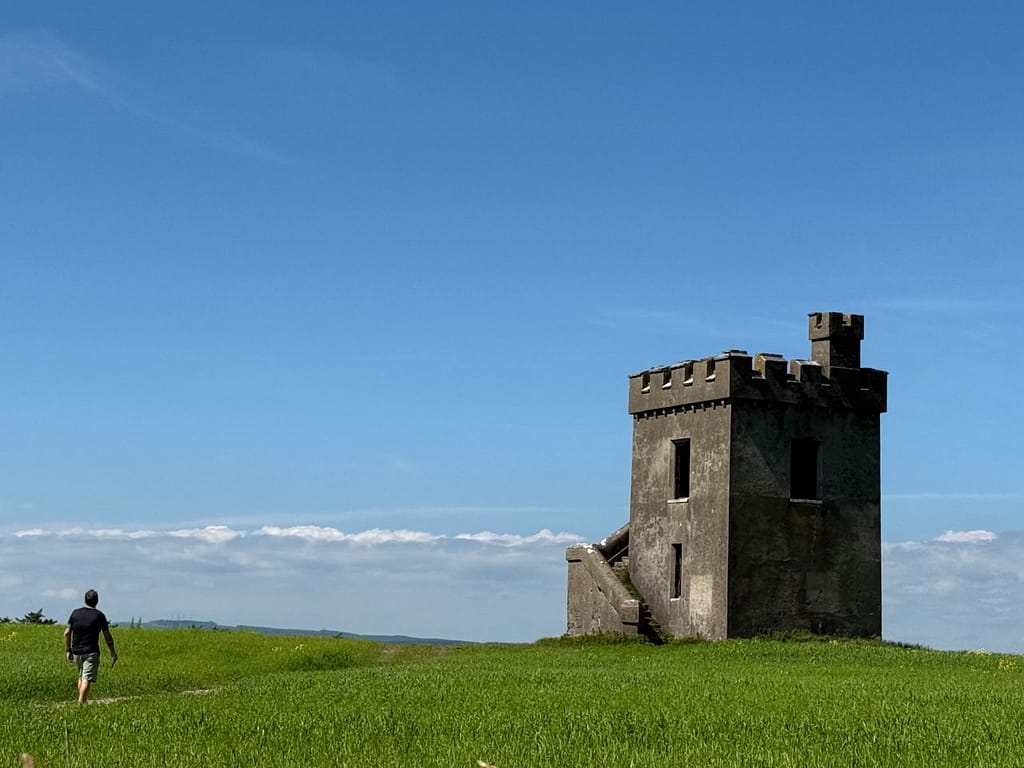
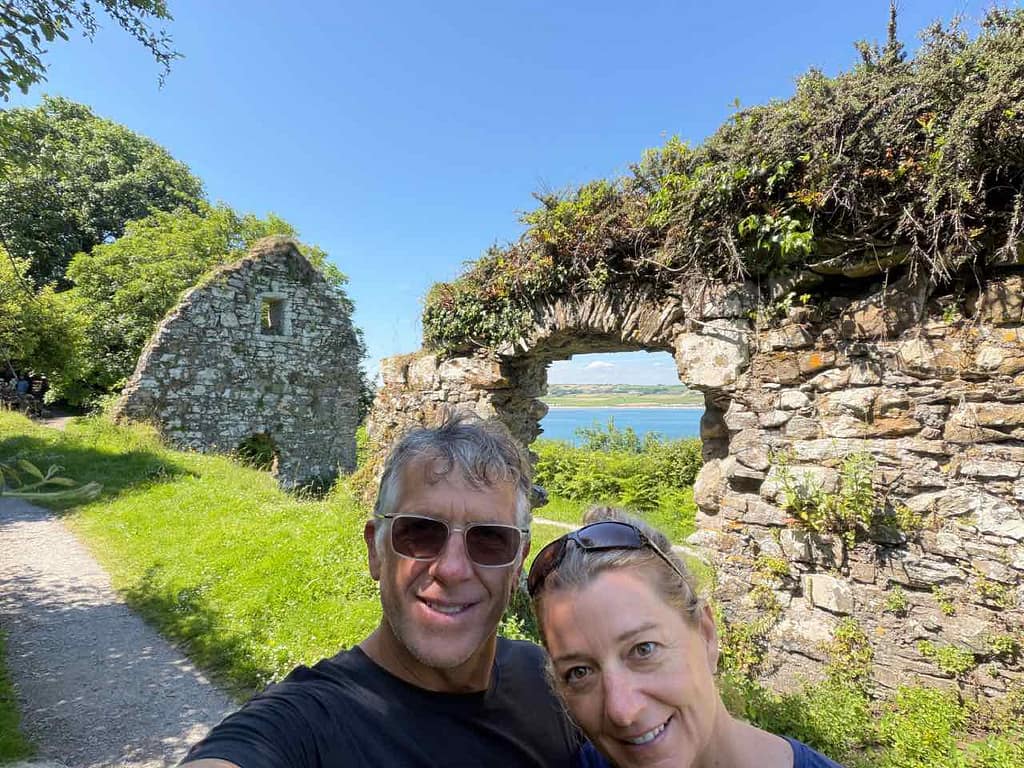
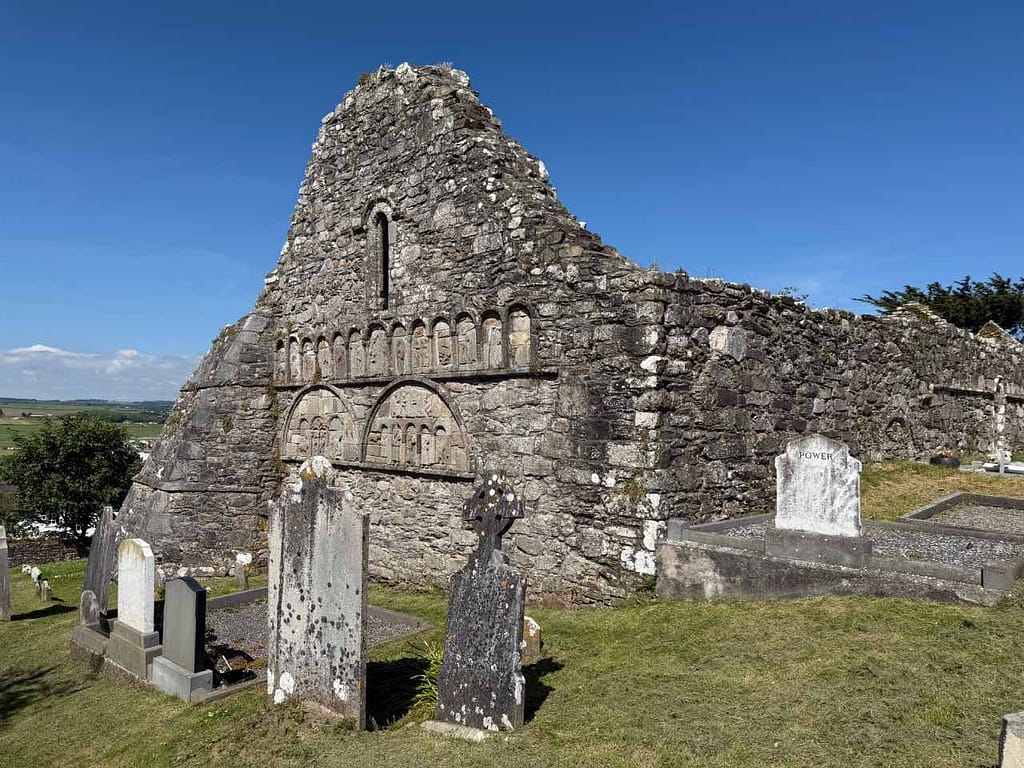
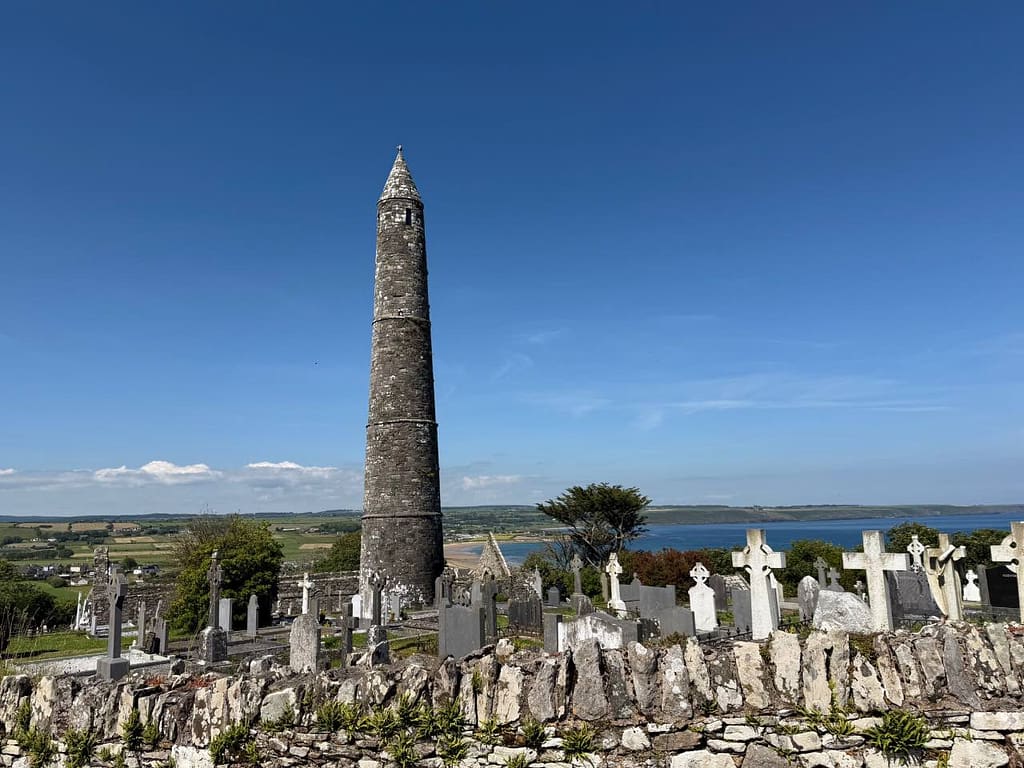
There is a beautiful seaside walk right out of Ardmore that wanders through the ruins of a 12th century church and hermitage and takes in these great views of the Ardmore Bay and shoreline. There is an old crane ship wrecked on the rocky shore, and a watchtower on top of the hill with a full view of the surrounding country and sea. The path loops back around to Ardmore town, into the ruins of the old cathedral and round tower on the edge of town. The tower is thirty meters tall and was built in the 12th century. It is believed that St Declan himself is buried here in the cathedral grounds.
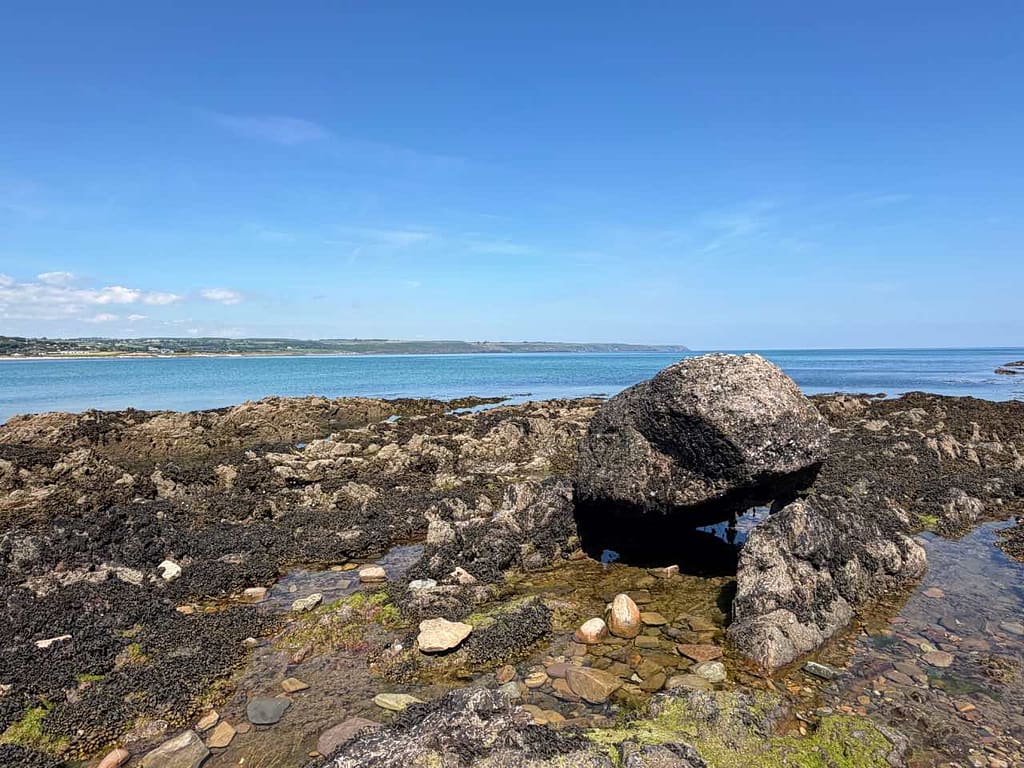
Speaking of St. Declan, that forgetful old bugger… Leaving town, before you start on the walking path, is St. Declan’s Stone. It sits in a tidal flat just outside of town. Legend has it that Declan’s magical golden bell was floated across the sea on this stone after he forgot to pack it on his return journey to Ireland. I don’t know. It doesn’t really look like a floating rock to me.
It is claimed that if you crawl under this rock on the 24th of July, you will be cured of your arthritis. We will still be in Ireland on the 24th… I may give it a go, though it doesn’t look like there is much room underneath that rock.
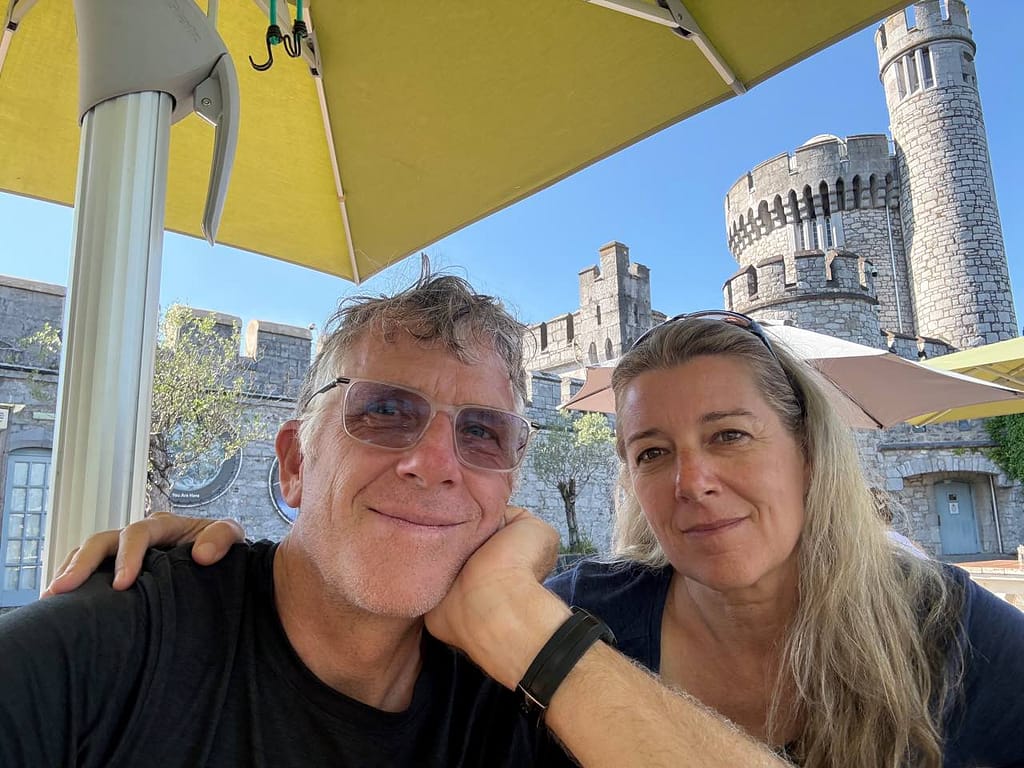
That evening we had a great dinner of pork collar with mashed potatoes, steamed veggies, soup, and bread in a 15th century castle that had suffered fire damage several times and had been painstakingly recreated each time. It currently houses a space, science, and astrophysics school.
And a restaurant…
The next day we stopped in the quintessentially Irish coastal town of Kinsale. We loved it. The narrow streets and colorful buildings lend themselves to a whimsical and lighthearted atmosphere.
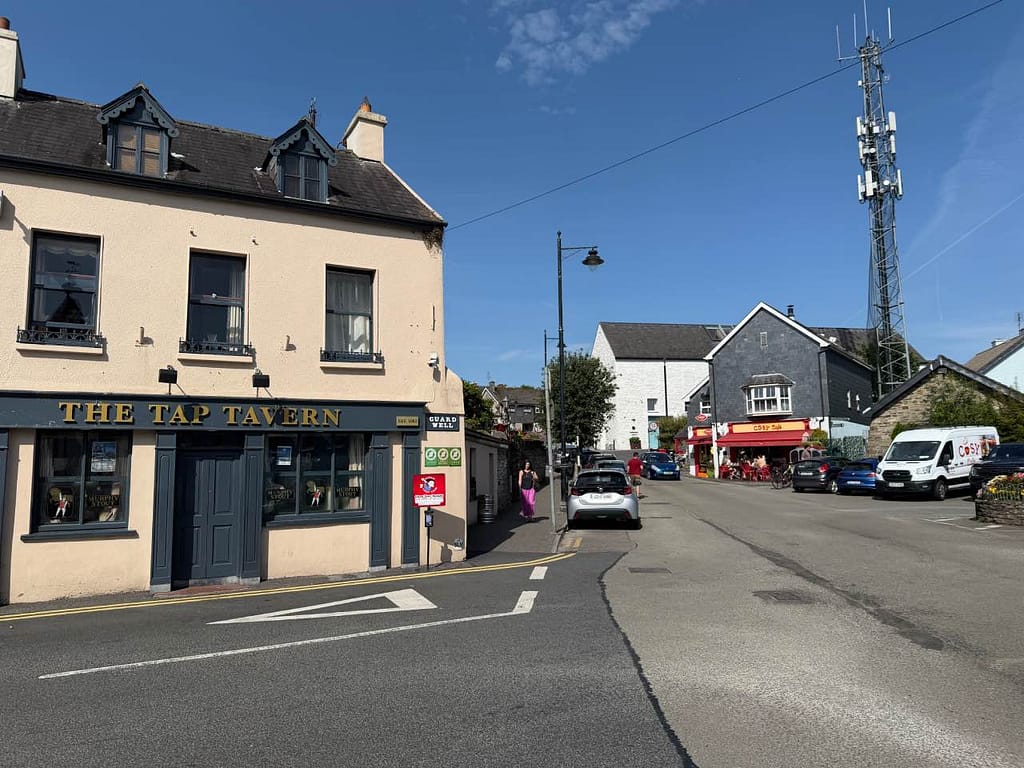
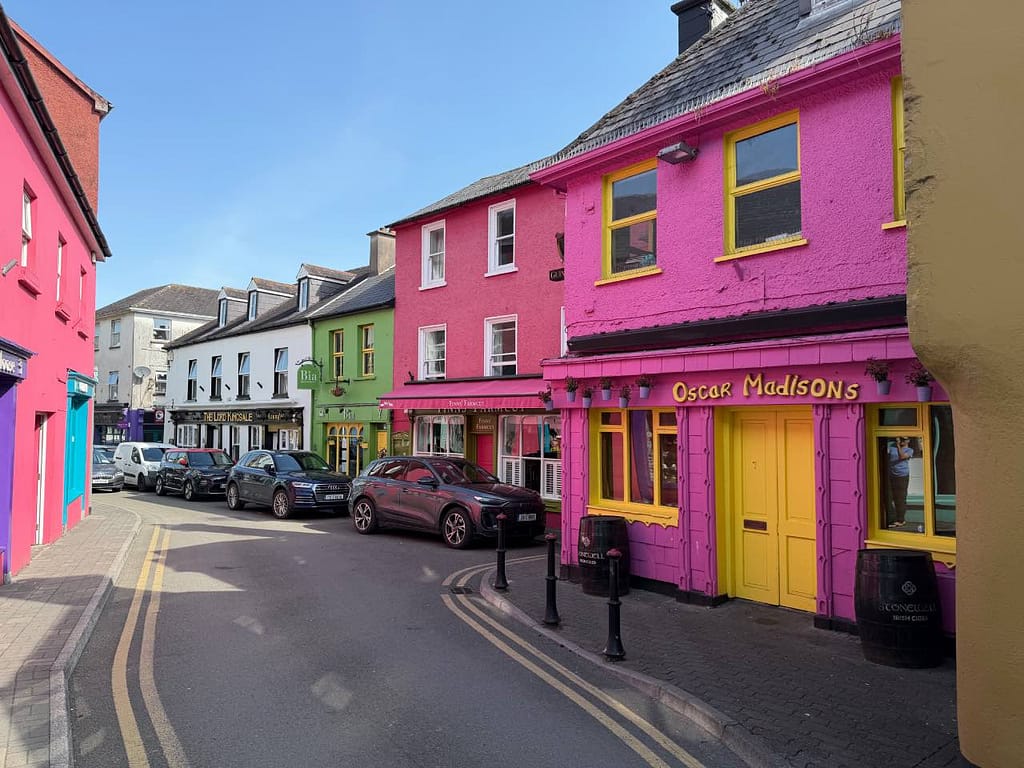
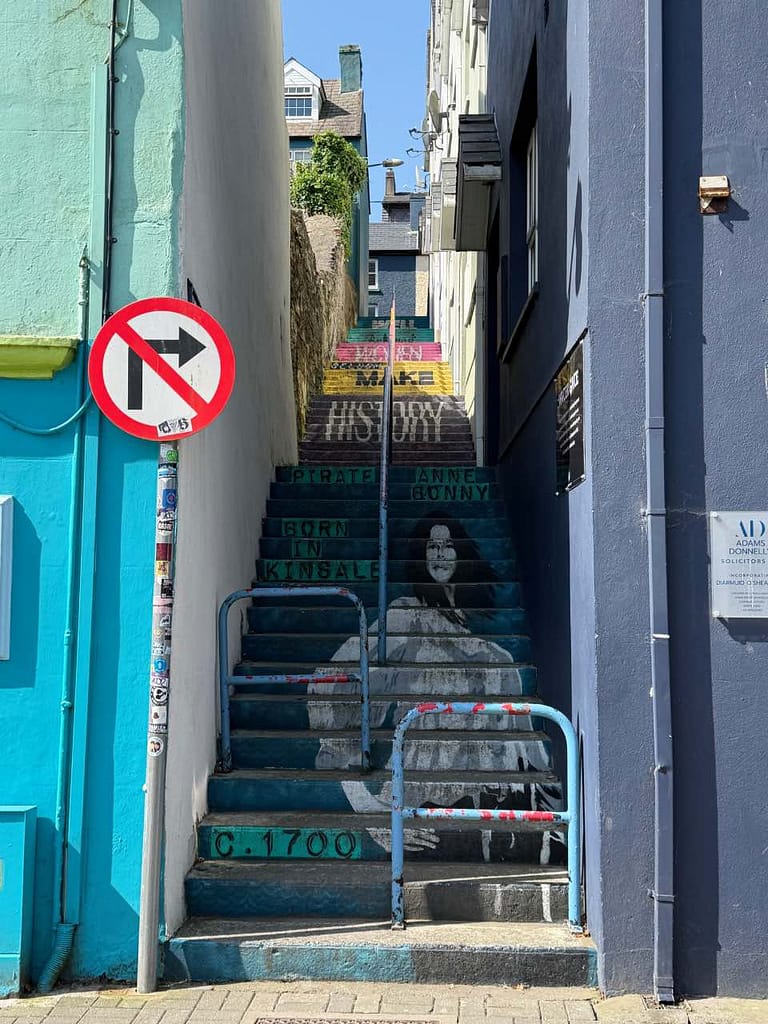
It is a place with a ton of history, just like everywhere else we stopped. My favorite bit of history was that this was the birthplace of the pirate Anne Bonny in 1697. She was a feared pirate in the Caribbean in the 1710’s and 1720’s, and settled for the remainder of her life in South Carolina with her child and second husband.
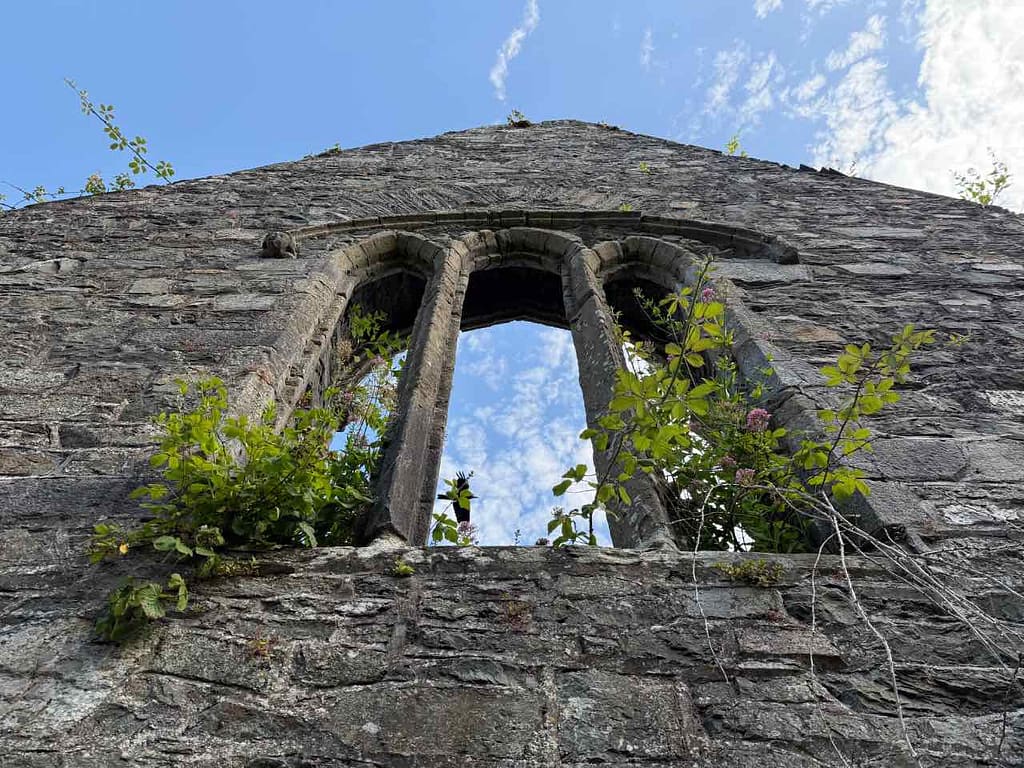
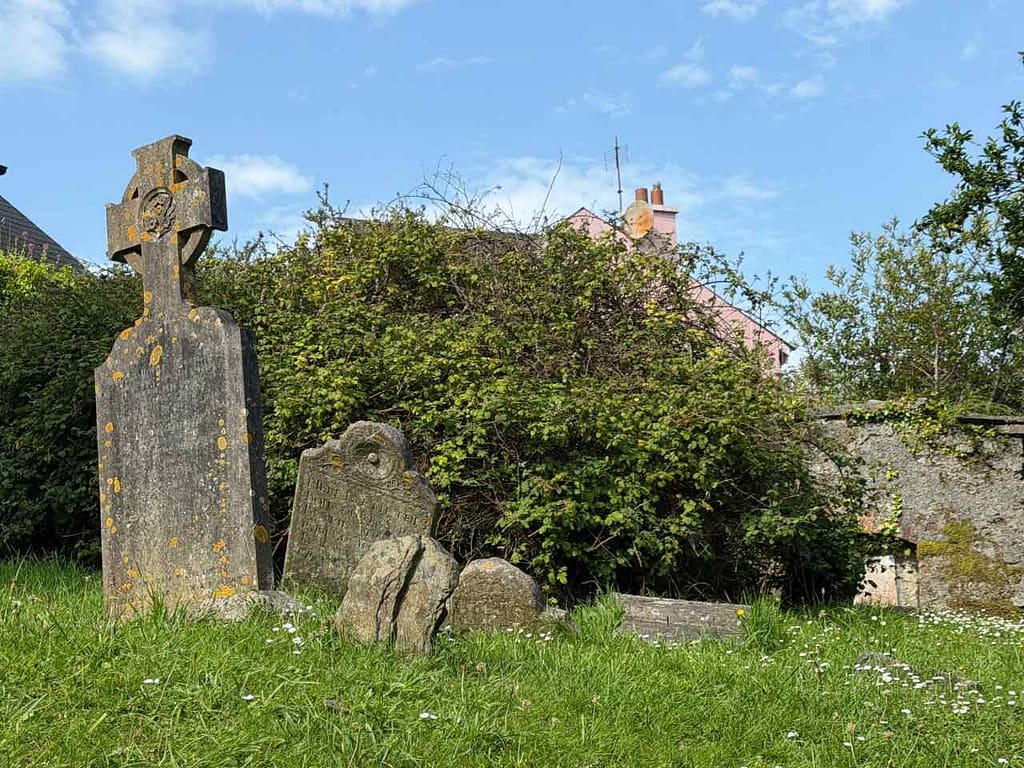
Some of the markers in this churchyard are old. Old enough that the inscriptions are very faint, and so one would have to guess at the “oldness” of them. The church was built in 1190, so we can safely assume there are some old grave plots there, even if time and weather have left them illegible.
The ages of these sites always intrigues me. Nothing in the states is this old, and especially on the West coast, a hundred and a half years is “historic”. I love to wander around these places and wonder to myself how many thousands of people must have stubbed their toes and bloodied their shins as they tripped over all the uneven walks and edges.
Probably a lot of people.
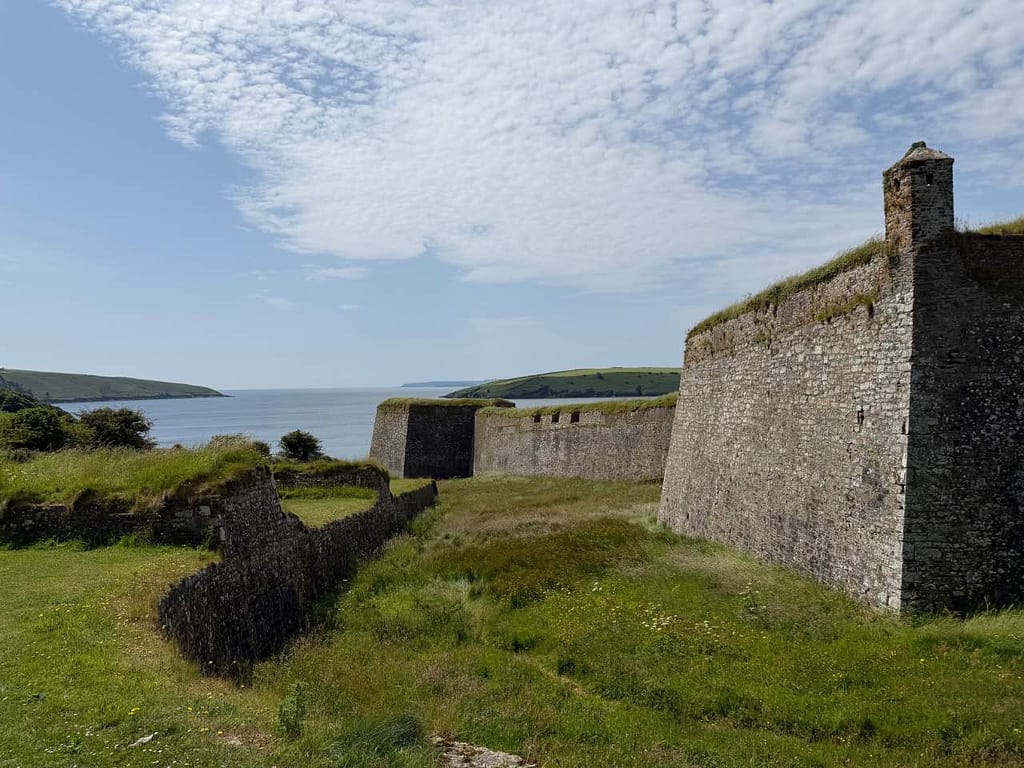
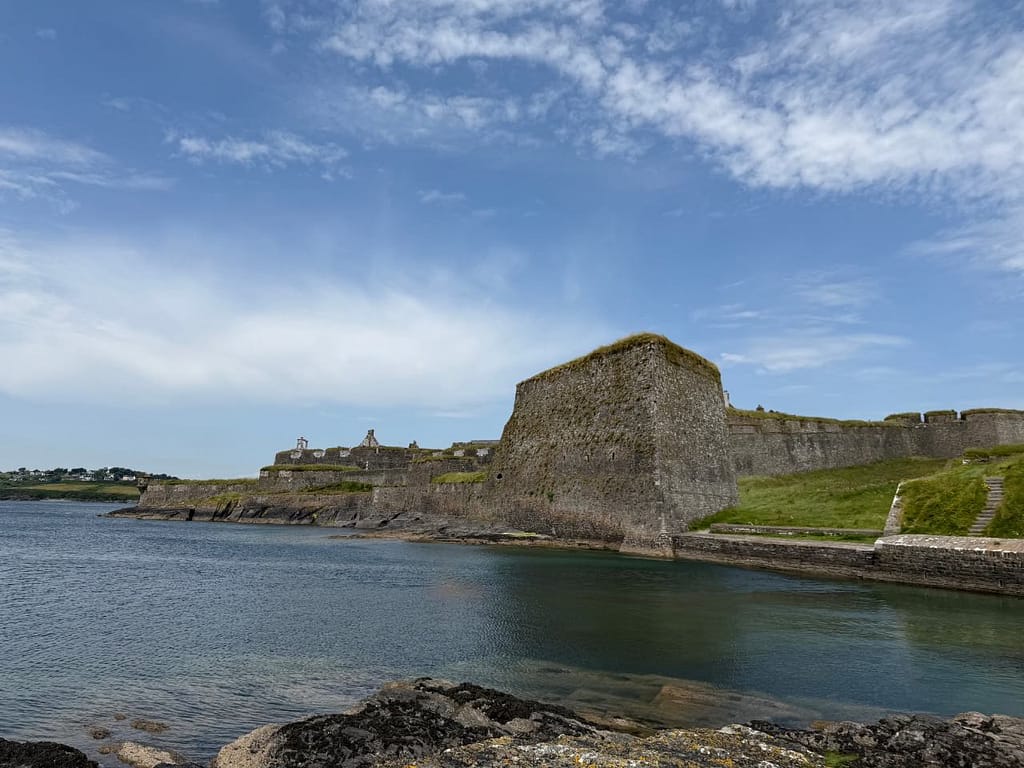
While we are on the subject of old stuff (I mean historical marvels), we also stopped and visited Charles Fort. There is a fort across the river — James Fort — and the story is that they used to pull a chain across the opening of the Bandon River between these forts to keep undesirables out of the Kinsale harbor. I have my doubts, as the distance between these two sites is eight hundred meters across water. That would be one hell of a chain.
Okay, well, on further reading, yes. They did stretch an underwater chain between the two forts to protect the bay from invaders, but I cannot find definitive history on when that was. The churches were breached in 169… zzzz…zzzz…zzzz
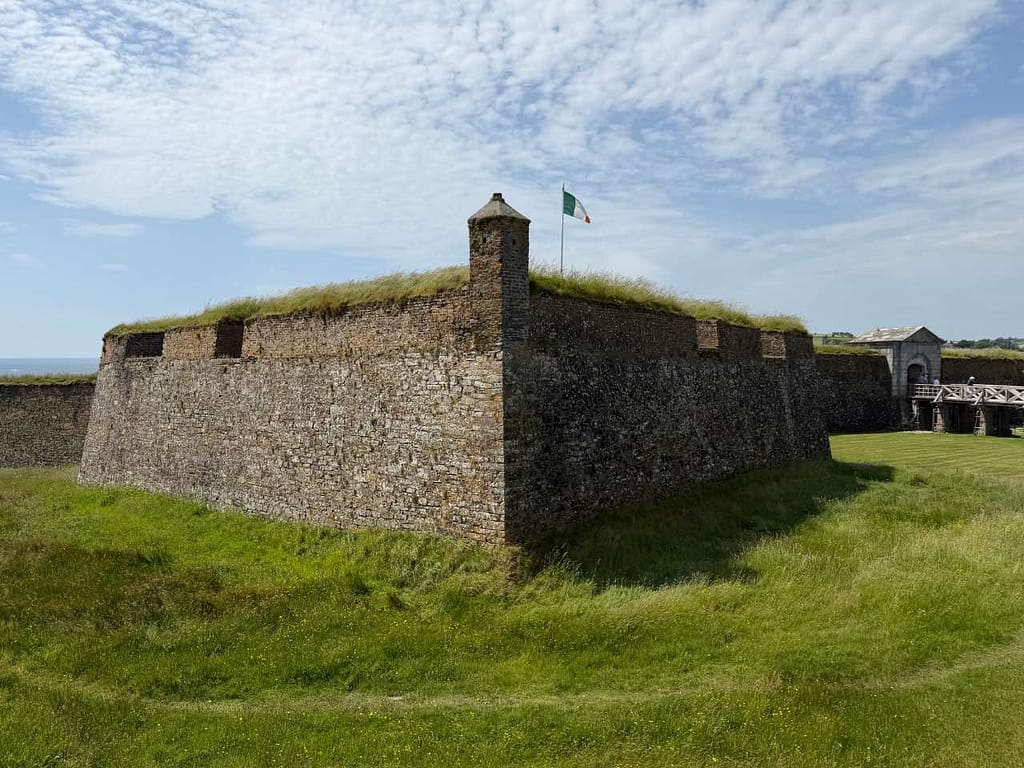
Just too much history.
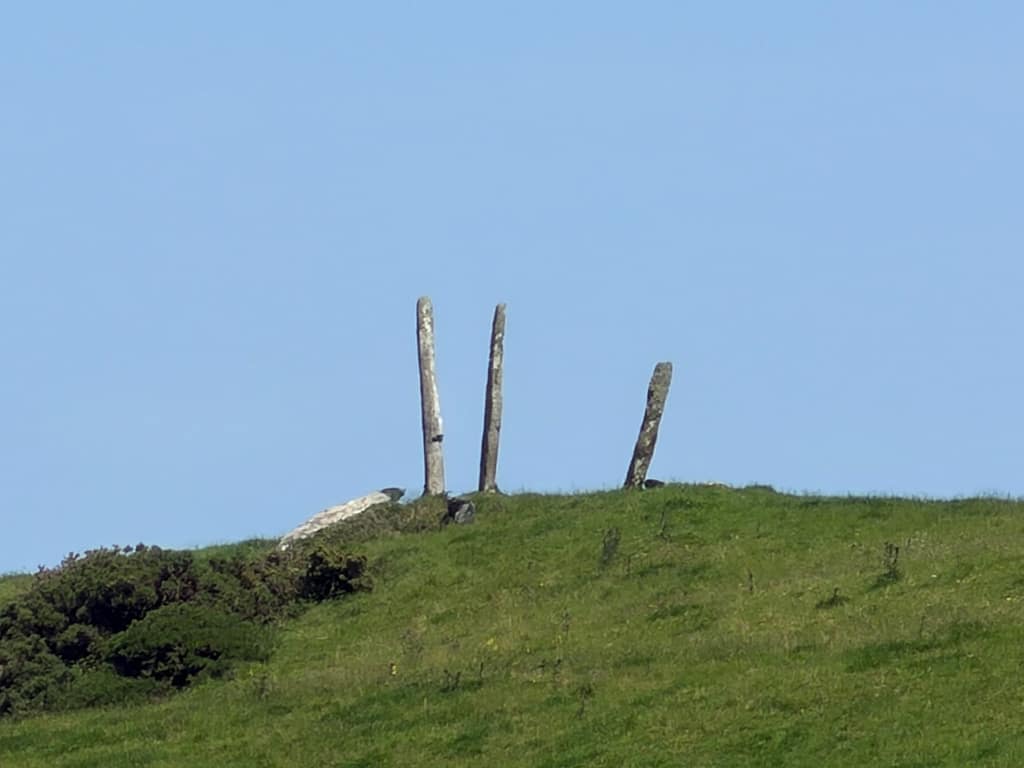
But, speaking of old sites…
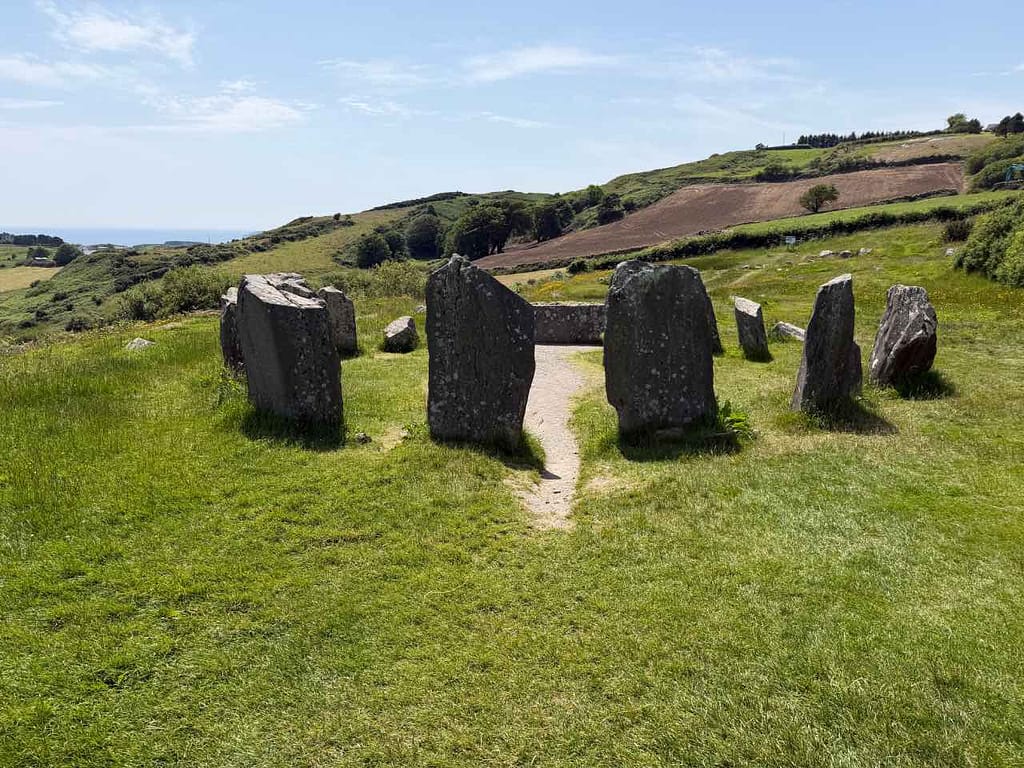
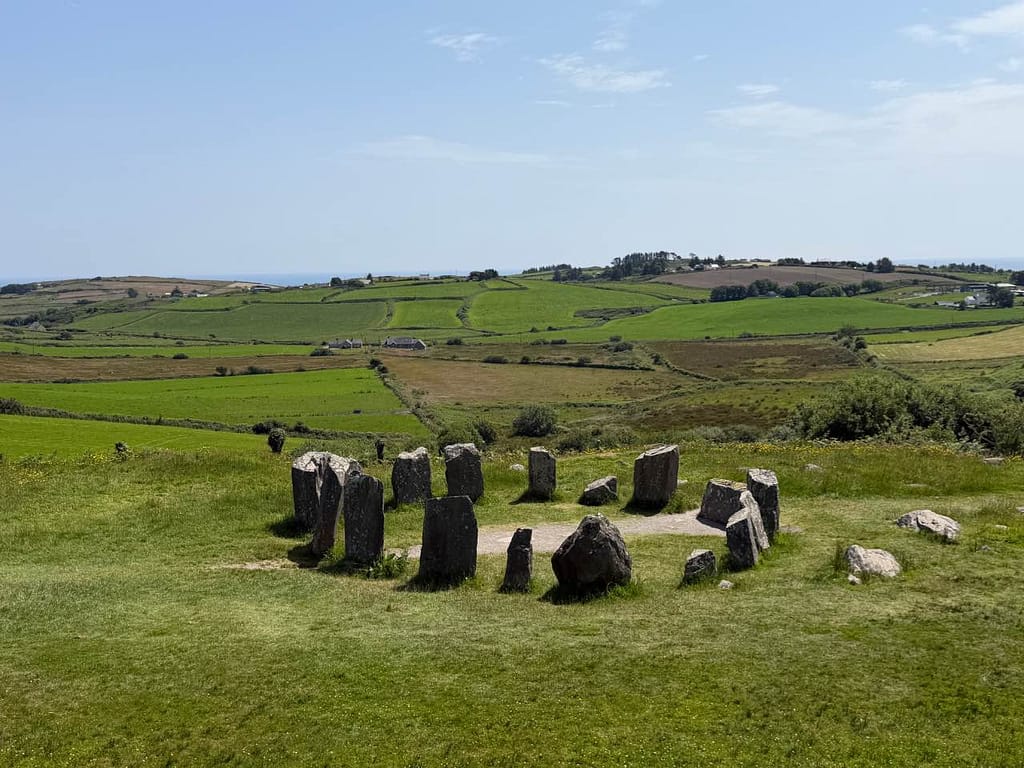
The Dromberg Stone Circle is estimated to be three thousand years old. If you line up the entrance, between the two tallest stones, across to the rectangular altar stone, it lines up perfectly with the setting sun on the winter solstice. It still amazes me that we can just walk up to and around this site, that someone hasn’t fenced it off and charges admission to see it from a hundred meters away.
Tam and I were the only ones out there, and we could actually touch the stones and conduct our own human sacrifices on the altar if we wanted (luckily, she did not). We sat in the grass in the stones and had a nice picnic instead… so much less mess to clean up.
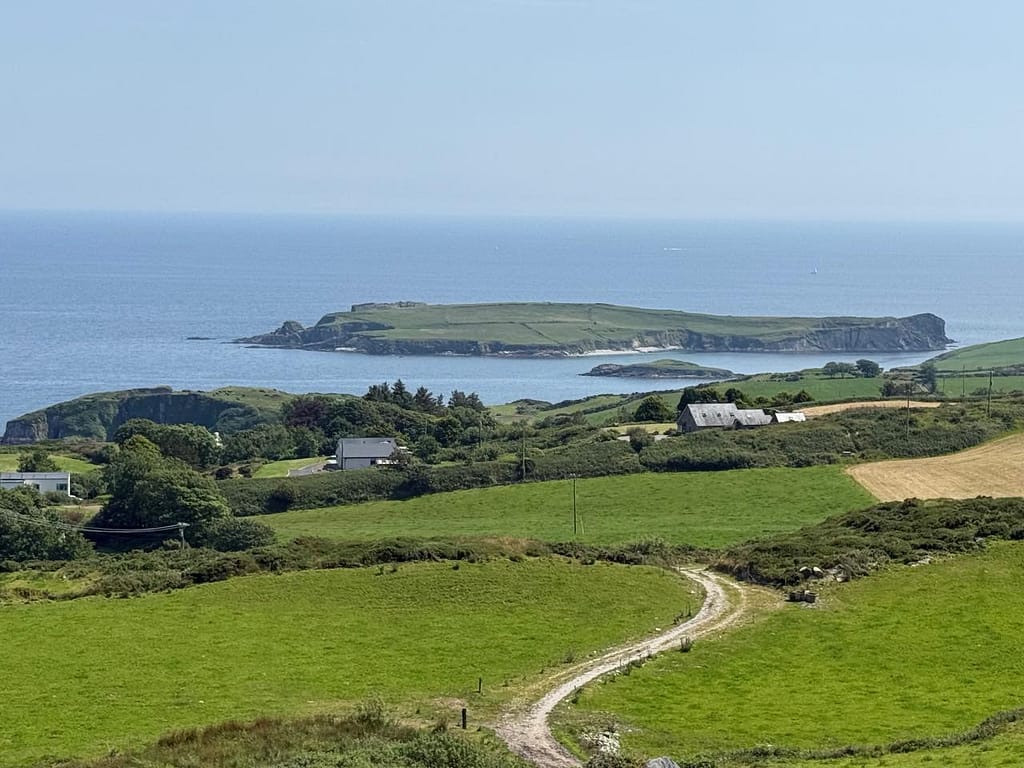
The South coast of Ireland, in and around County Cork and County Waterford, just continued offering up these postcard-perfect views.
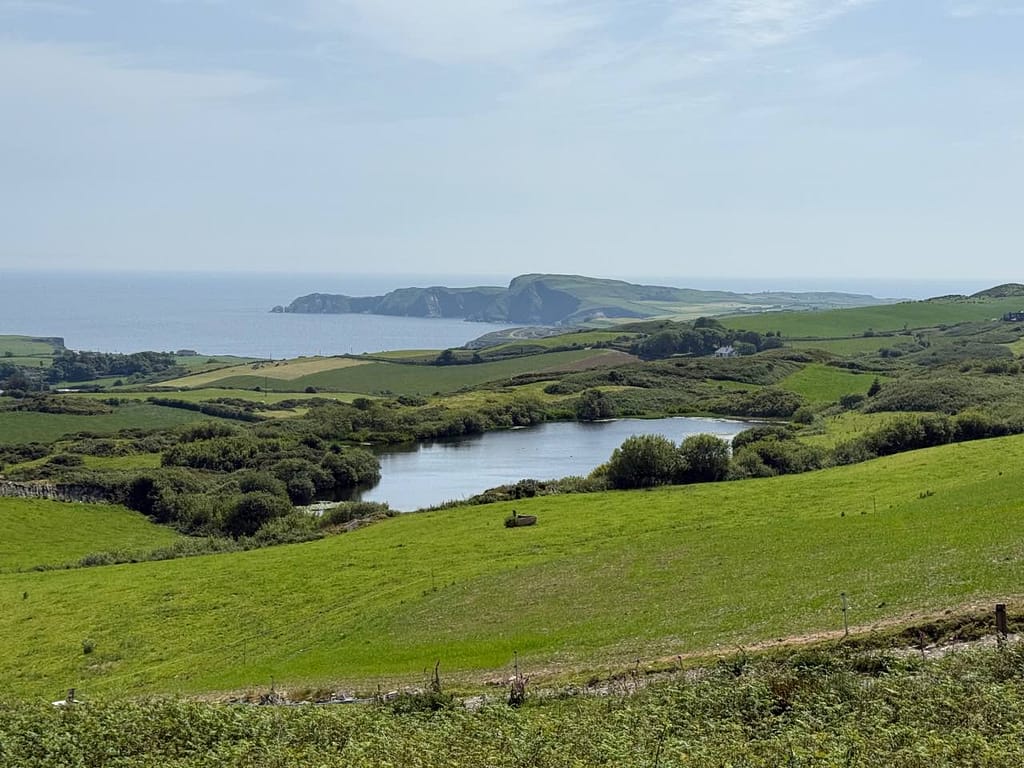
So gorgeous.
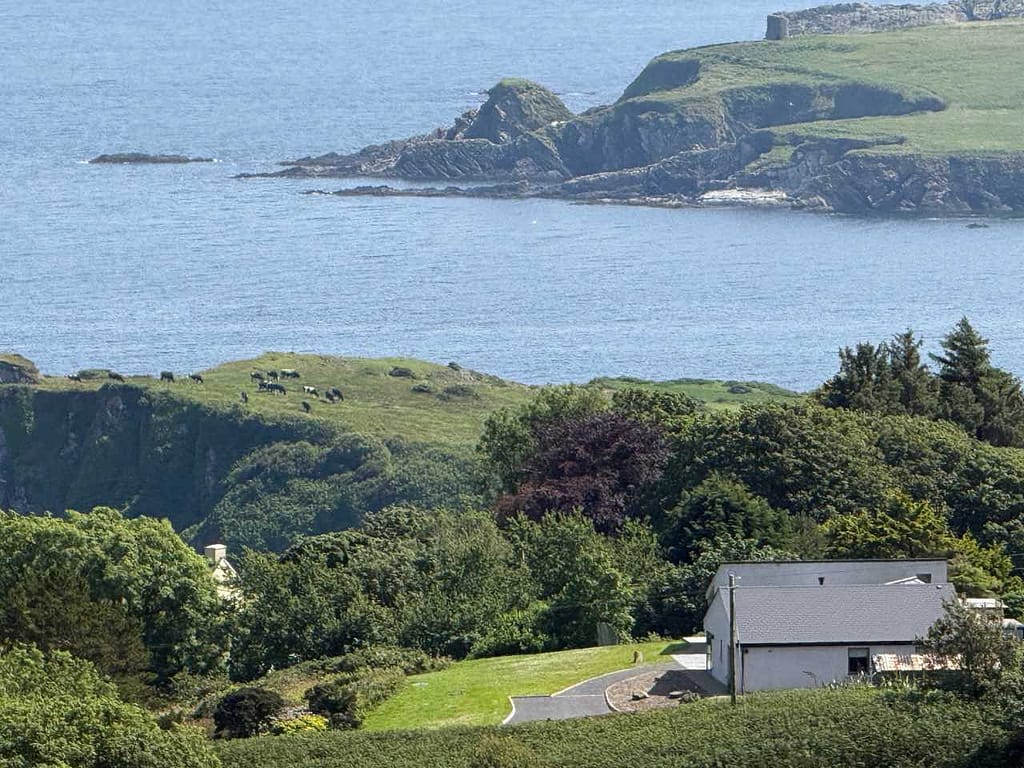
Some cows. Irish cows. On an Irish farm. On the Irish seaside.
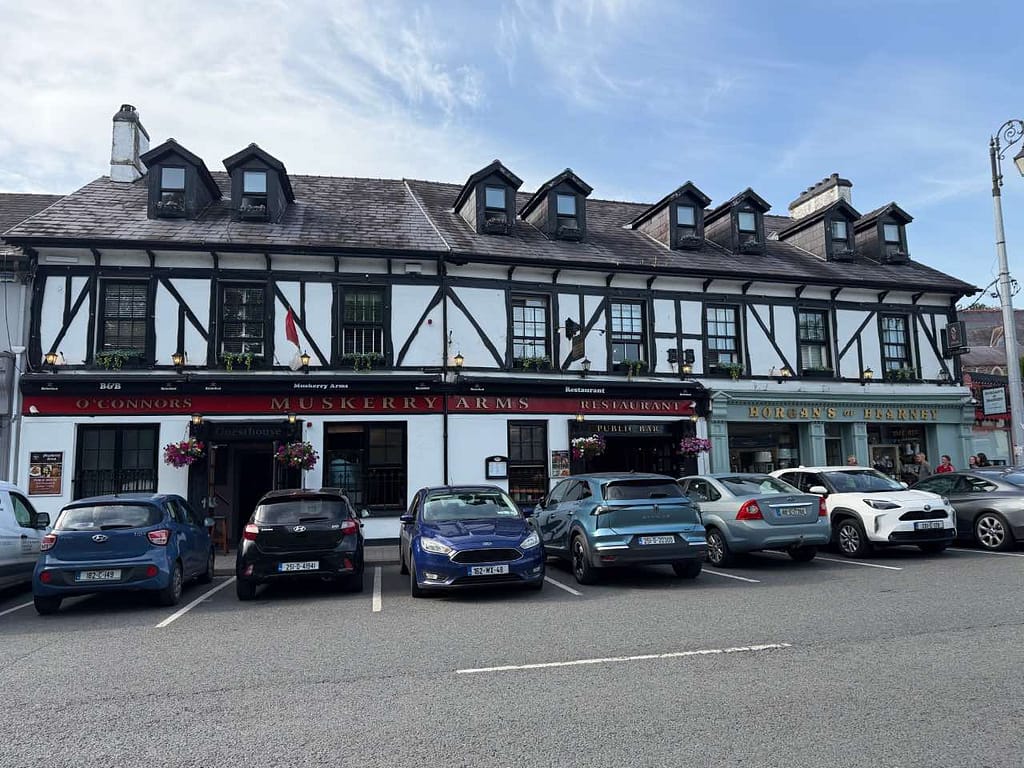
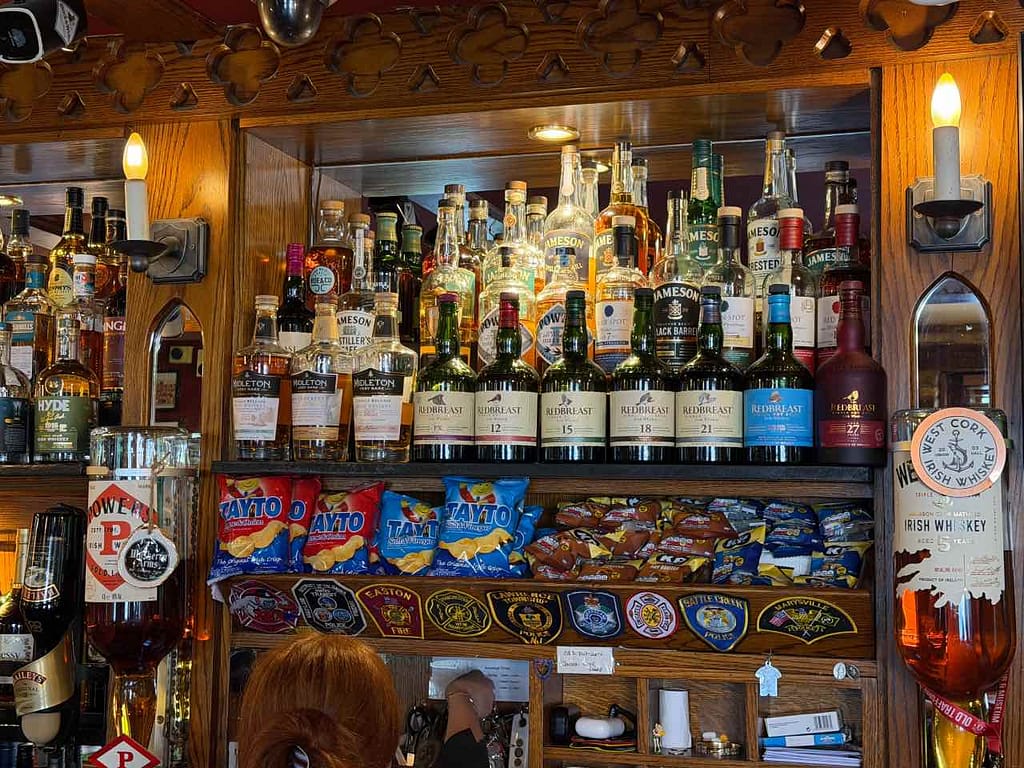
The second night we stopped at this pub in Blarney for food. Even the Muskerry Arms pub is old. It has been open since 1838. Good seafood chowder and Shepherds Pie, but look at that selection of whiskey. Those are some of my favorites.
We had discussed visiting the Blarney Castle, and stopping to have a little smooch on the old Blarney Stone, but Tam read some information on that stone, and it didn’t seem like such a good idea. It turns out that a little snog with the Blarney Stone will endow one with “the gift of blarney”: the ability to communicate at great length and importance with eloquence, exaggeration, flattery, and wit.
On reflection, I decided that there was no way I was going to let Tam anywhere near that stone…
A little side note here…
We drove from the South coast up through County Limerick (and, yes, of course I made Tam read limericks about Limerick while I was driving), and then, since it really is not such a long, long way to Tipperary, as we have been led to believe, we drove on into County Tipperary and on to Tipperary town.
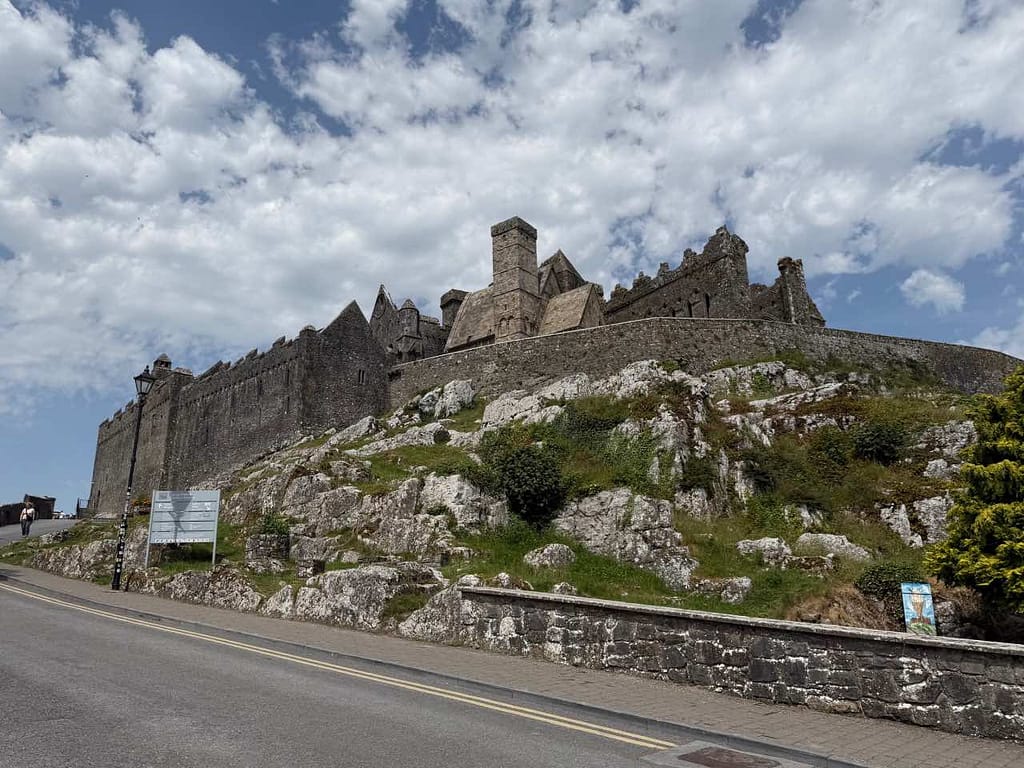
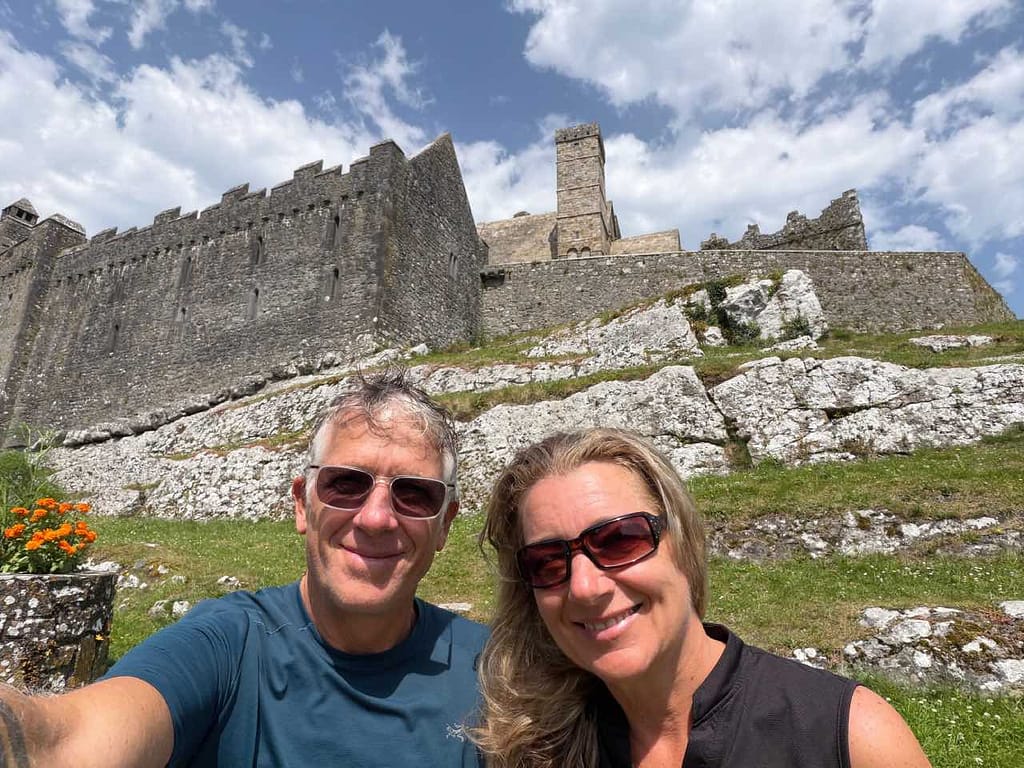
The next day, after what was not a very long, long way to drive, we took in some more ruins (surprise surprise) outside of Tipperary Town. A a site called The Rock of Cashel is a castle that sits on a limestone hill (the actual Rock of Cashel) in the town of Cashel.
It is prodigious, breathtaking, stunning, grand, sensational, mind-blowing… eventually I will run out of adjectives to describe all these archeological sites.
Really, it was pretty cool.
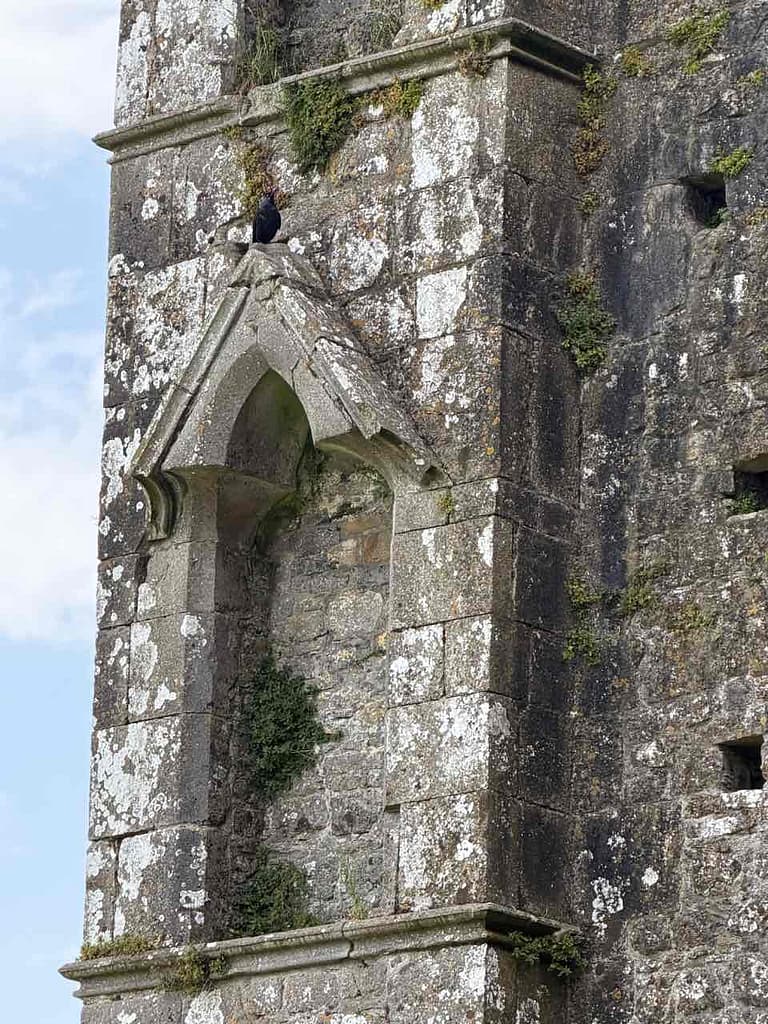
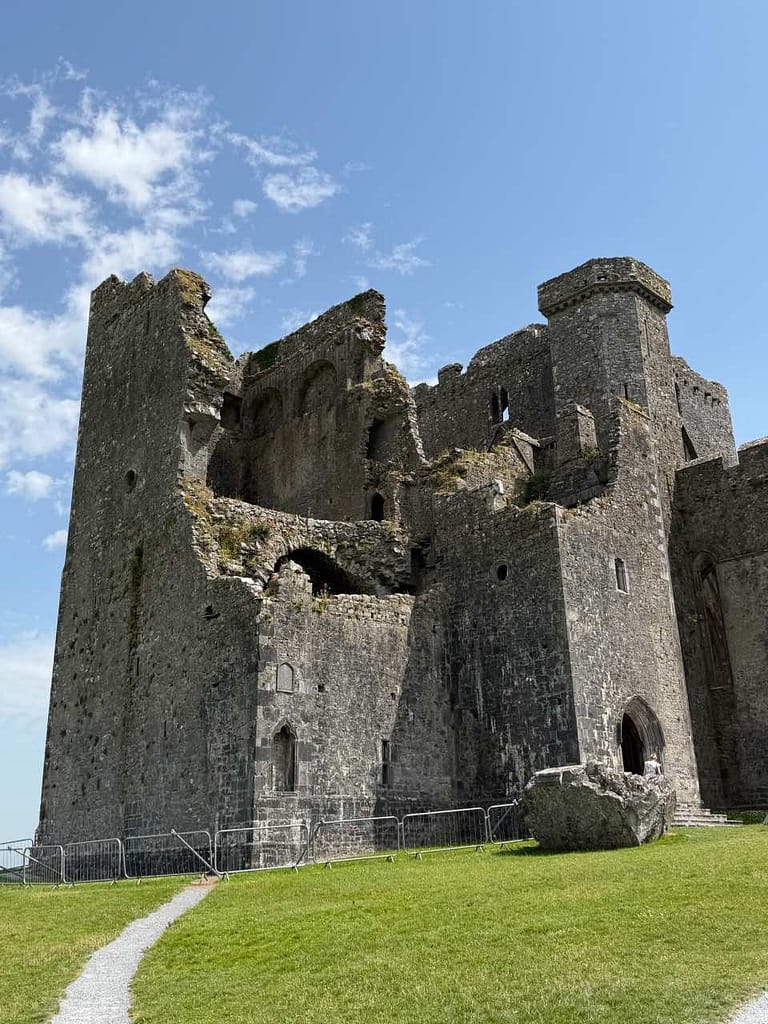
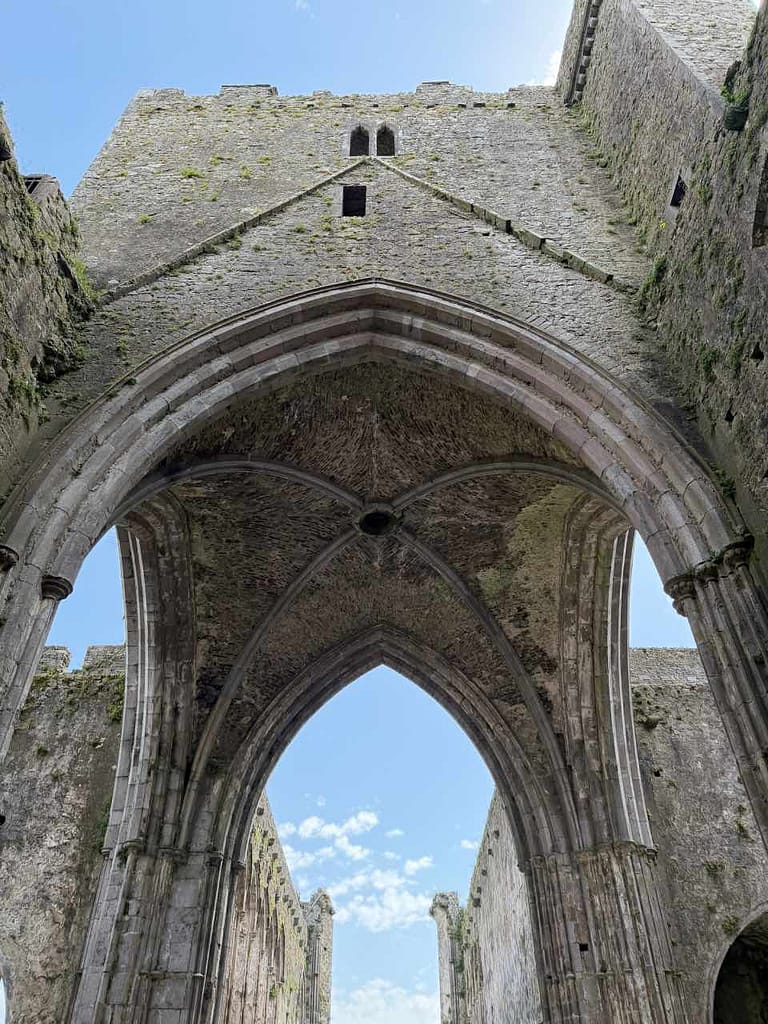
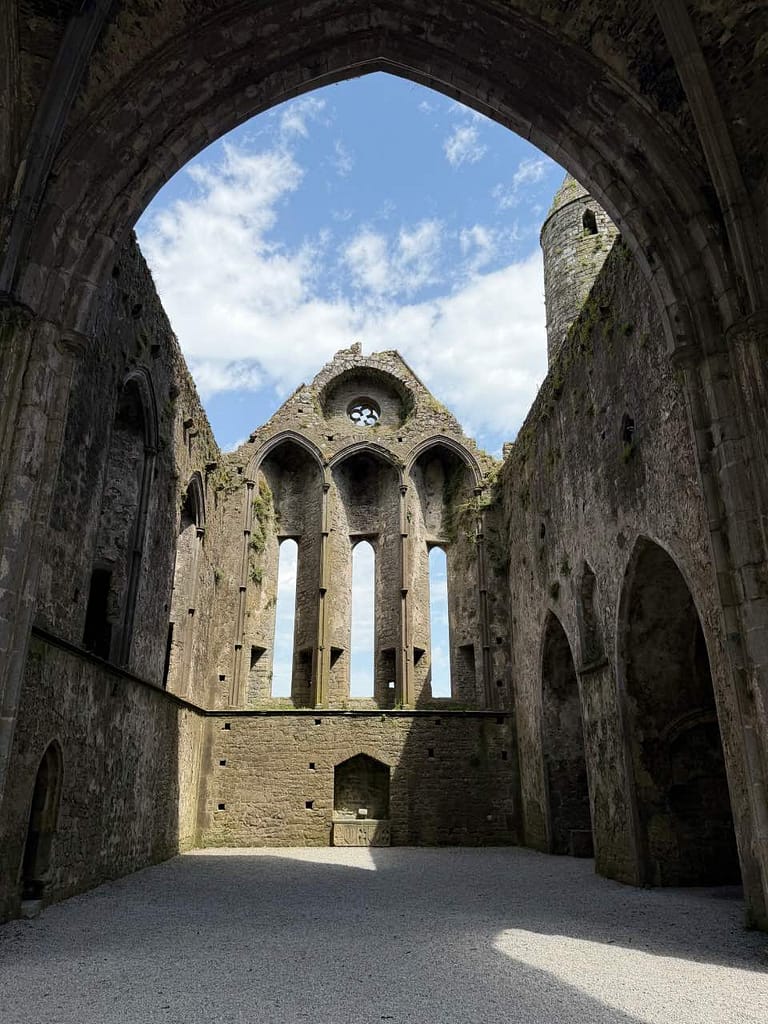
The St Patrick’s Cathedral is the churchy/castley thing that sits on top of the hill. It was started in the 1190’s and finished around 1280, and it is suspected that it was built over a previous structure because there are graves with remains dating back to the 4th century in the graveyard there. It always feels strange to me, to stroll casually over the remains of people that have lain in these graveyards for sixteen centuries. They must get annoyed by all the traffic.
Probably haven’t had a good night’s sleep since at least the 8th century…
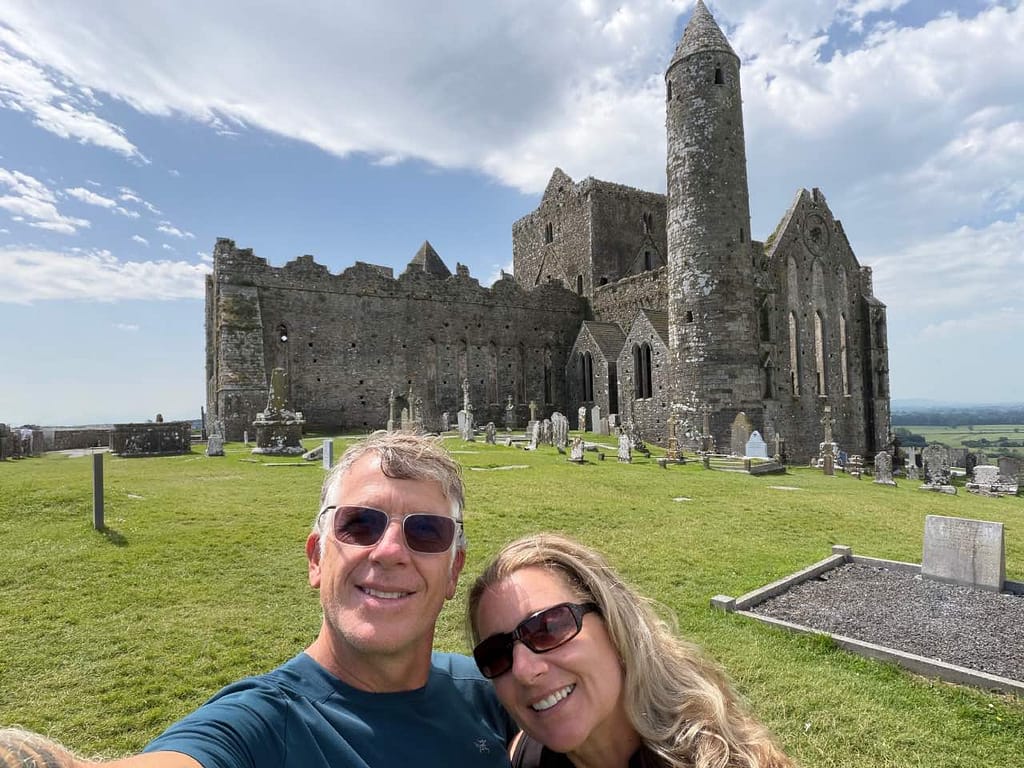
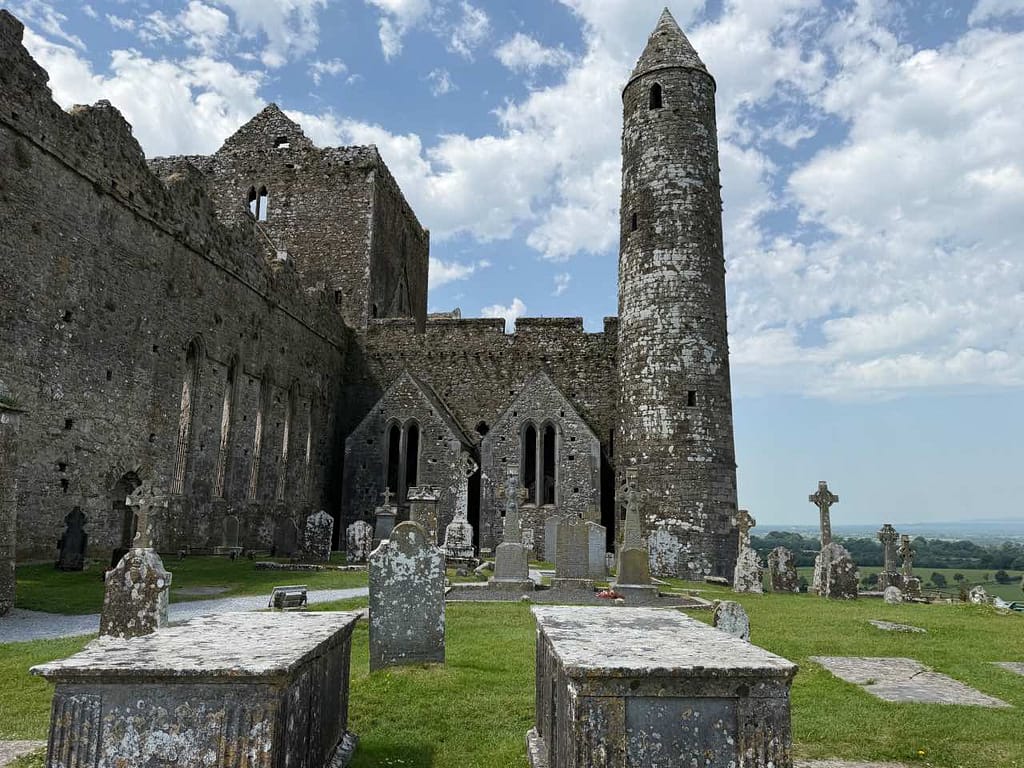
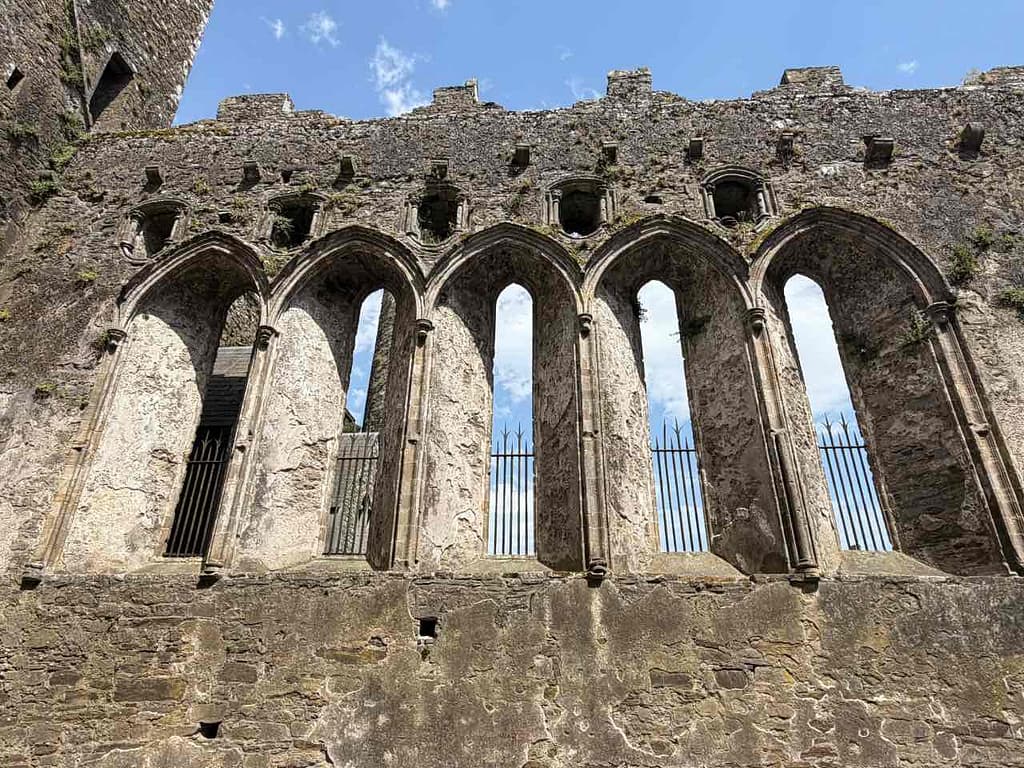
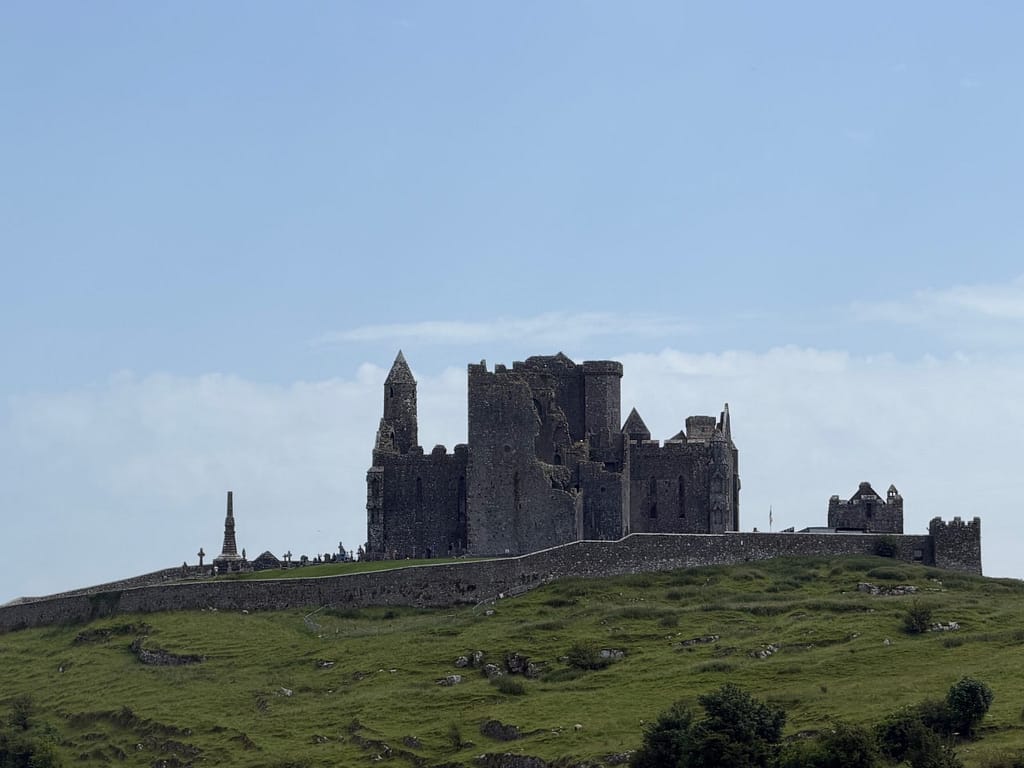
Those were all pictures of St. Patricks Cathedral at the top of the Rock Of Cashel. A short distance to the West is Hore Abbey. It was built as a Cistercian monastery around the same time. It is more ruined, and less maintained than St. Pat’s next door, but I think it was a bit cooler.
Either way, you can look down (or up) at one from the other, as they are only a kilometer or so apart.
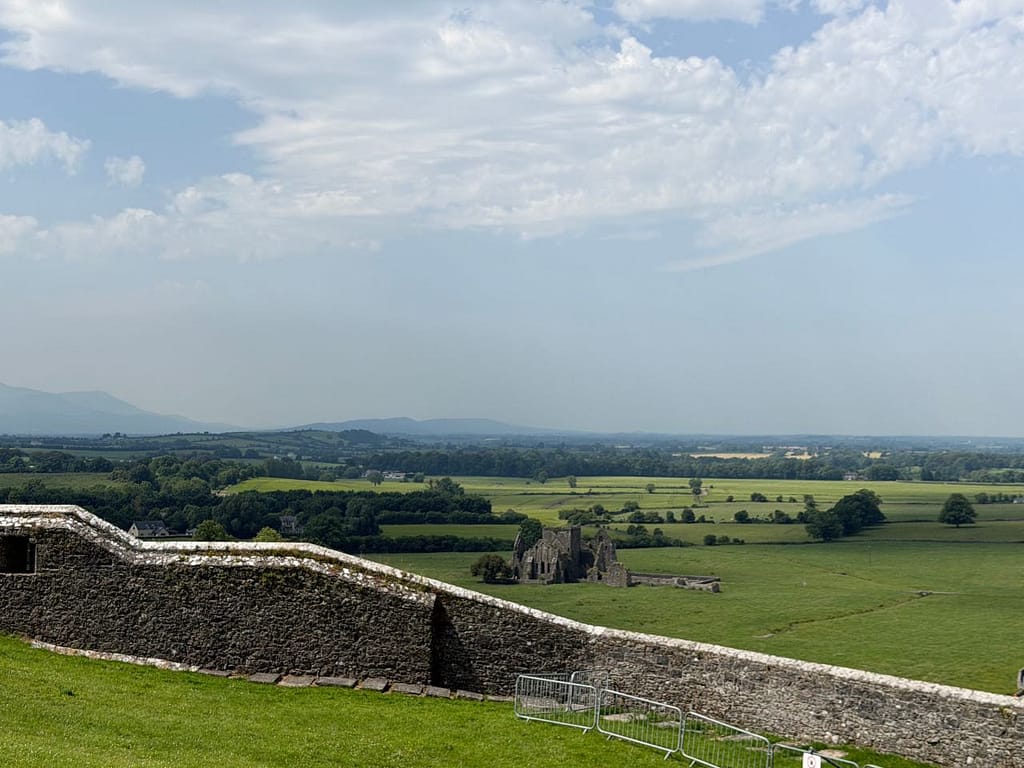
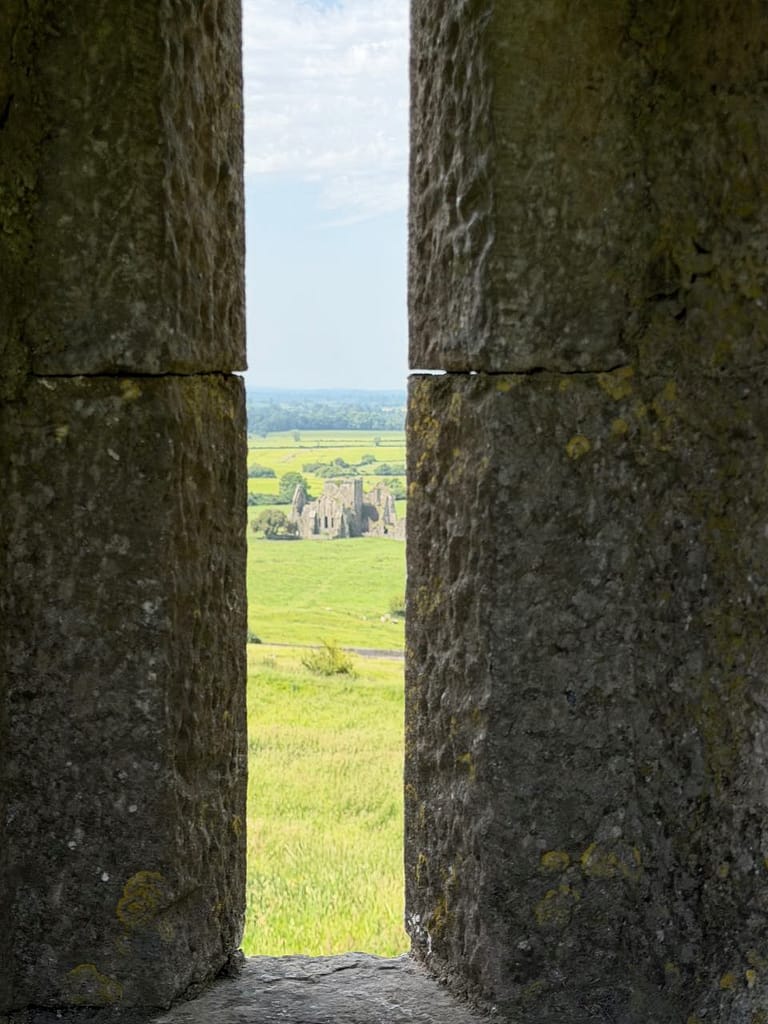
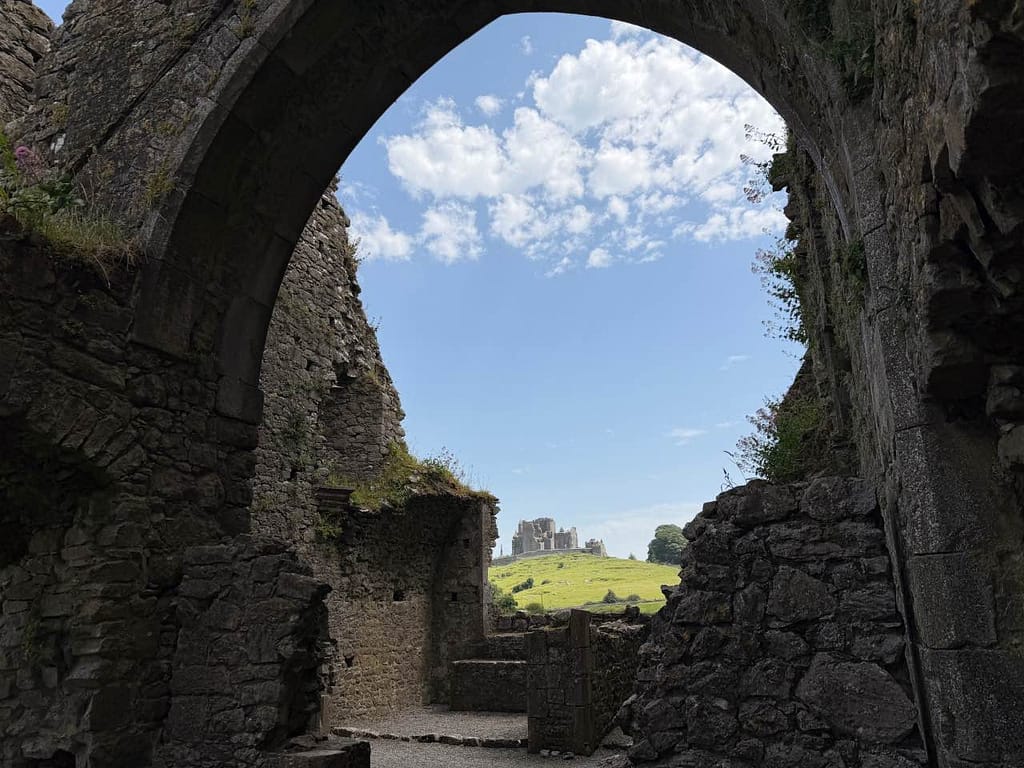
These are a few pictures of looking across from one site to the other, from either perspective.
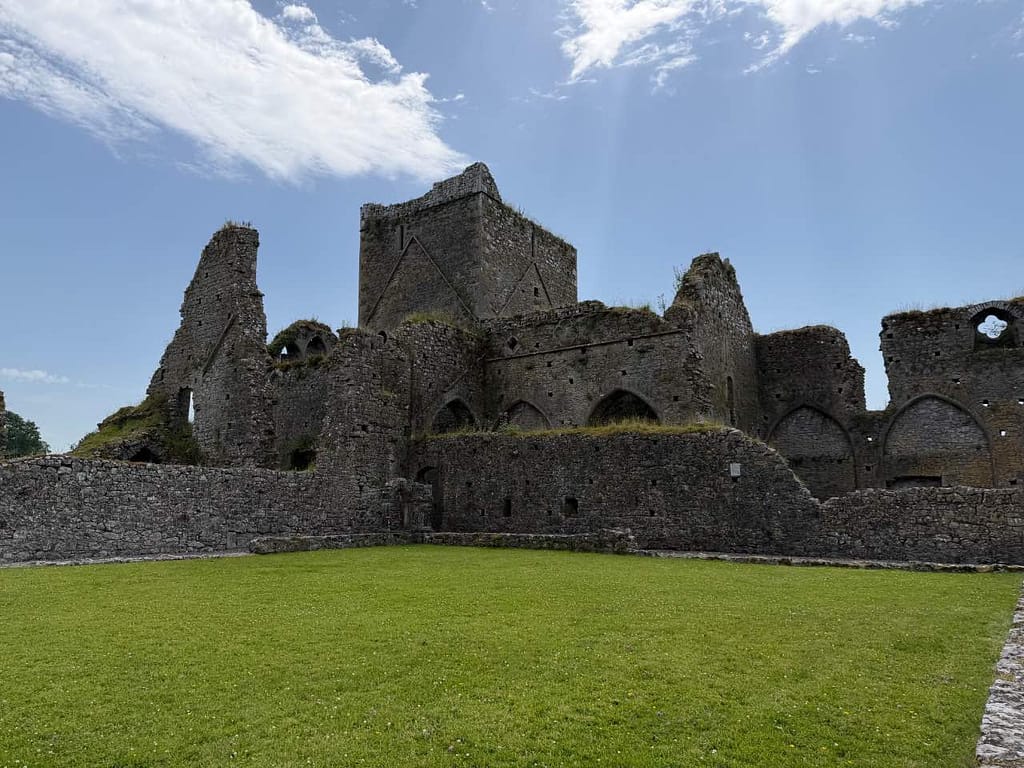
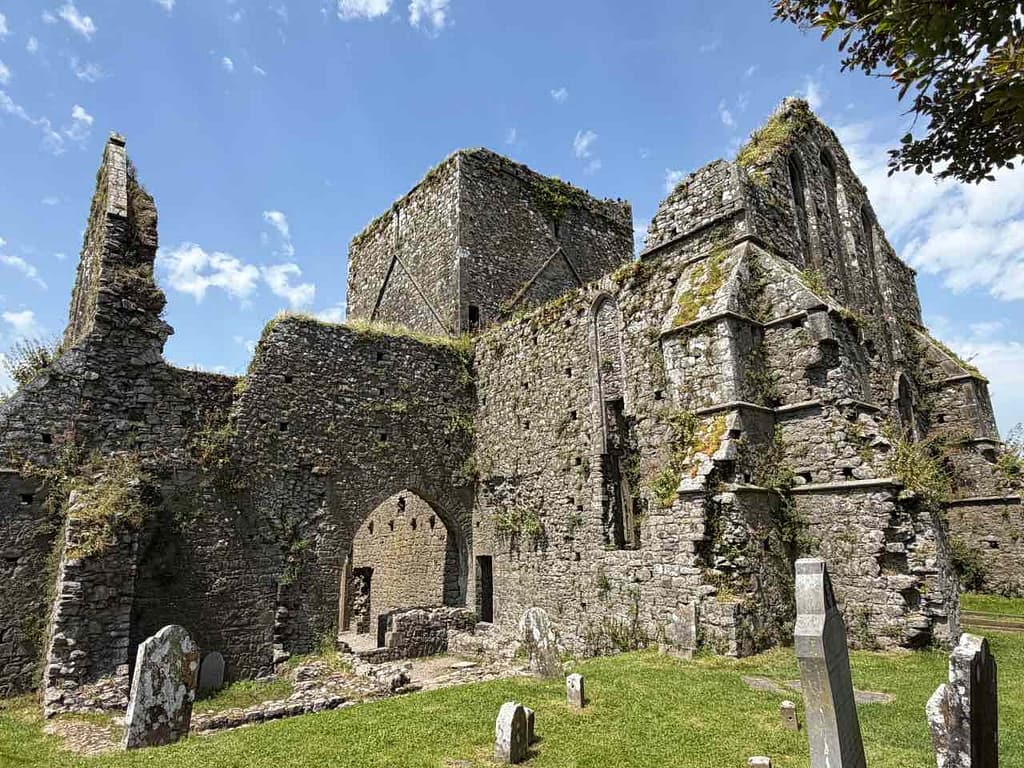
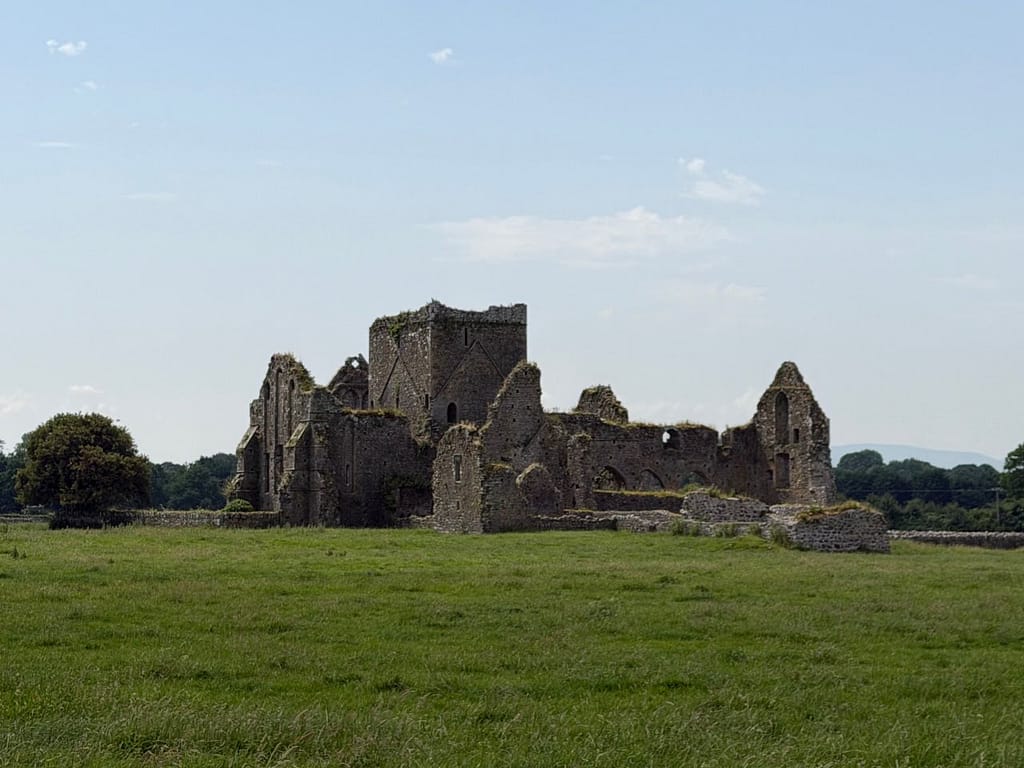
Hore Abbey.
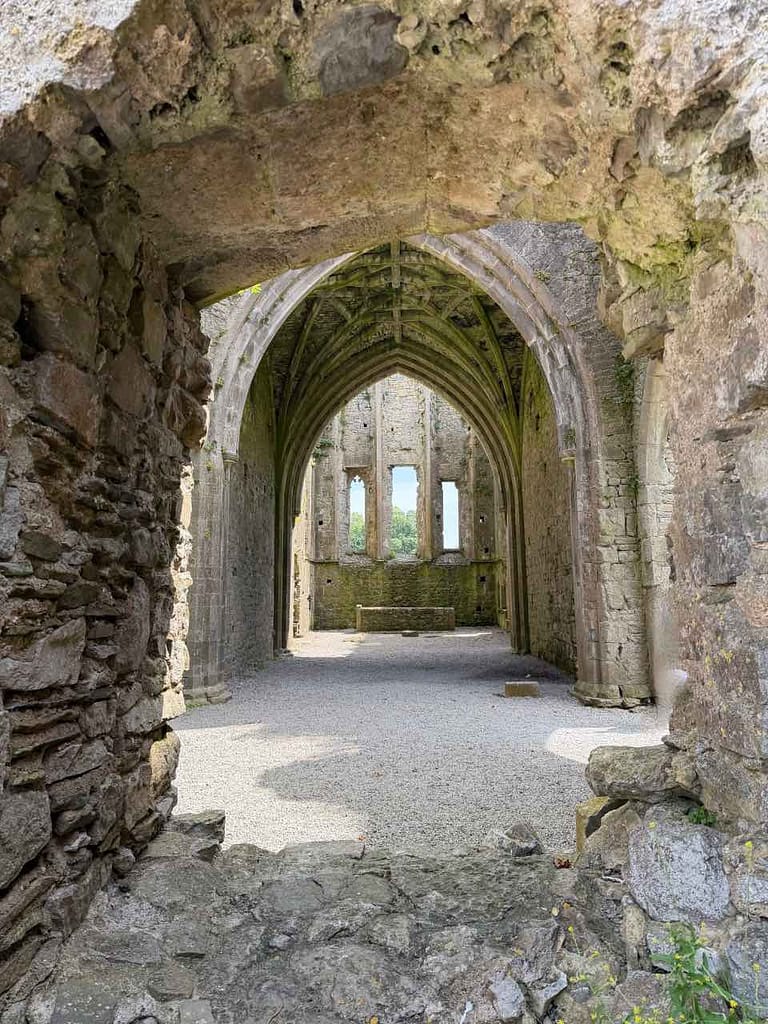
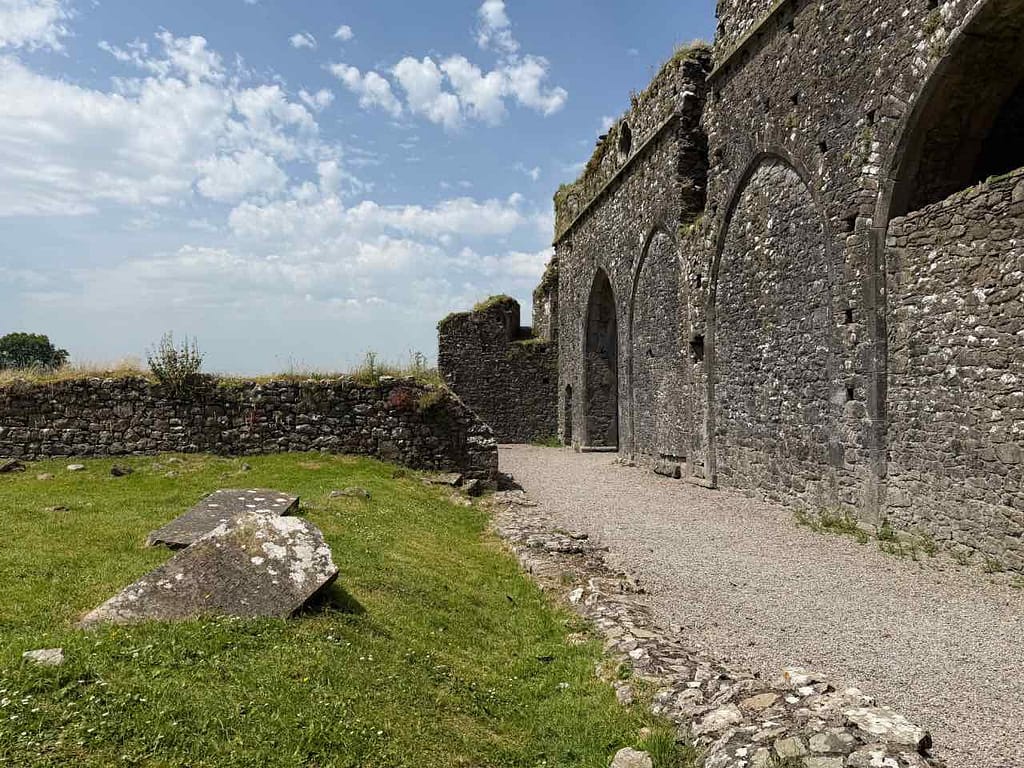
A couple more of Hore Abbey and a couple of tipped-over graves of unknown age.
Then, of course, we needed to find someplace to eat again, so we drove into Kilkenny Town to find the historic Kyteler’s Inn.
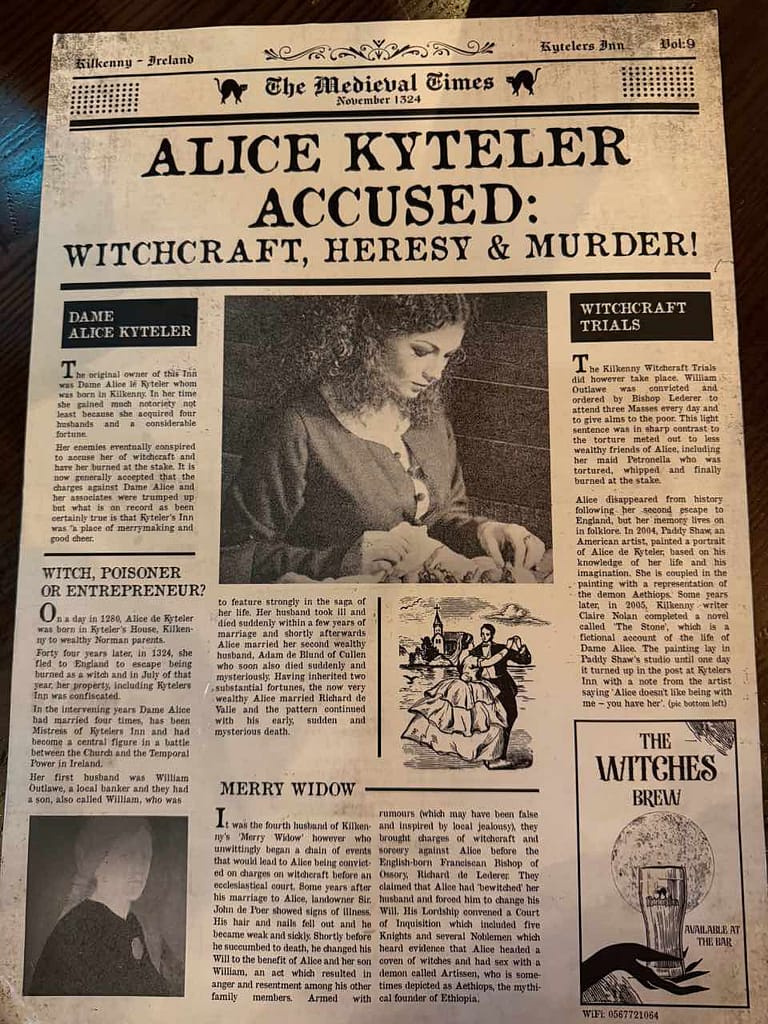
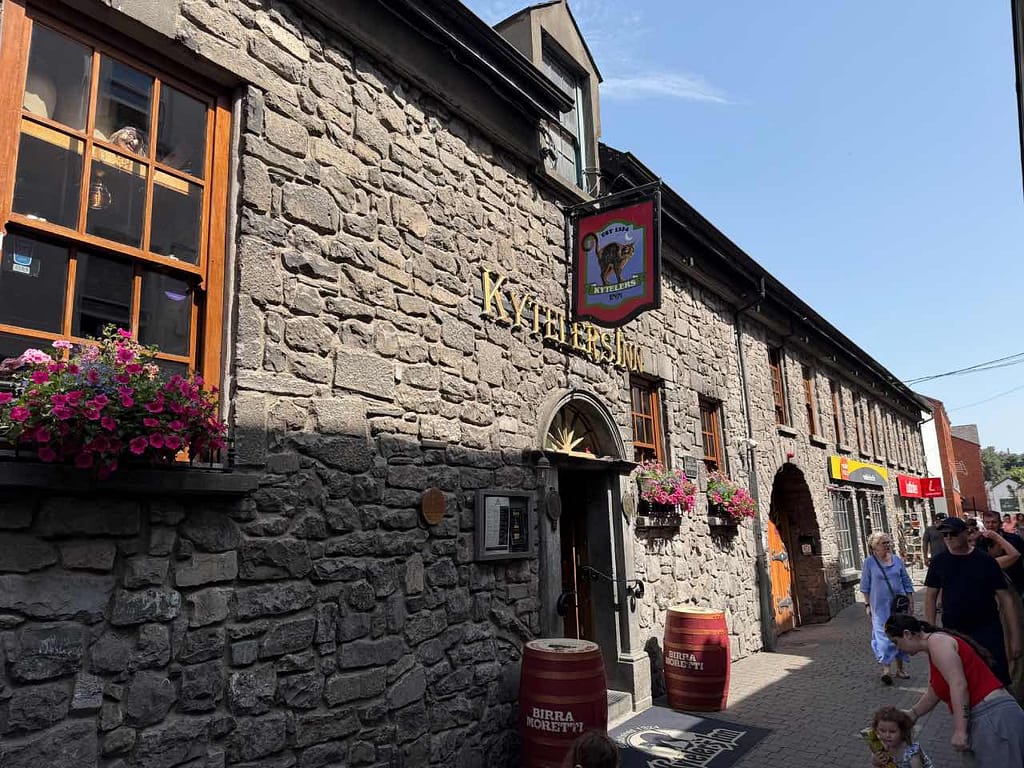
We had dinner that evening at the restaurant at the Inn. The history here is also very cool, but maybe I will just let you discover that for yourself. I will spare you the details unless you are curious.
But, it involves witches and curses and all sorts of crazy stuff…
Check it out here.
This particular version of the story of Alice Kyteler and the Kyteler’s Inn is just one of many…
The Inn did have really good fish and chips and fish soup. And Guinness.
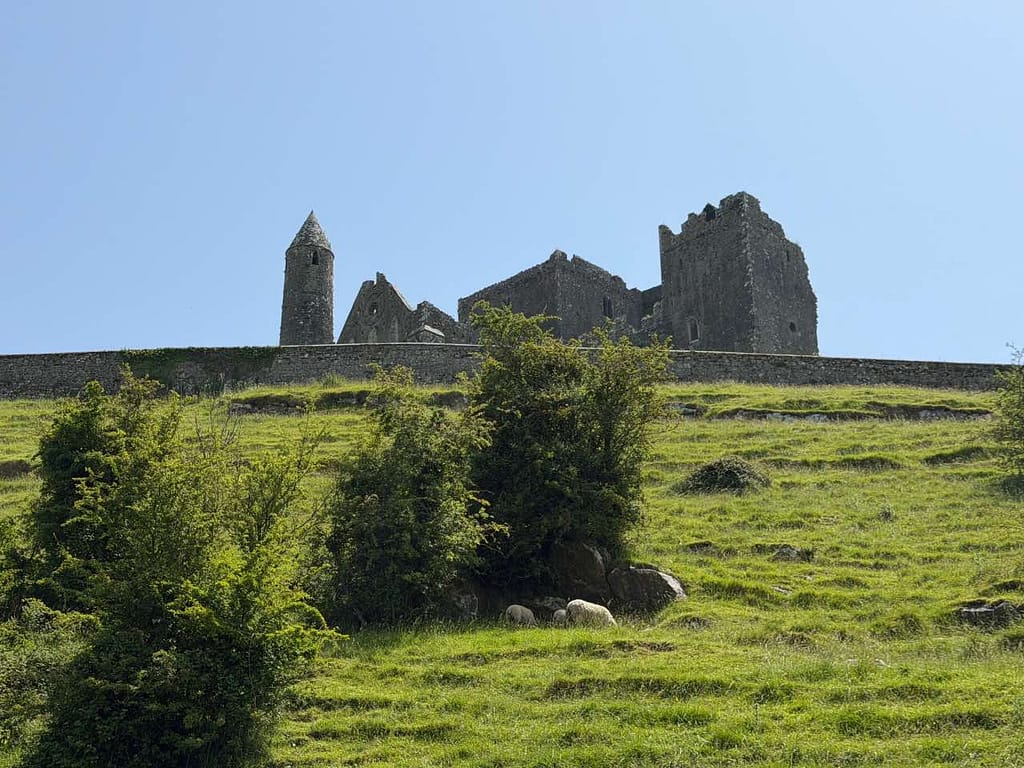
And this, was blah, blah, blah, snore, snore, zzzzzzzzzzzzzzz…
See? Ruins fatigue is a real thing. I even managed to bore you right to sleep.
Hope you enjoyed.
